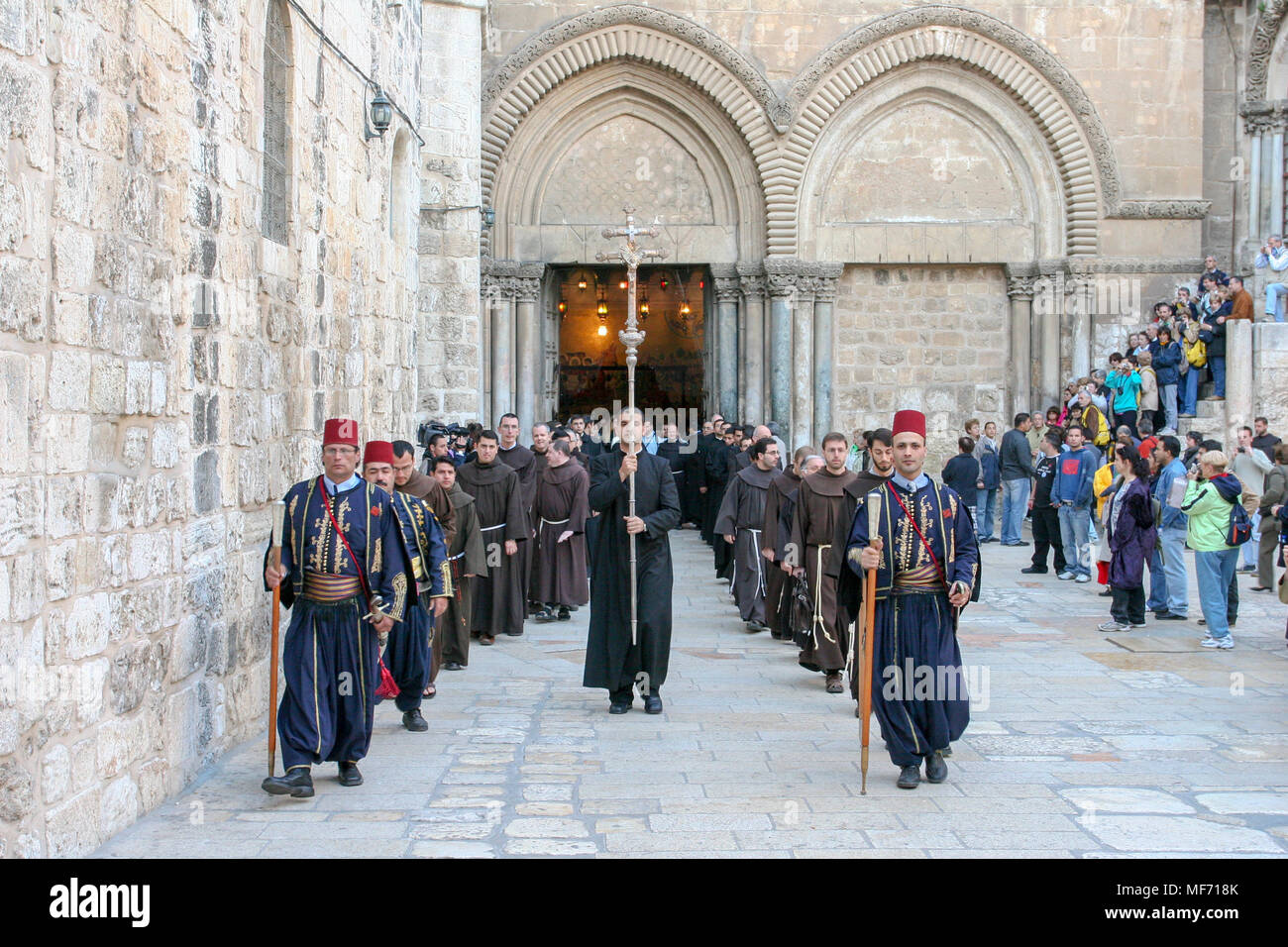
Israeli police on Sunday prevented Cardinal Patriarch Pierbattista Pizzaballa from conducting the Palm Sunday mass at the Church of the Holy Sepulchre in Jerusalem. This event is considered a historical precedent, as it has not occurred in centuries that a Latin Patriarch was barred from performing these religious rites.
In an official statement, the Latin Patriarchate of Jerusalem confirmed that Israeli police also prevented the Custodian of the Holy Land, Father Francesco Patton, from entering the church. This action comes at a sensitive time, as Christians around the world celebrate Palm Sunday, which marks the beginning of Holy Week.
Details of the Incident
The Church of the Holy Sepulchre is regarded as one of the holiest sites in Christianity, believed to be the location of Christ's burial and resurrection. For decades, this church has hosted significant religious celebrations, attracting visitors from around the globe. However, the recent actions taken by Israeli police raise concerns about religious freedom in the holy city.
The Patriarchate emphasized that this ban is part of a growing policy by Israeli authorities to control religious activities in Jerusalem. The statement pointed out that this step contradicts the human and religious values that should be respected in holy places.
Background & Context
Historically, Jerusalem has witnessed tensions among various religious denominations, particularly amid the Israeli-Palestinian conflict. Christian churches in the city have been facing increasing restrictions on religious freedom, prompting widespread condemnation from the international community.
In recent years, protests against Israeli policies perceived as discriminatory towards both Palestinians and Christians have escalated. Many international organizations, including the United Nations, have expressed concern over these policies and called for the respect of the rights of all religions in the holy city.
Impact & Consequences
The prevention of the Palm Sunday mass at the Church of the Holy Sepulchre is seen as an escalation in the restrictions imposed on religious freedom, which could exacerbate tensions between Christian and Israeli communities. This incident may ignite further protests and increase resentment among local populations.
Moreover, this action could negatively impact religious tourism in Jerusalem, as many locals rely on visitors who come to celebrate Christian holidays. Consequently, these policies may lead to economic and social repercussions for the city.
Regional Significance
This event represents a part of a larger picture concerning religious and political rights in the region. With rising tensions in Jerusalem, relations between Arab states and Israel may be affected, especially amid growing support for the Palestinian cause.
Additionally, the prevention of the Palm Sunday mass may prompt responses from Arab countries that might express solidarity with Palestinian Christians. This could strengthen the Palestinians' position in international forums and increase pressure on Israel to change its policies.
In conclusion, the prevention of the Palm Sunday mass at the Church of the Holy Sepulchre illustrates how Israeli policies can impact religious freedom and peaceful coexistence in Jerusalem. These events remind everyone of the importance of dialogue and understanding among different religions in the holy city.