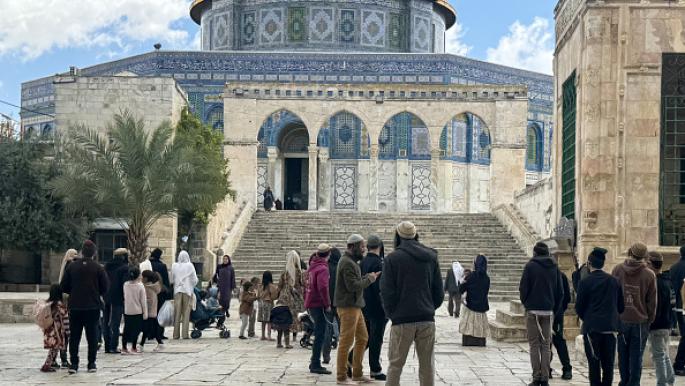
In an unprecedented move, Israeli police raised the Israeli flag above the western portico of Al-Aqsa Mosque in occupied Jerusalem on Tuesday morning, reflecting a significant shift in their behavior towards this sacred site. This incident occurs amid rising tensions in the region, raising concerns among Palestinians and the international community alike.
The public raising of the Israeli flag at this historic location indicates a new policy that Israeli authorities may adopt, aimed at reinforcing their control over Al-Aqsa Mosque. This step comes amidst increasing Israeli violations against Palestinians in Jerusalem, heightening tensions in the holy city.
Details of the Incident
On Tuesday morning, elements of the Israeli police publicly raised the Israeli flag, waving it above the western portico of Al-Aqsa Mosque. This incident is considered a historical precedent, as the Israeli flag has never been raised at this sensitive site before. This action provoked angry reactions from Palestinians, who viewed it as a blatant violation of the status of Al-Aqsa Mosque as one of the holiest Islamic sites.
This incident occurs at a time of escalating tensions between Palestinians and Israelis, with numerous confrontations reported in recent days. Reports have noted an increase in the number of Israeli incursions into Al-Aqsa Mosque, further inflaming the situation in the region.
Background & Context
Al-Aqsa Mosque is one of the holiest Islamic sites and a symbol of Palestinian identity. Since the occupation of East Jerusalem in 1967, the mosque has witnessed numerous Israeli violations, including incursions and arrests. Over the years, Israeli authorities have attempted to impose their control over the mosque, leading to heightened tensions between Palestinians and Israelis.
The public raising of the Israeli flag at Al-Aqsa occurs within the context of an occupation policy aimed at changing the status quo in the holy city. This policy includes increasing the number of settlers in East Jerusalem and reinforcing Israeli control over holy sites, exacerbating the conflict in the region.
Impact & Consequences
The raising of the Israeli flag over Al-Aqsa could have serious repercussions for the situation in Jerusalem. This step may lead to increased protests and confrontations between Palestinians and occupation forces, further heightening tensions in the city. Additionally, this incident could affect relations between Palestinians and Israelis, potentially increasing feelings of frustration and anger among Palestinians.
Moreover, this action may influence the international community's stance on the Palestinian issue. The international community may view this incident as an unacceptable escalation, leading to renewed calls for pressure on Israel to cease its violations in Jerusalem.
Regional Significance
This incident serves as a wake-up call for Arab countries that are closely monitoring developments in Jerusalem. The raising of the Israeli flag over Al-Aqsa may increase discontent in the Arab world and lead to new calls for solidarity with Palestinians. Furthermore, this incident could impact peace efforts in the region, complicating negotiations between Palestinians and Israelis.
In conclusion, the raising of the Israeli flag over Al-Aqsa Mosque represents a dangerous step that could escalate tensions in Jerusalem, and the international community must take a firm stance against these violations to protect Palestinian rights.