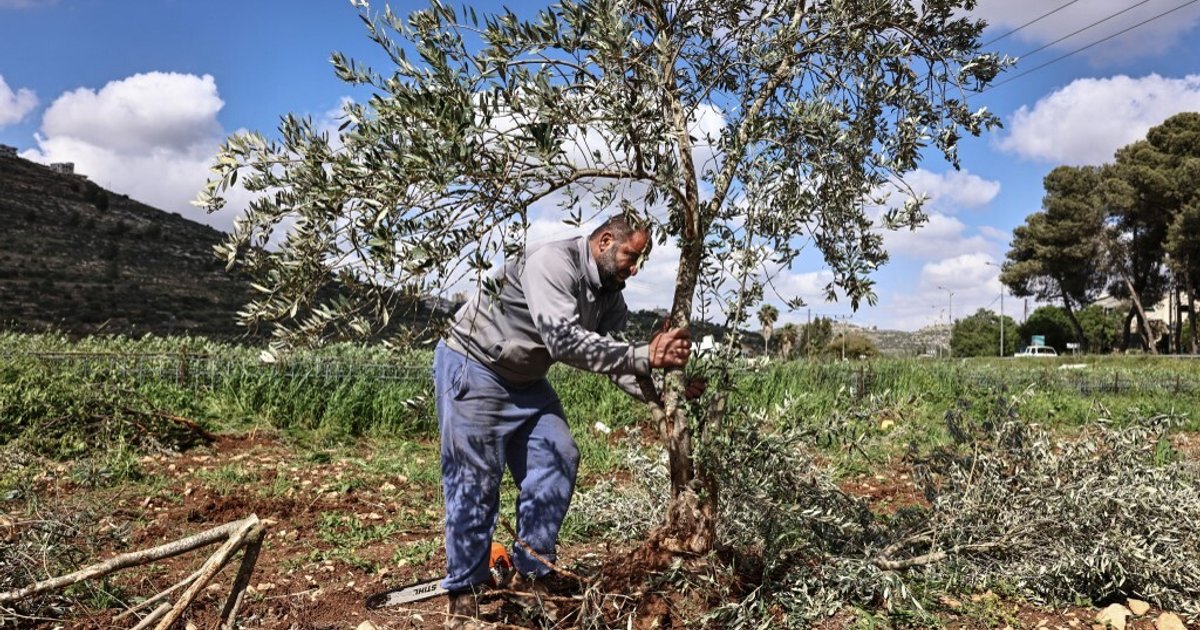
In a new incident reflecting escalating tensions in the West Bank, Israeli settlers have cut down approximately 400 olive trees in agricultural lands close to the town of Turmus Ayya, northeast of Ramallah. According to reports from the Wafa agency, this attack was executed by settlers from the outpost of Adi Ad, which is considered one of the hot spots in the region.
This incident comes at a sensitive time, as local residents have reported recurring incidents of arson targeting homes and vehicles in the same area, heightening fears among Palestinians of increasing assaults by settlers.
Details of the Incident
Olive trees are a symbol of Palestinian heritage and play a vital role in the local economy. Many Palestinian activists have condemned this assault, asserting that it is part of a systematic policy aimed at displacing Palestinians from their lands. Residents noted that these attacks are not new but occur periodically, reflecting a state of instability in the region.
In March alone, reports documented over 1800 assaults by Israeli forces and settlers against Palestinian communities and their properties. These figures indicate a significant rise in violence, raising concerns about the future of Palestinians in the West Bank.
Background & Context
Historically, Palestinian territories have witnessed numerous assaults by settlers, especially in areas close to Israeli settlements. These attacks are part of the settlement policy adopted by the Israeli government, which aims to expand settlements at the expense of Palestinian lands. Such policies have exacerbated the humanitarian situation in the region and increased tensions between Palestinians and settlers.
The roots of the Israeli-Palestinian conflict date back decades, with Palestinians seeking to establish their independent state in the territories occupied by Israel in 1967. As settlement activities continue, the situation becomes more complicated, making it difficult to reach a peaceful resolution.
Impact & Consequences
Attacks on olive trees are part of a broader strategy aimed at undermining Palestinian identity. In addition to the economic impact, the destruction of these trees affects Palestinian cultural heritage, increasing feelings of frustration and despair among Palestinians.
These incidents also contribute to escalating tensions between Palestinians and Israelis, which may lead to violent reactions from both sides. In the absence of any serious steps towards peace, the situation is likely to deteriorate further.
Regional Significance
The repercussions of these events extend beyond the West Bank, affecting relations between Arab countries and Israel. Arab nations are closely monitoring developments in the Palestinian territories, as the Palestinian cause is considered one of the central issues in the Arab world.
The ongoing assaults against Palestinians may lead to increased Arab support for the Palestinian cause, which could reflect on regional and international policies regarding the conflict. Furthermore, these events remind the world of the importance of finding a fair and comprehensive solution to the Israeli-Palestinian conflict.