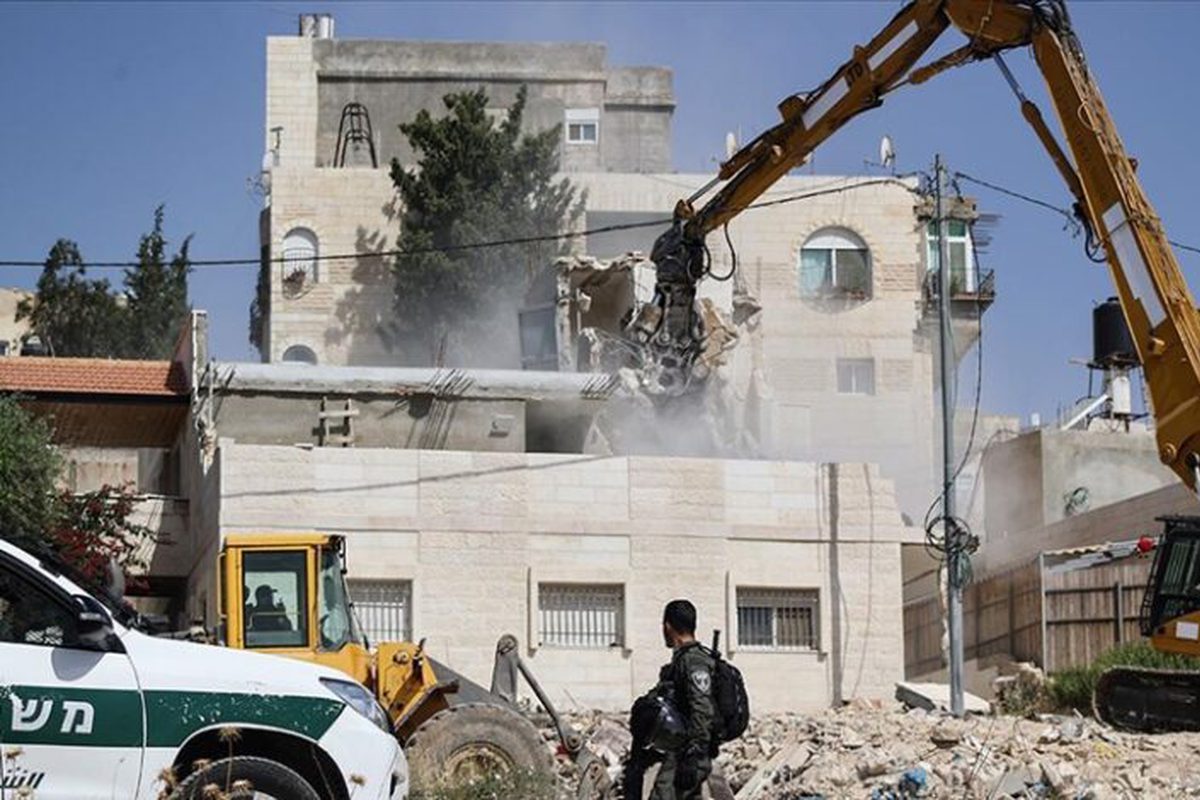
In a serious escalation reflecting the rapid settlement expansion in occupied Jerusalem, Israeli settlers stormed the Batn al-Hawa neighborhood in Silwan, seizing 13 residential apartments at once, under tight protection from occupation forces. This move is part of a systematic policy aimed at emptying Palestinian neighborhoods of their original inhabitants and replacing them with settlers, threatening the Palestinian presence in the city.
Videos and images published by the Wadi Hilweh Information Center show occupation soldiers invading residential areas, where they delivered notices of forced eviction to residents, paving the way for the seizure of their homes and handing them over to settlers. These actions come at a sensitive time, as Palestinians in Jerusalem face increasing threats to their existence.
Details of the Incident
Palestinian resident Raafat Basbous, one of the inhabitants of the Batn al-Hawa neighborhood, recounted the details of the invasion of his home and the delivery of an eviction order within 24 hours in favor of the settlers, stating: "The eye sheds tears and the heart is saddened for our home and the homes of our ancestors, fathers, and children." Basbous, who has lived in the area since before the occupation of Jerusalem in 1967, confirmed that he would leave under threat but would return.
Senior citizen Yusuf Basbous also spoke about his memories with the house, noting that he built it himself in 1963, and that he feels as if everything has been lost. These feelings reflect the pain experienced by Palestinians in Jerusalem, who are increasingly subjected to forced displacement.
In a related development, occupation forces evacuated 11 residential apartments belonging to the al-Rajabi family in favor of settlement associations, under the pretext of land ownership by Jews of Yemeni descent. After the eviction operation, settlers raised the Israeli flag over the buildings, escalating tensions in the area.
Background & Context
These events come at a time when the Batn al-Hawa neighborhood is witnessing an escalation in home seizures, with the number of seized apartments rising to 15 over the past four days, displacing approximately 80 people. This campaign aims to alter the demographic reality in the town adjacent to Al-Aqsa Mosque, amidst Israeli municipal plans to establish what is known as the "King's Garden" on the ruins of Palestinian homes.
Since 2015, many Palestinian families have been forced to leave their homes for the benefit of settlers, reflecting a systematic policy aimed at reducing the Palestinian presence in the area. These actions are accompanied by the enactment and enforcement of discriminatory Israeli laws targeting Palestinians, further complicating the situation in Jerusalem.
Impact & Consequences
Human rights organizations such as B'Tselem warn of a widespread displacement threat facing over 2,200 Palestinians in the Batn al-Hawa neighborhood alone, including hundreds of children. Additionally, around 1,550 individuals in the adjacent al-Bustan neighborhood face the risk of eviction and demolition. These figures reflect the extent of the suffering experienced by Palestinians in Jerusalem, who are under increasing pressure.
Data shows that the Batn al-Hawa neighborhood has witnessed the displacement of approximately 15 families since October 7, 2023, raising concerns about the future of Palestinians in the city. These events are not merely a legal dispute; they reflect a harsh humanitarian reality in which homes are being taken from their owners who have lived in them for generations.
Regional Significance
These events serve as a wake-up call for the Arab region, reflecting an escalation in Israeli policies towards Palestinians. What is happening in Jerusalem is not just a local issue; it has implications for security and stability in the region as a whole. These policies could exacerbate the conflict and increase tensions between Palestinians and Israelis.
In conclusion, the situation in Jerusalem remains concerning, as Palestinians face significant challenges threatening their existence. The continuation of these settlement policies could worsen humanitarian conditions and increase the suffering of the indigenous population.