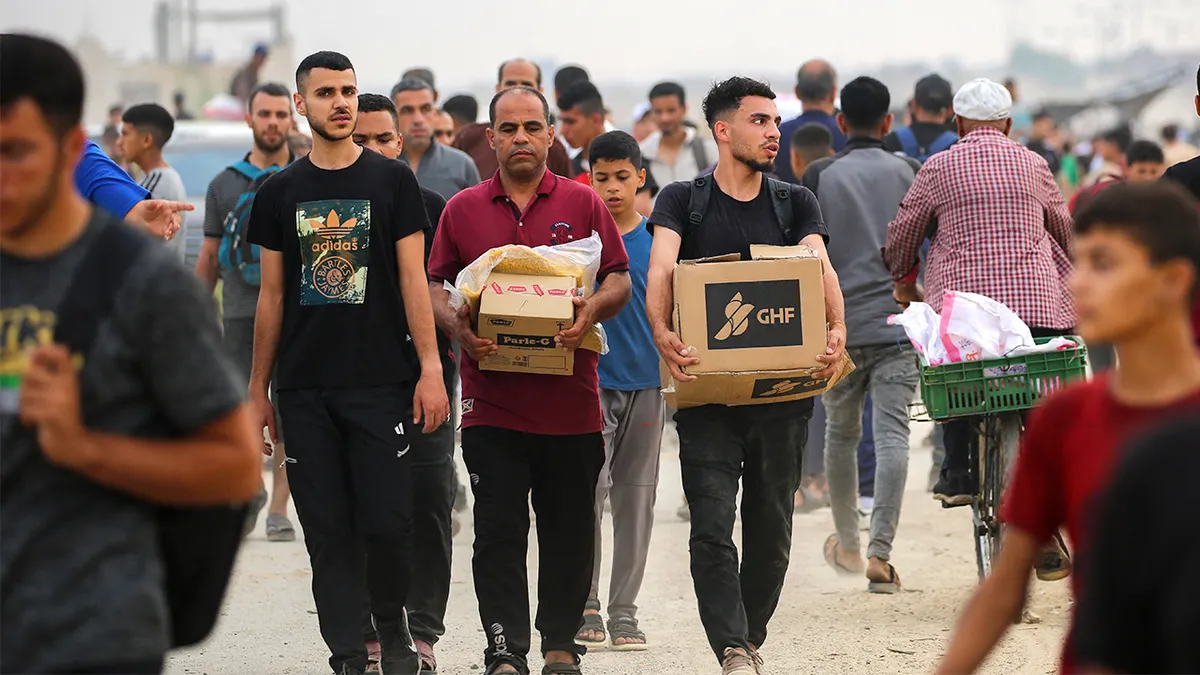
The United Nations Relief and Works Agency for Palestine Refugees in the Near East (UNRWA) confirmed that the Israeli occupation is enforcing a tightened siege on around 400,000 Palestinians in northern Gaza. This siege comes at a time when the region is suffering from a severe humanitarian crisis, with the basic needs of the population significantly increasing.
Reports indicate that the Israeli siege has worsened living conditions, as residents face acute shortages of food, water, and medicine. Additionally, health and educational services are under threat due to the inability to access necessary resources.
Details of the Situation
Israeli violations continue in the Palestinian territories, with the siege intensifying on residential areas in northern Gaza. UNRWA, which provides humanitarian support to Palestinian refugees, confirmed that the situation is deteriorating day by day. Agency spokespersons noted that many families are suffering from harsh conditions, unable to obtain sufficient food or necessary healthcare.
Furthermore, UNRWA added that the siege particularly affects children and women, who represent a large percentage of the affected population. The health situation in the area is becoming increasingly complicated, as many patients cannot reach hospitals or obtain the necessary medications for their treatment.
Background & Context
Historically, Palestinians in the Gaza Strip have endured difficult conditions due to the siege imposed by Israel for years. This siege, which began in 2007, has led to a deterioration of economic and social conditions in the region. Human rights organizations have documented numerous violations against Palestinians, including arrests and systematic destruction of infrastructure.
UNRWA is considered one of the main humanitarian agencies providing support to Palestinian refugees, working to provide food, shelter, and healthcare. However, the restrictions on movement and access to resources make it challenging for the agency to deliver the necessary assistance.
Impact & Consequences
The repercussions of the Israeli siege extend beyond Gaza, affecting regional stability in general. As humanitarian crises increase, pressure mounts on neighboring countries to accommodate Palestinian refugees. The deteriorating situation in Gaza could lead to heightened tensions in the region, threatening security and peace.
These conditions require an urgent international response, as the global community must pressure Israel to end the siege and provide humanitarian aid immediately. The continuation of the current situation could exacerbate humanitarian crises and increase the suffering of civilian populations.
Regional Significance
The situation in Gaza represents a focal point in the Israeli-Palestinian conflict, raising concerns among many Arab countries. The ongoing siege and Israeli violations undermine peace efforts and fuel feelings of frustration and anger in the region. Additionally, the humanitarian crises in Gaza could worsen conditions in neighboring countries, necessitating urgent action from Arab governments.
In conclusion, the international community must take responsibility for the Palestinian people and work to end the siege while providing the necessary support to improve humanitarian conditions in Gaza. Achieving peace and stability in the region requires addressing the root causes of the conflict and urgently providing humanitarian assistance.