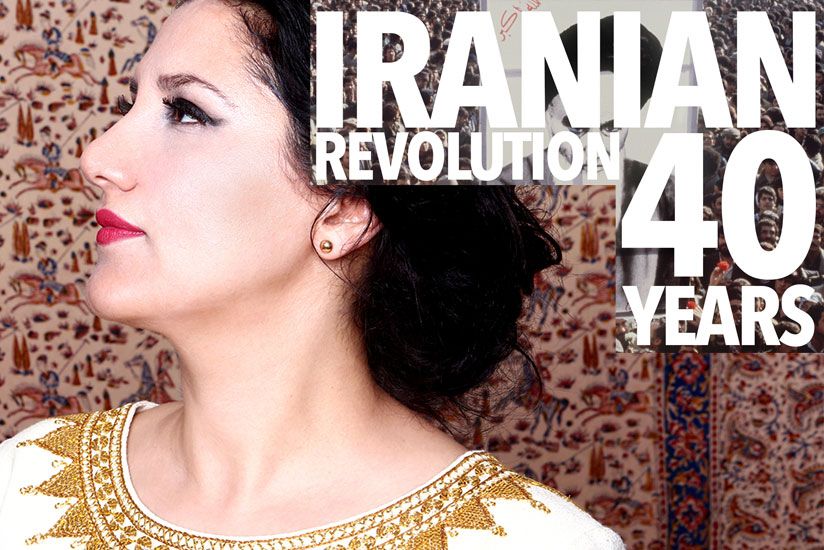
Israeli singer Maureen Nahdar, born in the Iranian city of Isfahan, has announced her performance of songs in Persian, which has sparked widespread debate about cultural identity and communication between peoples. This initiative comes at a time when tensions between Iran and Israel are escalating, making it a provocative topic of discussion.
Nahdar, who resides in Israel, expresses through her art a desire to transcend cultural and political barriers, believing that music can serve as a bridge for communication between peoples. She has stated on several occasions that she believes in the power of art to unite hearts and overcome differences.
Event Details
Nahdar presents a collection of songs that embody feelings of love and nostalgia, using the Persian language, which she considers a part of her personal heritage. Reactions on social media have shown significant variation, with some expressing admiration for her courage in using a language deemed the 'language of the enemy' in the context of the Israeli-Iranian conflict.
Through her art, Nahdar seeks to promote dialogue between cultures, stating, "All I want is to show the world that music knows no borders and that we can communicate despite our differences." Her songs have been well-received by a broad audience, reflecting a desire among many to move beyond political disagreements.
Background & Context
Historically, relations between Iran and Israel have been extremely tense, especially following the Islamic Revolution in 1979. However, the arts and music have always been a means of expressing shared human emotions. In recent years, we have witnessed numerous attempts by artists from both sides to transcend these barriers, although they often face resistance from certain factions.
Nahdar is among a small number of artists attempting to use their art as a means of cultural communication. Her use of the Persian language in her songs reflects her connection to her roots and reinforces the idea that cultural identity can be multidimensional.
Impact & Consequences
Nahdar's initiative is seen as a challenge to prevailing stereotypes regarding relations between Iran and Israel. This initiative could contribute to opening a new dialogue on how the arts can be used as a means of communication and understanding between peoples. It may also inspire other artists in the region to adopt a similar approach, potentially contributing to the construction of new bridges between different cultures.
However, this step is not without risks, as Nahdar may face criticism from some circles that view the use of the Persian language in an Israeli context as a betrayal of national identity. Nevertheless, she appears ready to confront these challenges in pursuit of her artistic vision.
Regional Significance
Nahdar's experience serves as an example of how the arts can be used to communicate between different cultures, which could have a positive impact on relations between Arab countries and Israel. Amid ongoing tensions in the region, there may be a greater need than ever for cultural and artistic communication as a means to promote peace and understanding.
Nahdar's experience may inspire other Arab artists to explore similar themes, contributing to the enhancement of dialogue between different cultures in the region. Ultimately, the arts remain a powerful means of expressing shared human emotions and could be the key to building a more peaceful and understanding world.