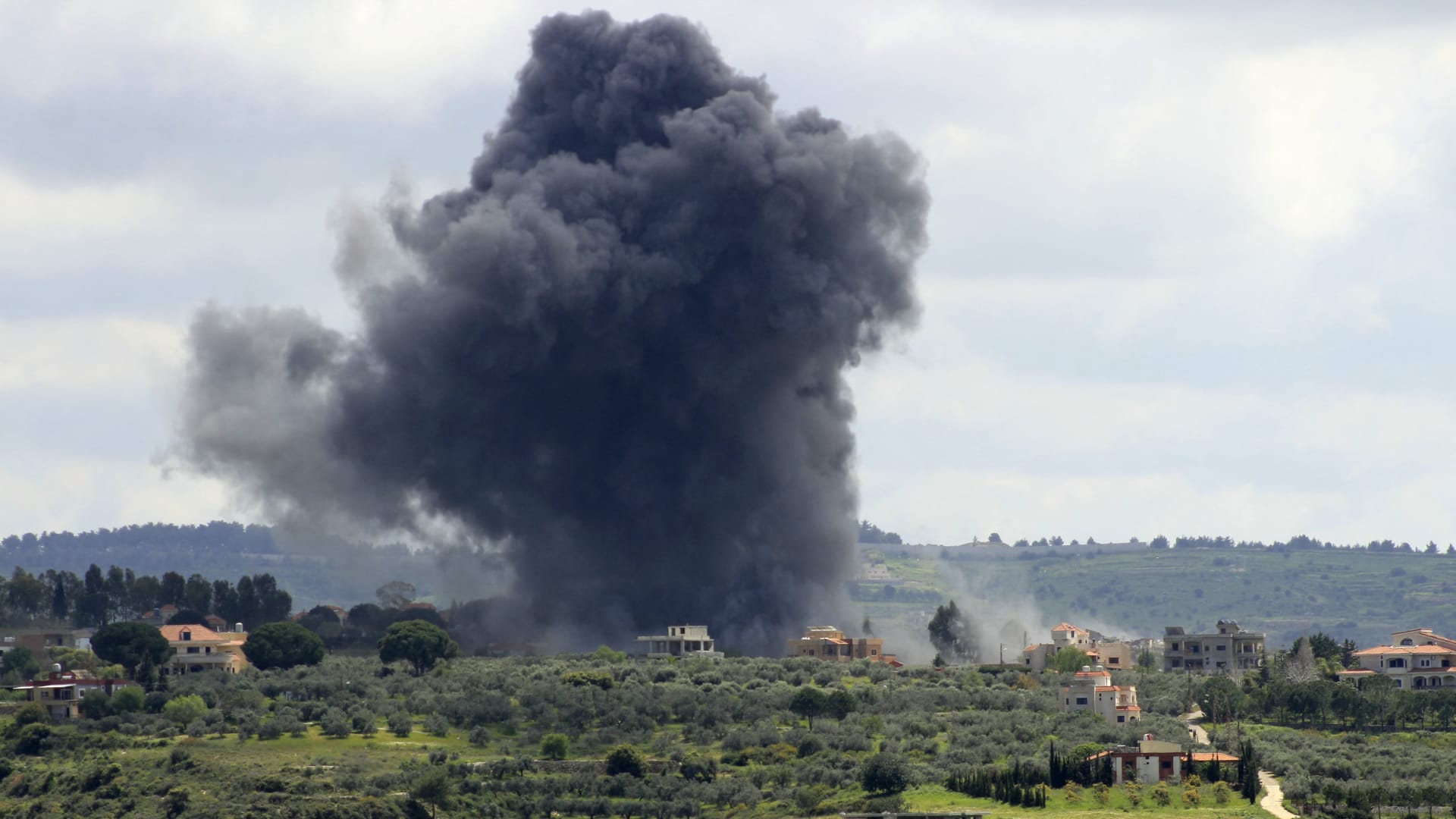
Israeli Channel 12 reported the death of an Israeli soldier and injuries to two others due to an attack on an Israeli force during an operation in a village in southern Lebanon. These developments come at a time when military confrontations on the Lebanese front have intensified, with Hezbollah announcing the execution of a series of "qualitative operations" targeting the depth of the Israeli occupation and strategic sites in Tel Aviv.
In an official statement, Hezbollah confirmed the targeting of the Israeli Ministry of Defense headquarters in Tel Aviv and the "Dolphin" barracks belonging to the military intelligence division, using advanced missiles. The targets also included the command center for the northern region in the city of Safed and an artillery position in the "Shamir" settlement, amid continuous sirens in the Upper Galilee.
Details of the Incident
On the ground, the Lebanese Ministry of Health announced the death of 5 citizens and injuries to 19 others due to Israeli airstrikes targeting the towns of Harouf, Tulin, and Kounin. Earlier, it was reported that paramedics were killed in Nabatieh while performing their duties, raising the number of casualties in the emergency sector to 42 since the beginning of March, amid accusations against the Israeli army of deliberately suppressing rescue teams.
Al Jazeera's correspondent noted persistent Israeli attempts to advance into the depths of southern Lebanese areas, where direct clashes occurred in the town of Deir Sryan. Hezbollah revealed the establishment of "rocket ambushes" for the invading forces, leading to the destruction of a large number of vehicles, including 7 "Merkava" tanks in the town of Qantara alone.
Background & Context
These events come amid escalating tensions between Hezbollah and the Israeli army, as the occupation seeks to expand the "buffer zone" in southern Lebanon. Israeli Prime Minister Benjamin Netanyahu stated that these steps are part of the ongoing campaign against Hezbollah, complicating the situation in the region further.
In this context, Hezbollah's Secretary-General, Naeem Qassem, reiterated the party's rejection of negotiations "under fire," describing the proposals made amid ongoing airstrikes as an attempt to impose surrender. Qassem called on the Lebanese government to retract its recent decisions regarding the prohibition of military activities by the party.
Impact & Consequences
Concerns are rising over escalating violence in the region, with reports indicating that Iran has informed mediators of the necessity to include Lebanon in any ceasefire agreement with the United States and Israel. Tehran has confirmed that any regional settlement must include a halt to military operations in Lebanon, reflecting the importance of the Lebanese situation in the regional conflict.
These developments are seen as indicators of a potential escalation in the conflict, with fears growing that the current clashes could lead to a full-scale war in the region, which could negatively impact security and stability in neighboring countries.
Regional Significance
The Arab countries are significantly affected by the escalating tensions in Lebanon, as any military escalation could lead to widespread repercussions, including refugees and regional security issues. Furthermore, these events may bolster the position of extremist forces in the region, complicating the political and security situation further.
In conclusion, the situation in Lebanon remains under the world's watch, as fears of exacerbating the conflict increase, necessitating urgent international intervention to halt the violence and protect civilians.