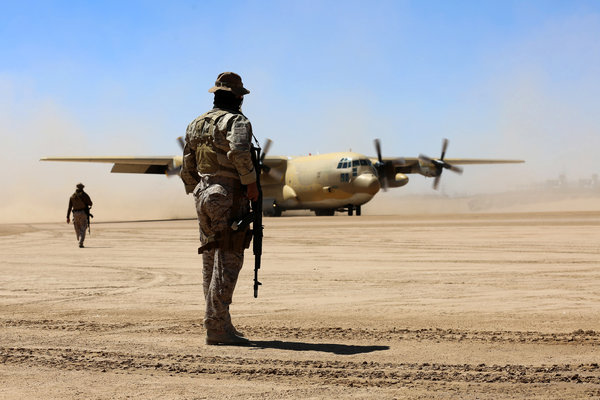
In an unprecedented move, the Italian government announced its refusal to allow American warplanes to refuel on its territory, reflecting escalating tensions between the United States and European countries. This decision comes at a time when divisions among traditional allies are increasing regarding how to handle the ongoing conflict in Iran.
This step follows a series of exchanged statements between American and European officials, where President Donald Trump criticized some European countries, including France, for what he deemed insufficient support for American efforts in the region. This has raised concerns among many observers who believe that these tensions could impact transatlantic relations.
Details of the Event
Italy's refusal to allow American warplanes to refuel is seen as a sign of deteriorating relations between the United States and Europe. This decision came after Italy expressed concern over the escalation of military actions in Iran, as the Italian government seeks to maintain a neutral stance in the conflict.
At the same time, the United States is looking to enhance its military presence in the region, increasing pressure on European countries that are trying to balance their national interests with military commitments to their allies. Some observers have noted that this decision could have implications for military cooperation between the United States and European countries in the future.
Background & Context
Historically, relations between the United States and European countries have been strong, with both parties cooperating on various security and political issues. However, in recent years, these relations have witnessed increasing tensions, especially under the Trump administration, which has taken a hardline stance on many international issues.
The conflict in Iran is one of the most prominent issues that has sparked divisions between the United States and Europe. While the United States seeks to take a hard line against Iran, many European countries prefer a more balanced diplomatic approach. This difference in strategies reflects the varying interests between the two sides.
Impact & Consequences
Italy's decision could lead to widespread ramifications for transatlantic relations. As tensions rise, the United States may find itself more isolated in its military efforts, which could affect its ability to implement its strategies in the region.
Moreover, this decision may encourage other countries to take similar stances, complicating the security situation in the region. At the same time, it could strengthen cooperation among European nations seeking to bolster their independent position in international politics.
Regional Significance
Considering the impact of these tensions on the Arab region, the escalating tensions between the United States and Europe could affect the stability of the region. Arab countries that rely on military and economic support from the United States may find themselves in a difficult position if these divisions continue.
Furthermore, these tensions could exacerbate conflicts in the region, as regional powers seek to exploit opportunities arising from the decline in cooperation among traditional allies. Thus, the situation in Iran could have direct implications for security and stability in Arab countries.
In conclusion, it appears that transatlantic relations are facing new challenges amid rising tensions regarding the conflict in Iran. As these dynamics continue, it will be important to monitor how they affect security and stability in the region and the world.