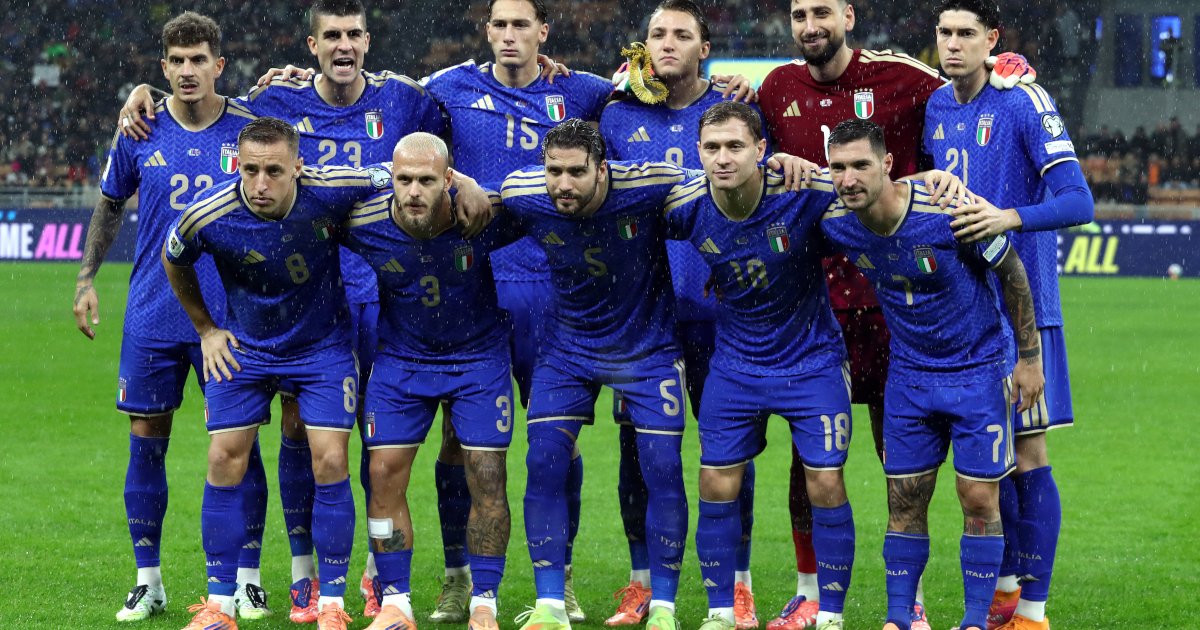
Italy's national team, known as the "Azzurri," did not just stumble in their quest to qualify for the 2026 World Cup against Bosnia and Herzegovina; it marked an official declaration of a deepening identity crisis affecting a school that was once a "hub" of global football.
In this context, Jurgen Klinsmann, former star and coach of the German national team, provided a scathing critical analysis that pinpointed the bleeding wounds in the body of Italian football, known as "calcio." Klinsmann, who previously played for Inter Milan, indicated that one of the main problems lies in the lack of trust in young players.
Event Details
Klinsmann stated, "They are paying the price for the lack of leaders, technically gifted players, and the absence of trust in young players. In Italy, it is likely that (Spanish) Lamine Yamal and (German) Musiala will play in Serie B to gain experience." He added in an interview on RAI, "This cannot be right."
Klinsmann believes that the crisis is not only about the quality of players' feet but also about the minds behind them. His analysis revealed two serious gaps in the Italian football system.
Background & Context
Historically, Italy has been one of the strongest countries in the world of football, having achieved numerous global championships. However, in recent years, Italian football has witnessed a noticeable decline, raising questions about its future. The failure to qualify for the 2026 World Cup serves as a wake-up call for Italian football, reflecting the urgent need to reassess player development strategies.
Concerns are growing that Italy may lose its status in the football world, especially with other nations rapidly advancing in this field. Greater investment in academies and the development of young players is required to ensure the continuity of success.
Impact & Consequences
This crisis could lead to negative repercussions at both club and national team levels, as the overall performance of Italian teams in domestic and international competitions may be affected. Additionally, the lack of trust in young players could negatively impact the development of new talents, exacerbating the problem in the long term.
Moreover, this crisis may affect Italian fans, who are accustomed to seeing their national team in major tournaments. Repeated failures could lead to a decline in fan support, placing additional pressure on clubs and the Italian Football Federation.
Regional Significance
Football in the Arab region is considered an essential part of culture and identity. Italy's failure may raise questions about how football is managed and developed in Arab countries. Arab nations could benefit from Italy's experience in reassessing their strategies, especially in the area of youth player development.
Furthermore, Italy's failure could open the door for Arab countries to invest in developing football academies, contributing to improving the level of the game in the region.
In conclusion, failing to qualify for the 2026 World Cup presents an opportunity to rethink how Italian football is managed and should serve as a lesson for other countries on how to invest in the future of the game.