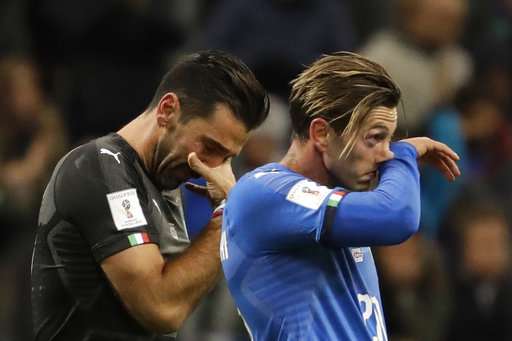
Italy, the four-time World Cup champion, is facing a new disappointment after failing to qualify for the World Cup for the third consecutive time, following a penalty shootout loss to Bosnia and Herzegovina, 4-1. The match, held in Zenica, saw a lackluster performance from the Italian team, which was compounded by the red card shown to one of its players before the end of the first half.
Italian fans and media have expressed their deep dissatisfaction with this failure, with some describing the event as a "disaster" and a "scandal." Tommaso Silvestri, a 65-year-old fan, stated, "We really messed this up. We have players who can't even hit the target. Our golden days in Italian football are gone."
Match Details and Performance
In the match that took place on Tuesday, the Italian national team found itself in a difficult position after defender Alessandro Bastoni was sent off, significantly impacting the team's performance. Despite Moise Kean scoring a goal for Italy, the team was unable to maintain its lead, leading to a penalty shootout that resulted in their defeat.
Reactions to this loss were swift and emotional, with Ignazio La Russa, the President of the Italian Senate, expressing his disappointment via social media, stating that "everything has its limits." Meanwhile, writer Roberto Saviano pointed to structural deficiencies in Italian football, from corruption to a lack of investment in youth development.
Background & Context
The history of Italian football is filled with achievements, as the country has won the World Cup four times, the last being in 2006. However, since then, Italy has experienced a noticeable decline in performance in international tournaments. Despite their surprising victory in the 2021 European Championship, the failure to qualify for the World Cup has become a painful reality.
Many analysts believe that this failure reflects deeper crises within the Italian football system, including poor youth player development and an increasing reliance on foreign players in clubs.
Impact & Consequences
This repeated failure may exacerbate youth disengagement from the national team, as many feel a deep sense of disappointment. Elisabetta Esposito, a sports journalist, confirmed that "the disappointment is profound, but the country also feels a nearly horrific disappointment. It seems that a new generation no longer knows what it means to support their country."
She added that rebuilding the team will require a long-term strategy, and making hasty decisions will not achieve the desired success.
Regional Significance
Football is one of the most popular sports in the Arab world, with millions of fans following European teams. Italy's failure may impact football fans in the region, as Italy has always been one of the favorite teams in international tournaments.
It is crucial for officials in Arab countries to learn from the experiences of major teams like Italy, by investing in youth development and enhancing sports infrastructure.
In conclusion, Italy's failure to qualify for the World Cup signifies the need to rethink football strategies in the country, and this experience should serve as a lesson for other teams on how to build a sustainable sports future.