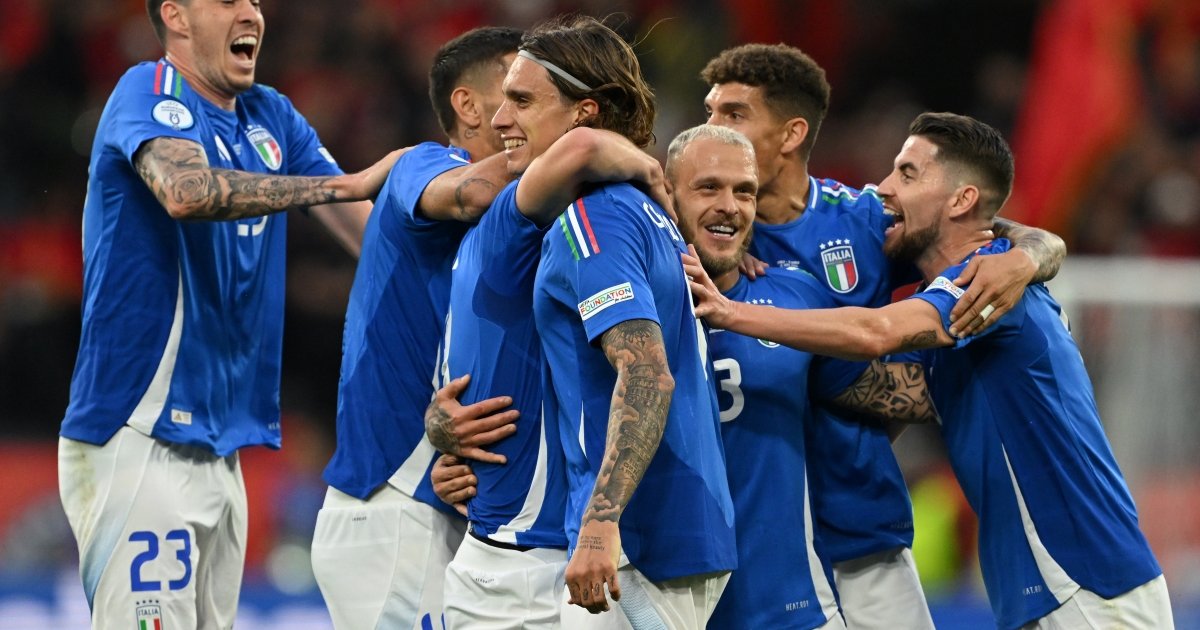
The Italian national team has failed to secure qualification for the 2026 World Cup after losing to Bosnia in a penalty shootout (4-1), following a draw at the end of regular and extra time. Despite a strong start from the Azzurri, who took the lead in the first half through player Kean, the team could not maintain its advantage, especially after finishing the match with ten players, forcing them to retreat into their own half and defend for the remainder of the game.
This elimination raises profound questions about the reasons behind this failure, which can be summarized in several interrelated factors. Italy squandered several clear chances that could have decided the match early, but haste and a lack of effectiveness in front of goal prevented them from converting these opportunities into goals, as seen in Kean's one-on-one and Esposito's chance. This problem is not new; it dates back many years, as Italian football has suffered from a shortage of decisive strikers capable of making a difference in critical moments since the retirement of prominent names.
Match Details and Turning Points
The red card received by Bastoni was a crucial turning point in the match, as it forced the Italian team to play with ten men from the final minutes of the first half. This numerical disadvantage compelled the team to retreat, stripping them of the ability to impose their style, and reflected a lack of focus at a moment where mistakes were intolerable. The Italian players entered the match under immense pressure, both from the media and fans, in addition to the negative legacy of the team missing the last two World Cup editions.
In contrast, the Bosnian team played with ease and confidence, benefiting from their previous qualification at the expense of Slovenia, which gave them a clear morale boost. It seems that the coaching staff failed to mentally prepare the players adequately for such decisive encounters. The match revealed a lack of clear vision in managing the small details: wasted opportunities, poor exploitation of set pieces, and a lack of efficiency in counter-attacks.
Background & Context
This failure cannot be considered an isolated incident; rather, it is an extension of a structural crisis that Italian football has been experiencing for years, specifically since the generation that won the World Cup in 2006. The decline in talent production, poor team performance, and fluctuating presence of Italian clubs in continental competitions are all indicators of a deep-seated imbalance that requires a comprehensive review. The Italian national team could not impose its dominance or style against a historically inferior team; on the contrary, the Bosnian team appeared more organized and dangerous, especially through the flanks and aerial balls effectively exploited by Džeko.
This reflects a decline in the quality of Italian talent, as the team no longer includes the same caliber of players capable of making a difference across various positions, except for a few names like Donnarumma. The lack of effectiveness in attack and the team's absence of a clear vision in managing the match reflect a larger crisis that necessitates radical reforms.
Impact & Consequences
The repercussions of this failure extend beyond a single match, highlighting the need to rethink the strategy of Italian football. A comprehensive review of the training and development system is required, along with investment in nurturing young talents, to ensure Italy's return to its rightful place in the football world. This failure could serve as a wake-up call for the Italian Football Federation, which must take responsibility for addressing this crisis.
Ultimately, Italy appears to be at a pivotal moment that calls for a serious pause to rebuild the football system through strategic reforms encompassing training, investment, and technical planning, so that it can regain its standing among the giants of the game.
Regional Significance
Italy's failure to qualify for the 2026 World Cup serves as a lesson for many Arab countries striving to develop their football. Arab federations must learn from past experiences and work on building strong teams capable of competing at the international level. Additionally, this failure highlights the importance of investing in youth categories and developing sports infrastructure.
In conclusion, the Italian failure is not merely a sports event; it is an indicator of the need to rethink how football is managed at a high level, both in Italy and in Arab countries aspiring to achieve success in this field.