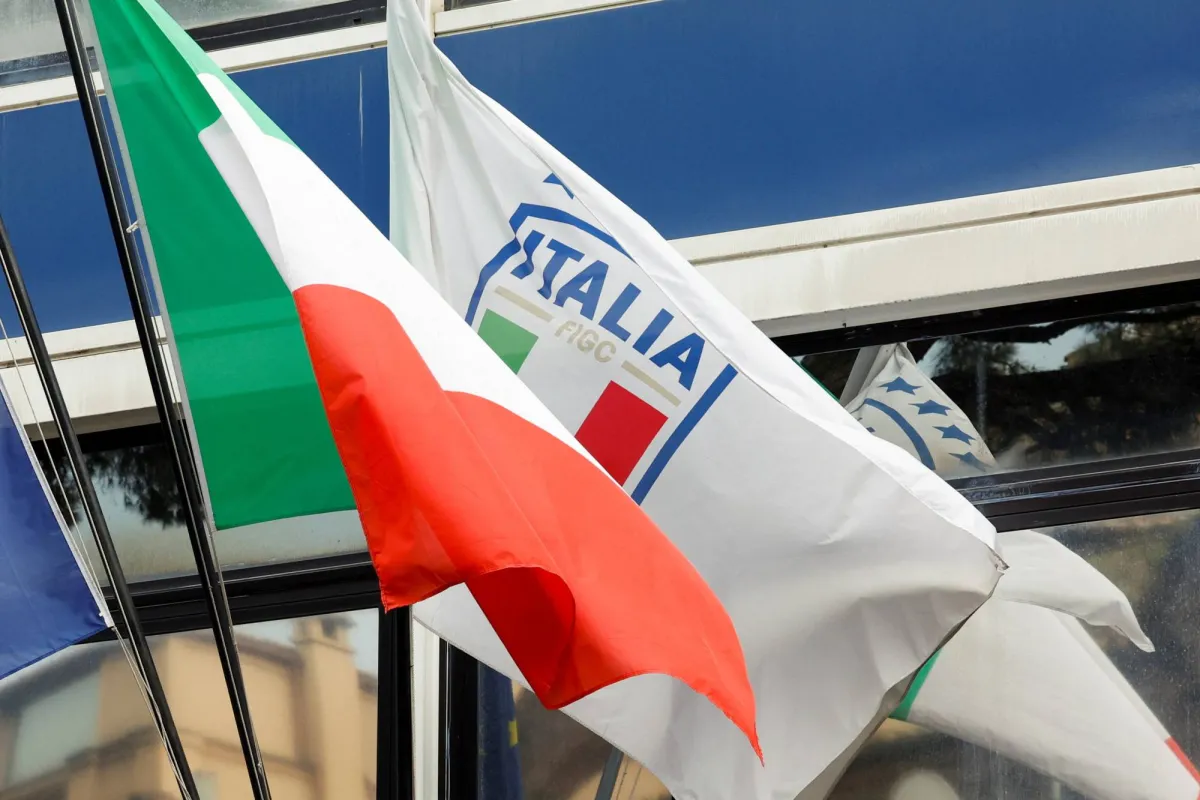
Italy is facing increasing backlash after the national team's latest failure to qualify for the World Cup, marking a crisis that has plagued the structure of Italian football for years. This third consecutive failure to reach the World Cup has sparked widespread discontent, with many attributing it to a lack of vision and proper management.
Italian Sports Minister Andrea Abodi emphasized that "Italian football needs to be re-established," stressing the necessity of renewing leadership within the Italian Football Federation. In a clear message, he indicated that shirking responsibility after these repeated failures is an unfair proposition, especially when some are trying to blame institutions or external factors.
Details of the Event
This political discourse is not isolated; it resonates within sports circles as Peppino De Cecco called for direct intervention from the ministry, highlighting the need for all parties to come together to devise practical solutions. He asserted that the federation alone can no longer rectify the situation, and that responsibility is shared, although federation president Gabriele Gravina bears a significant portion of it.
On the political front, criticism has intensified remarkably, with Matteo Renzi stating that the current situation is a result of a "culture of recommendations and favoritism," pointing out that football in Italy is no longer managed with a national project mentality but rather with narrow interests. Additionally, Giorgio Mulè, the Deputy Speaker of Parliament, called for Gravina's resignation, asserting that this failure is the result of "outdated management without vision."
Background & Context
Statements from Aurelio De Laurentiis, president of Napoli, further confirmed the depth of the crisis, likening the situation to a "game in the hands of children," referring to the poor management and stagnation that characterize Italian football. He proposed several solutions, including reducing the number of league teams to 16, decreasing the number of matches, and allowing the national team more time to work, in addition to financially compensating clubs for their international players.
Conversely, another faction advocates for a return to the roots, with Carolina Moraci emphasizing the need to invest in youth categories and develop local players, warning against the continued dominance of quick-profit logic at the expense of talent development. She noted that the experiences of France and Germany after their previous failures relied on rebuilding their foundations, something Italy currently lacks.
Impact & Consequences
Within the sports community, reactions have varied between sadness and anger, with Dino Zoff expressing his shock, describing what happened as a "football tragedy." Meanwhile, Franco Baresi called for a "comprehensive review," asserting that the results over the past two decades cannot be ignored, aside from a single title in the European Championship.
Despite widespread criticism, there has been a trend to alleviate pressure on coach Gennaro Gattuso, with Baresi considering him "one of the least responsible" for this failure, pointing out that he worked hard during a short period, but circumstances did not favor him. Antonello Cucurido also expressed sympathy for the players, emphasizing that the solution does not lie in blaming a specific player but rather in "rebuilding everything."
Regional Significance
Reactions extend to athletes from various sports, with boxer Irma Testa criticizing the gap between what football players earn compared to athletes in other sports. In contrast, Olympic champion Arianna Fontana attempted to provide a more balanced perspective, affirming that what happened is a "painful blow," but it should serve as motivation to come back stronger, especially since Italy has proven its ability to succeed in other sports.
This situation reflects significant challenges facing Italian football and may influence how sports are managed in other countries, including Arab nations striving to develop their sports and achieve international success.