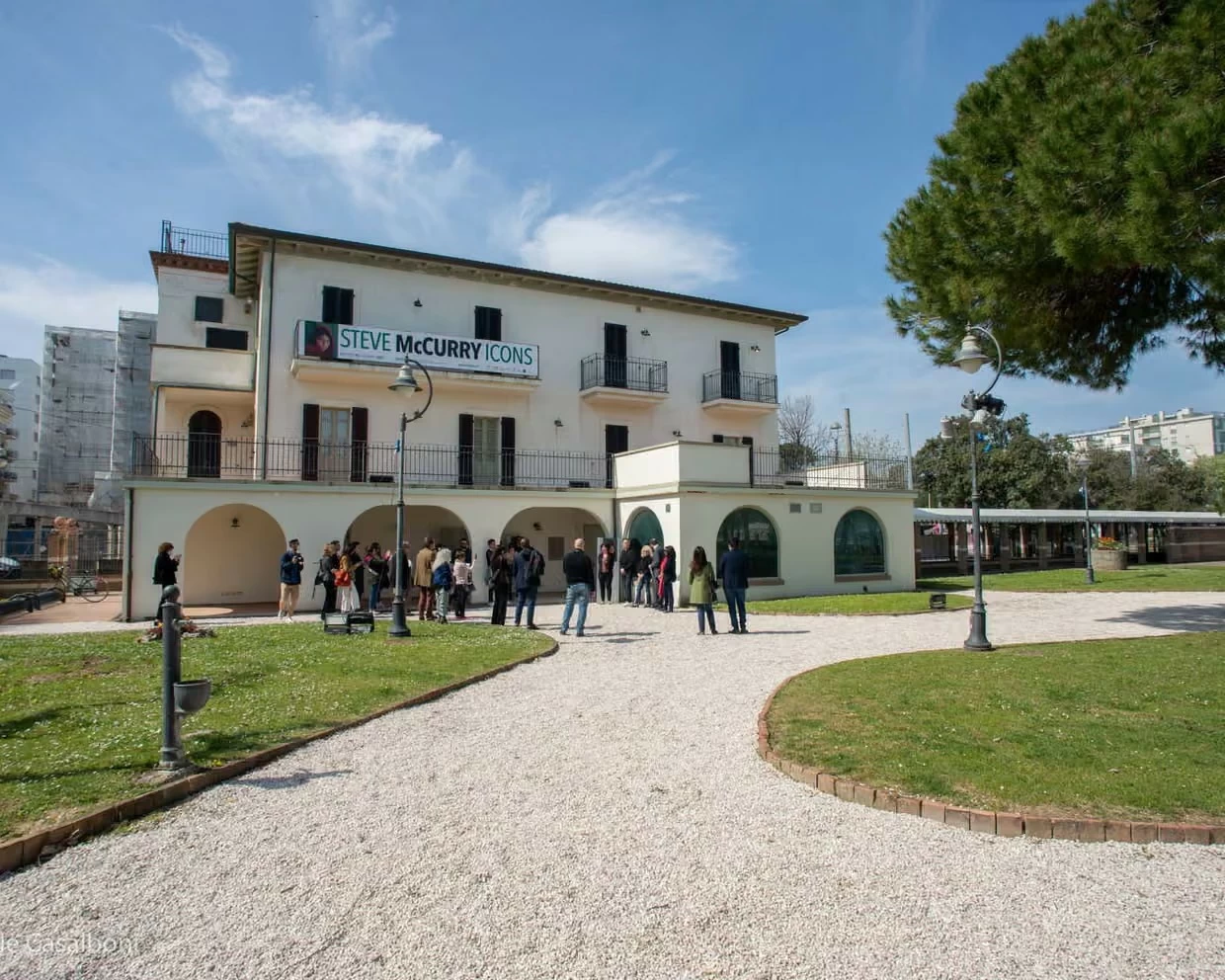
The municipality of Riccione, located on the Adriatic coast near Rimini, has announced its success in purchasing a villa that was used as a summer resort by former Italian leader Benito Mussolini. This step is part of the municipality's efforts to prevent the property from falling into the hands of those who promote fascist ideology, with Mayor Daniela Angelini asserting that returning the villa to public ownership represents an "act of love and vision."
Riccione successfully overcame a private competitor, an individual linked to the "Italian Social Movement," a neo-fascist party founded by Mussolini's supporters after World War II. Angelini considered this victory a triumph for the entire city.
Details of the Event
The villa was built in 1893 near the beach and was purchased by Rachele, Mussolini's second wife, in 1934. Mussolini, who was born in the nearby town of Predappio, used the villa for government work during his stays, where seaplanes would arrive to transport him. The Mussolini family expanded the villa to include a third floor, 20 rooms, and a tennis court.
After the end of World War II and the fall of the fascist regime, the villa transitioned to public ownership. During Riccione's economic boom in the 1950s and 1960s, it was used for various commercial purposes, including a veterinary clinic and a restaurant. A communist mayor attempted to demolish it in the late 1970s, but it remained abandoned for years before being purchased by the Rimini Savings Bank in the late 1990s, which restored it and opened it as an art exhibition center and venue for public events in 2005.
Background & Context
The villa's history and its association with Mussolini have sparked long-standing controversy in Riccione. This debate resurfaced last year when the "Casa di Risparmio" foundation decided to put the villa up for auction. Calls emerged from advisors of the "Brothers of Italy" party, led by Prime Minister Giorgia Meloni, to preserve the name "Villa Mussolini" regardless of the buyer.
Amidst this pressure, Mayor Angelini confirmed that the name would remain unchanged, emphasizing the importance of not erasing history. She noted that changing the name could turn the villa into a "shrine for nostalgic fascists," which the current administration would not accept.
Impact & Consequences
The municipality of Riccione intends to use the villa as a public community space, where exhibitions will narrate the "good, the bad, and the ugly" aspects of 20th-century history, along with other social and cultural events. Angelini affirmed that the name evokes a gruesome story, but it must be told correctly while emphasizing democratic values.
Riccione, like most of the Emilia-Romagna region, has been a traditional stronghold of the left since the end of World War II. However, the municipality did not officially revoke the "honorary citizenship" granted to Mussolini until 2025, with Angelini stating that Mussolini was "a man whose hands were stained with crimes" and did not deserve this honor.
Regional Significance
This issue highlights how communities deal with their complex histories, especially regarding dictatorial regimes. Riccione's experience can serve as a lesson for Arab countries facing similar challenges in addressing the legacies of past regimes. Reevaluating history and affirming democratic values can significantly impact the shaping of national identity.
In conclusion, this step in Riccione represents a model for confronting history in a way that promotes human and democratic values, opening the door to broader discussions on how to handle historical symbols in contemporary societies.