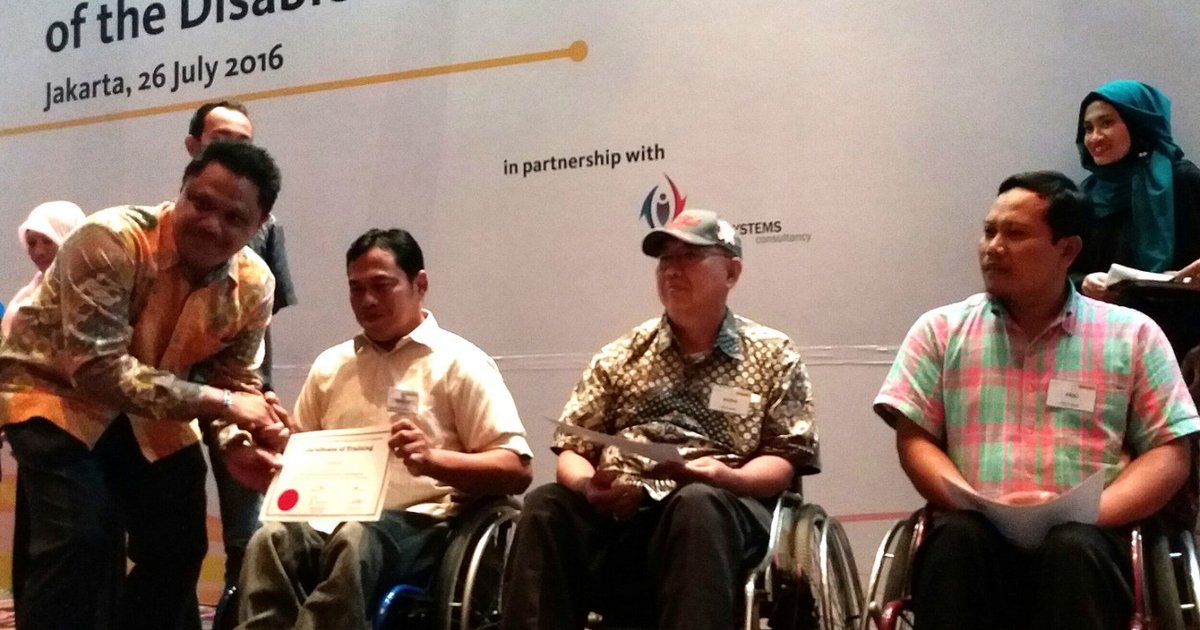
In a demonstration of its social commitment, Jakarta Bank announced the distribution of aid to support persons with disabilities in collaboration with the Solidarity Foundation for the Disabled. This initiative coincides with the bank's 65th anniversary celebrations, aiming to improve training and empowerment opportunities for this group.
During the event, Ateng Rivai, the Compliance Director at Jakarta Bank, stated that this aid reflects the bank's dedication to providing necessary support for persons with disabilities, enabling them to have better training opportunities and acquire essential skills for independence.
Event Details
The aid was delivered at a ceremony held in the Indonesian capital, Jakarta, where Suti Karno, the President of the Solidarity Foundation for the Disabled, warmly welcomed this initiative. She noted that this aid will significantly contribute to enhancing the capabilities of participants in training programs.
Ari Renaldi, the bank's Secretary General, added that this event is part of a series of social activities organized by the bank, focusing on enhancing cooperation and community participation, especially with the most vulnerable groups.
Background & Context
Indonesia is one of the countries facing significant challenges in the field of disability rights, where there is still a lack of available opportunities for them. Hence, the importance of initiatives aimed at improving their living conditions and enhancing their participation in society becomes evident.
Founded in 1958, Jakarta Bank is considered one of the leading banks in Indonesia, consistently striving to provide exceptional financial services, alongside its social role in supporting vulnerable groups.
Impact & Consequences
This initiative is a positive step towards raising awareness about the rights of persons with disabilities in Indonesia, highlighting the importance of empowering this group through the provision of educational and training opportunities. These efforts reflect the commitment of financial institutions to their social role.
It is expected that these initiatives will improve the quality of life for persons with disabilities, enhancing their effective participation in society and reducing the discrimination they may face.
Regional Significance
This initiative serves as a model to be emulated in the Arab region, where many countries face similar challenges in the field of disability rights. Raising awareness and providing necessary support for this group can contribute to improving their conditions and enhancing their participation in society.
In conclusion, the importance of such initiatives remains significant worldwide, as they contribute to building more inclusive and tolerant communities.