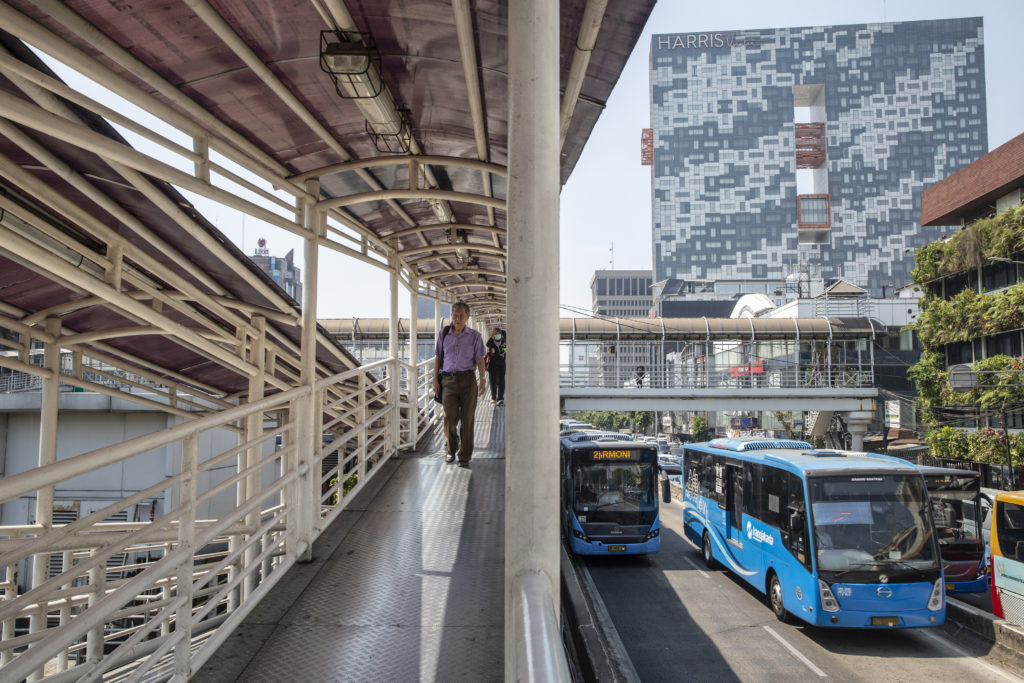
In a move aimed at enhancing public transport usage and reducing congestion, Jakarta Governor Anies Baswedan announced a decision prohibiting government employees (ASN) from using their private cars during work-from-home (WFH) days every Friday. The governor emphasized that this decision is part of the government's efforts to improve air quality and reduce traffic congestion in the Indonesian capital.
During a press conference held at the Jakarta Municipality, Baswedan clarified that employees who need to go out for work-related purposes or other activities must use public transport. He also stressed that working from home does not equate to the freedom to work from anywhere; rather, it should adhere to the set standards of working from home.
Details of the Decision
This step is part of the Indonesian government's policy aimed at improving the work environment and mitigating the negative impacts of traffic congestion. Friday has been designated as part of the work-from-home system, reflecting global trends towards remote work.
Baswedan confirmed that strict penalties will be imposed on employees who violate these instructions, although specific details regarding the nature of these penalties were not disclosed. He noted that the goal of this policy is to promote discipline and commitment among government employees.
Background & Context
Historically, Indonesia, particularly Jakarta, has faced significant issues related to traffic congestion and air pollution. The government has taken several steps in recent years to address these issues, including encouraging the use of public transport and implementing work-from-home policies.
Jakarta is considered one of the most congested cities in the world, with its residents suffering from long wait times in traffic. Therefore, this new policy could be seen as a positive step towards improving the quality of life in the city.
Impact & Consequences
This decision is expected to have positive environmental impacts by reducing carbon emissions from private vehicles. It may also encourage more citizens to use public transport, contributing to the improvement of the city's transport system.
However, some employees may face challenges in adapting to this policy, especially those who rely on their private cars for work purposes. Thus, it will be important to monitor feedback from both employees and citizens alike.
Regional Significance
Indonesia's experience in implementing work-from-home policies and promoting public transport serves as a model that Arab countries facing similar challenges in transportation and congestion can benefit from. Arab nations may draw inspiration from these policies to enhance their work environment and reduce congestion in major cities.
In conclusion, Jakarta's government decision reflects a commitment to improving the quality of life in the city and mirrors the global trend towards sustainable work practices. It is crucial for Arab countries to observe these experiences and consider how to implement similar policies that cater to their specific needs.