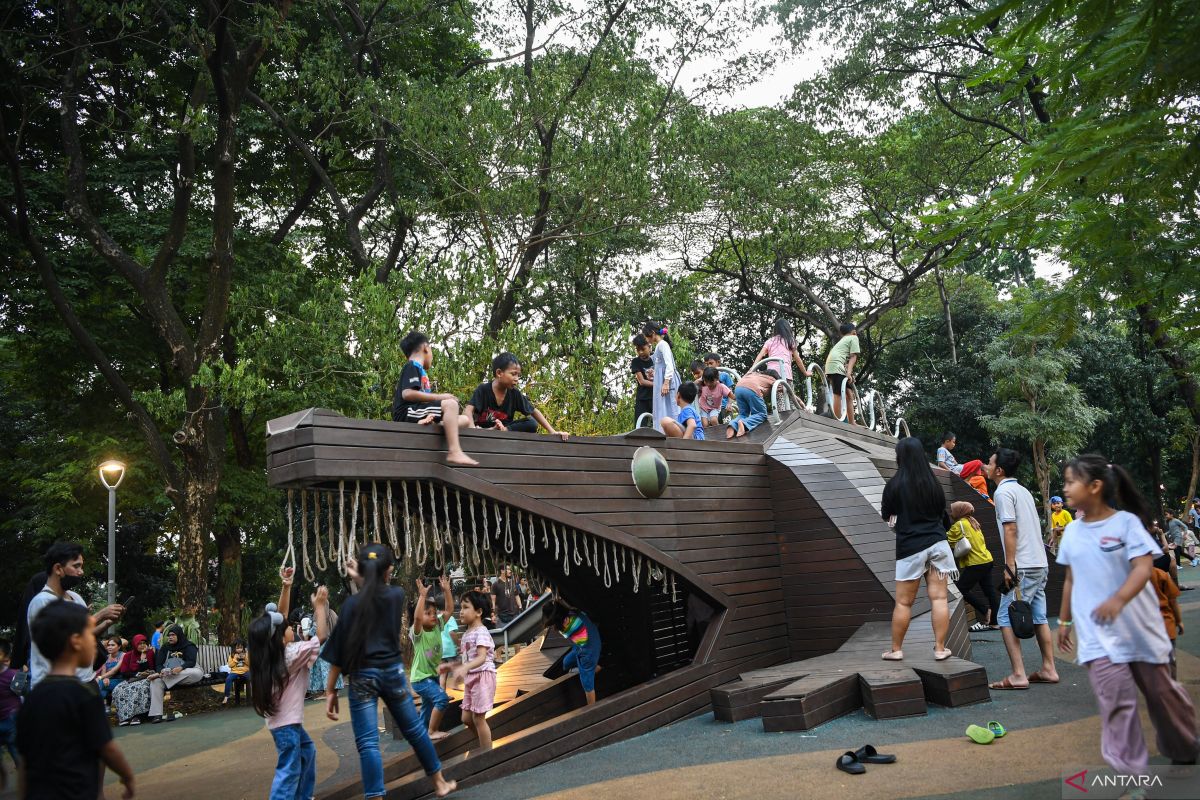
The Jakarta provincial government (Pemprov DKI Jakarta) has unveiled its plans to develop green spaces and public libraries as part of its efforts to promote positive activities for children. This move is part of the commitment to support the Child Protection Law (PP Tunas), which will come into effect on March 28, 2026.
Shaku Hakim, the special advisor to the Governor of Jakarta, explained that this initiative aims to encourage children to engage in real activities such as learning, playing, and social interaction, away from the digital world. He emphasized that the government sees this law as an opportunity to enhance positive activities for children.
Details of the Initiative
The Jakarta government, under the leadership of Pramono Anung, aims to transform the city into a more child-friendly environment. Among the proposed plans, the development of public spaces will be enhanced through the renovation of public parks and the provision of safe and inclusive play areas.
The initiatives also include the development of public libraries and mobile libraries, along with educational programs focused on reading in schools and communities. These steps are expected to enrich children's educational and social experiences.
Background & Context
This initiative comes at a time when concerns are rising about the impact of technology on children, as they spend excessive time in the digital realm. Numerous studies have shown that physical and social activities play a crucial role in children's development, making these plans essential.
Historically, Jakarta has suffered from a lack of green spaces, negatively affecting the quality of life. With the growing population, it has become imperative to provide safe environments for children to play and learn.
Impact & Consequences
This initiative could contribute to improving children's mental and physical health by providing them with opportunities to interact with their peers and develop social skills. Additionally, promoting reading and cultural activities could help raise the educational level in the city.
Furthermore, these steps may inspire other cities in the region to adopt similar policies, reflecting the importance of providing healthy and safe environments for children worldwide.
Regional Significance
Given the challenges faced by Arab countries in child protection and education enhancement, Jakarta's experience could serve as a model. Many Arab cities struggle with a lack of public spaces and libraries, which affects children's development.
Arab countries can benefit from these initiatives to develop similar policies that promote children's rights and provide them with better educational and social environments.