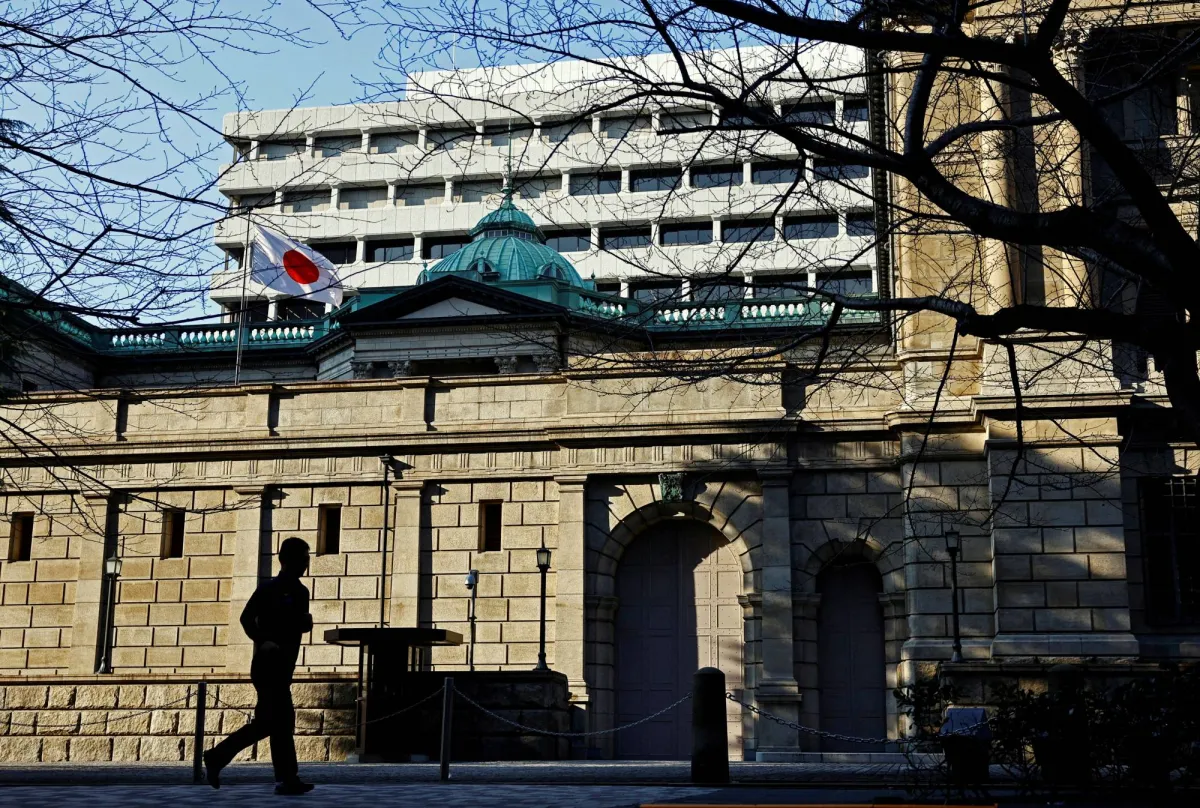
The minutes from the Bank of Japan's January meeting, published on Wednesday, revealed a hawkish stance from several monetary policymakers, who emphasized the necessity of continuing to raise interest rates to address increasing inflationary pressures. Some members called for immediate action to counter these pressures, particularly amid geopolitical tensions that have contributed to rising oil prices.
Members also highlighted the importance of being vigilant regarding the impact of a weak yen on inflation, which has become more evident as companies are able to pass on rising import and labor costs more effectively. One member was quoted saying, "The Bank of Japan should not waste too much time studying the effects of raising interest rates but should proceed with the next rate hike in a timely manner."
Details of the Meeting
The meeting minutes showed that one member proposed raising interest rates at intervals not exceeding a few months, stressing that this measure is the only solution to curb the undesirable weakness of the yen, which leads to increased import costs. Several members noted that the mechanism of moderate wage and price increases has become entrenched in Japan, and this year's wage negotiations are expected to result in significant wage increases for a wide range of companies.
These observations confirm the Bank of Japan's determination to proceed with tightening monetary policy, as several board members expressed confidence that the rise in U.S. interest rates will contribute to improving the situation. Tariffs and previous interest rate hikes have not posed a significant burden on the economy thus far.
Context and Background
These developments come amid escalating tensions in the Middle East, where the Iranian war has distorted political expectations and increased oil prices, further intensifying inflationary pressures on the Japanese economy. The Bank of Japan indicated that core inflation, a key indicator for raising interest rates, is approaching the central bank's target of 2%.
In a subsequent meeting in March, the Bank of Japan kept interest rates unchanged while maintaining its inclination towards a more hawkish monetary policy, as rising oil prices signal worsening inflationary pressures. Core consumer inflation has remained above the Bank of Japan's 2% target for nearly four years, driven by rising raw material and labor costs.
Implications and Effects
Attention is now focused on how the Bank of Japan will respond to these pressures, as any potential interest rate hike is expected to have significant effects on financial markets and the Japanese economy. There are also concerns that this policy could slow economic growth in Japan, especially given the increasing global challenges.
On the other hand, the continued weakness of the yen may increase import costs and affect consumers' purchasing power, potentially leading to a decline in domestic consumption. Meanwhile, investors are looking at how these policies will impact global markets, particularly amid rising geopolitical tensions.
Impact on the Arab Region
Arab countries are directly affected by these developments, as any rise in interest rates in Japan could impact investment flows to the region. Additionally, rising oil prices due to tensions in the Middle East could increase inflationary pressures in Arab countries, necessitating appropriate economic measures.
In conclusion, the Bank of Japan appears to be facing significant challenges amid changing global economic conditions, requiring decisive actions to maintain national economic stability.