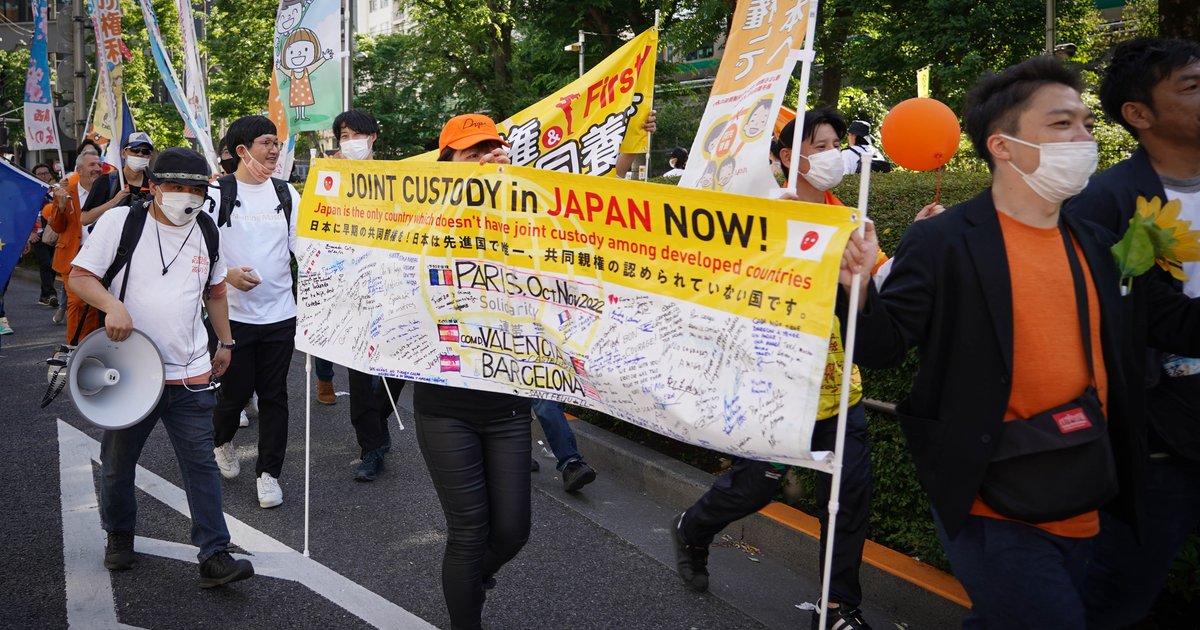
Japan has recently announced a new law allowing joint custody of children after separation, marking an important step in enhancing the rights of migrants. This law, which has come into effect, aims to improve the legal circumstances for migrant families, providing migrant parents with greater opportunities to jointly care for their children, potentially transforming the lives of many families in Japan.
The new law comes at a sensitive time, as many migrants face difficulties in securing their legal rights, particularly in custody matters. According to reports, this change could positively impact the lives of migrants and their children, offering them greater opportunities to communicate and stay together after separation.
Details of the New Law
The new law includes several provisions aimed at protecting the rights of children and parents. Among these provisions are flexible visitation schedules, facilitating communication between parents, and providing legal support for migrant families. The law also stipulates the necessity for parents to be involved in decision-making regarding their children's upbringing, thereby enhancing their role in their children's lives.
This law represents a significant shift in Japanese policy towards migrants, as custody issues have traditionally been viewed as purely domestic matters. However, demographic changes in Japan, including the increasing number of migrants, have prompted the government to reconsider its policies.
Background & Context
Historically, Japan has been considered one of the countries lacking in migrant rights, where custody laws typically favored Japanese parents over migrants. In recent years, with the rising number of migrants in the country, the Japanese government has begun to recognize the importance of addressing these issues more comprehensively. Pressure from human rights organizations and civil society has pushed the government towards taking positive steps in this direction.
Japan is one of the countries that has witnessed a significant transformation in its demographic structure, with the number of migrants increasing markedly over the past two decades. This change necessitates the Japanese government to reevaluate its policies to ensure the rights of all citizens and residents in the country.
Impact & Consequences
This law is expected to have wide-ranging effects on the lives of migrants in Japan. With joint custody, migrant parents will have more opportunities to see their children, which may contribute to improving family relationships. Furthermore, this law could encourage more migrants to settle in Japan, as they feel their rights are protected.
Moreover, this change may contribute to enhancing cultural diversity in Japan, as it can lead to increased awareness of migrant rights and the importance of supporting diverse families. Improving the conditions for migrants could also positively reflect on the Japanese economy, as stable families contribute more significantly to society.
Regional Significance
Considering the situation in Arab countries, this law could serve as a model for addressing migrant issues. Many Arab countries are experiencing a significant influx of migrants, whether for economic or political reasons. Therefore, enhancing and protecting migrant rights can contribute to improving their conditions and integration into new communities.
In conclusion, the joint custody law in Japan represents a positive step towards improving migrant rights. Strengthening the rights of migrant families can have positive effects on society as a whole, fostering understanding and cooperation among different cultures.