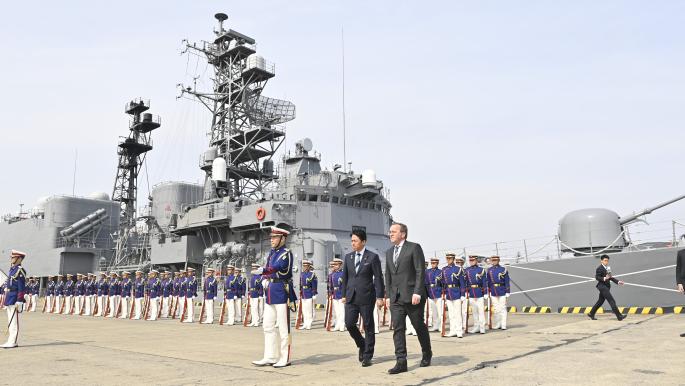
Japan has recently unveiled plans to expand its military capabilities in the Pacific region, aiming to modernize its naval forces and enhance its military presence. This new direction comes at a sensitive time, as China closely monitors these developments, considering Japan's military expansion a threat to its national security.
Japan, which has grappled with the repercussions of World War II, seeks to rebuild its military strength in line with the increasing security challenges in the region. Reports indicate that Tokyo plans to significantly increase its defense budget, reflecting its commitment to enhance military capabilities.
Details of the Expansion Plans
Japan's plan includes expanding its naval fleet, which involves constructing new warships and upgrading existing equipment. The strategy also encompasses strengthening military cooperation with allies, including the United States, as part of joint efforts to address the rising threats from China and North Korea.
In this context, the Japanese government has emphasized its aim to achieve a strategic balance in the region, asserting that bolstering its military capabilities is an urgent necessity to confront security challenges. Japanese officials have indicated that these measures are part of a comprehensive strategy to enhance national security.
Background & Context
Historically, Japan has maintained limited defense policies, focusing solely on self-defense. However, with rising tensions in the Pacific, particularly due to increased Chinese military activities, Japan has begun to reassess its defense strategy. In recent years, there has been a notable uptick in Chinese military activities, including the expansion of the Chinese navy and its operations in the South China Sea.
China perceives any expansion of Japanese military capabilities as a direct threat, accusing Tokyo of attempting to revive its military past. Beijing has reacted strongly to these plans, warning that such actions could escalate tensions in the region.
Impact & Consequences
These developments could alter the balance of power in the Pacific, potentially encouraging other countries in the region to enhance their military capabilities. Furthermore, this military expansion may lead to an arms race in the area, intensifying tensions among major powers.
Moreover, Japan's military direction could affect diplomatic relations in the region, compelling other nations to reassess their security strategies. This may result in increased cooperation between Japan and the United States, which could provoke negative reactions from China.
Regional Significance
As Japan focuses on strengthening its military capabilities, this shift may have indirect effects on the Arab region. Heightened tensions in the Pacific could impact global market stability, including oil and gas markets that many Arab nations rely on.
Additionally, enhanced military cooperation between Japan and the United States could open avenues for Arab countries to expand their military partnerships with major powers, potentially affecting regional balances.
In conclusion, Japan's expansion of military capabilities in the Pacific represents a strategic move that could pose numerous challenges in the region. With growing concerns about China's reactions, the question remains how these developments will influence security and stability both regionally and globally.