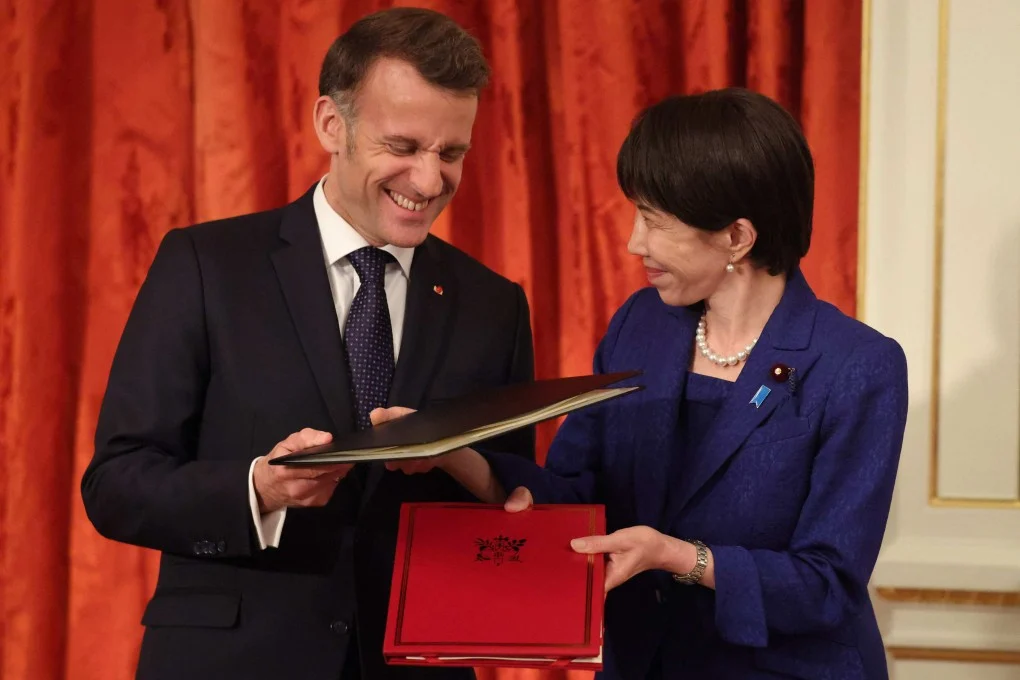
In a strategic move aimed at enhancing bilateral cooperation, Japanese Prime Minister Suga Takashi and French President Emmanuel Macron agreed on Wednesday to formulate a plan to secure supplies of critical minerals. This agreement comes at a time when concerns are rising over China's dominance in the rare minerals market, which are essential for various technological industries.
During a joint press conference, Takashi confirmed that Japan and France would maintain close communication to support efforts to reduce tensions in the Middle East, in addition to establishing a high-level dialogue on artificial intelligence. These steps reflect the two countries' desire to strengthen cooperation in vital areas that concern the global economy.
Details of the Agreement
This agreement comes at a time when the global market for critical minerals is facing intense competition, with China controlling about 80% of the supply of rare minerals. These minerals, such as lanthanides, are used in the production of electronics and electric vehicles, making the securing of their supplies vital for countries seeking industrial independence.
Furthermore, cooperation between Japan and France in this area could help reduce dependence on China and enhance both countries' ability to face global economic challenges. The new plan is expected to include joint investments in mining projects and the development of new technologies for mineral extraction.
Background & Context
Historically, Japan has heavily relied on importing rare minerals from China, making it vulnerable to fluctuations in the global market. In recent years, Japan has begun seeking alternatives to secure its supplies, including developing partnerships with other resource-rich countries.
On the other hand, France aims to strengthen its position in the global mineral market by collaborating with countries like Japan, which possesses advanced technologies in mining. This cooperation could open new horizons in innovation and technology.
Impact & Consequences
This agreement is considered an important step towards enhancing the economic security of both countries, as it will help reduce dependence on China and provide stable supplies of critical minerals. Additionally, collaboration in the field of artificial intelligence could contribute to the development of new technologies to improve the efficiency of mineral extraction.
Globally, this move could lead to increased competition in the mineral market, which may positively affect prices and stimulate innovation in this sector. Furthermore, cooperation among major countries in this field could contribute to enhancing political and economic stability in the region.
Regional Significance
Looking at the Arab region, the enhancement of cooperation between Japan and France in the field of critical minerals could open new horizons for resource-rich Arab countries. Arab nations could benefit from these partnerships to develop their local industries and increase their competitiveness in the global market.
Moreover, stability in the rare minerals market could contribute to improving economic conditions in the region, potentially leading to increased foreign investments and economic growth.
In conclusion, the collaboration between Japan and France in the field of critical minerals represents a strategic step towards achieving economic security and innovation. Amid global challenges, these partnerships may be key to achieving sustainability and growth in the future.