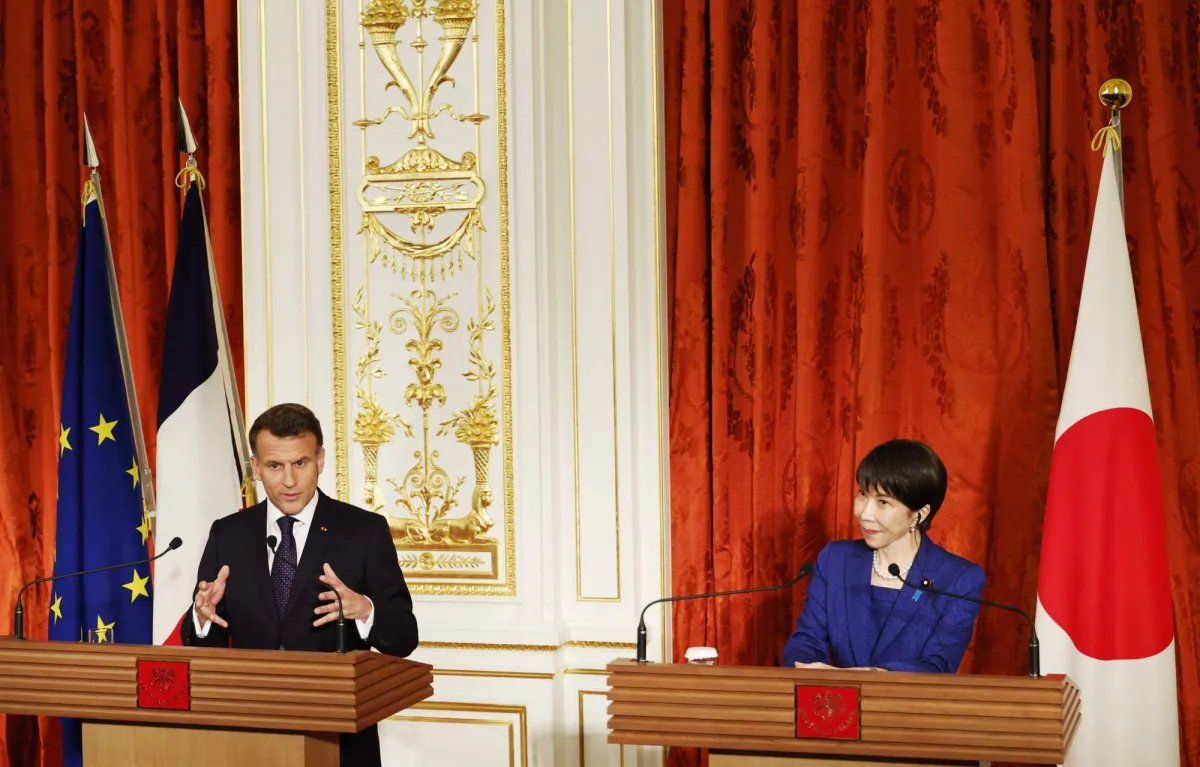
Japan and France agreed on Wednesday to strengthen coordination in addressing the repercussions of the U.S.-Israeli war on Iran, with an emphasis on reopening the Hormuz Strait to commercial shipping. This agreement was made during a meeting between Japanese Prime Minister Sanae Takichi and French President Emmanuel Macron in Tokyo, where various security and economic issues were discussed.
Takichi highlighted the importance of solidifying relations between the two countries amid challenging international conditions, stressing the need to enhance cooperation to tackle shared challenges. Macron expressed his support for the idea of restoring freedom of navigation in the Hormuz Strait, which is a vital artery for oil and natural gas flows.
Details of the Agreement
This move comes at a time when both Japan and France are suffering from the ongoing war in the Middle East, which has entered its fifth week. This war has led to rising energy prices, directly impacting global economies. The Hormuz Strait is a critical transit point, through which approximately 20% of the world's total oil and natural gas flows pass.
Japan imports about 90% of its oil needs from the Middle East and has already begun to draw on its oil reserves to mitigate the effects of rising prices. In this context, Macron emphasized the necessity of working together to restore security in the region.
Background & Context
Historically, the Hormuz Strait is a strategic area that has witnessed numerous political and military crises. In recent years, tensions between Iran and the United States have escalated, exacerbating the situation in the region. Several countries, including France and Japan, have attempted to play a mediating role in these crises.
Japan, which adheres to a policy of non-involvement in military conflicts, has expressed readiness to consider sending mine sweepers to the region, although any participation would remain limited under its constitution. On the other hand, France seeks to coordinate its efforts with other countries to find lasting solutions to the crises in the area.
Impact & Consequences
This agreement between Japan and France underscores the importance of international cooperation in addressing global crises. As the war continues, pressures on global economies may increase, necessitating a coordinated response from major countries. Moreover, reopening the Hormuz Strait could contribute to stabilizing energy prices, which is vital for oil-importing nations.
Furthermore, these steps may enhance security cooperation between Japan and France, potentially opening new avenues for collaboration in other fields such as technology and renewable energy.
Regional Significance
Arab countries are directly affected by the situation in the Hormuz Strait, as this area is a key gateway for oil exports. Any escalation in tensions could impact oil supplies and energy prices in the region. Therefore, Japan and France's efforts to reopen the strait represent a positive step towards regional stability.
In conclusion, this cooperation between Japan and France reflects the importance of joint action in facing global challenges and indicates the need for effective strategies to ensure security and stability in the Hormuz Strait region.