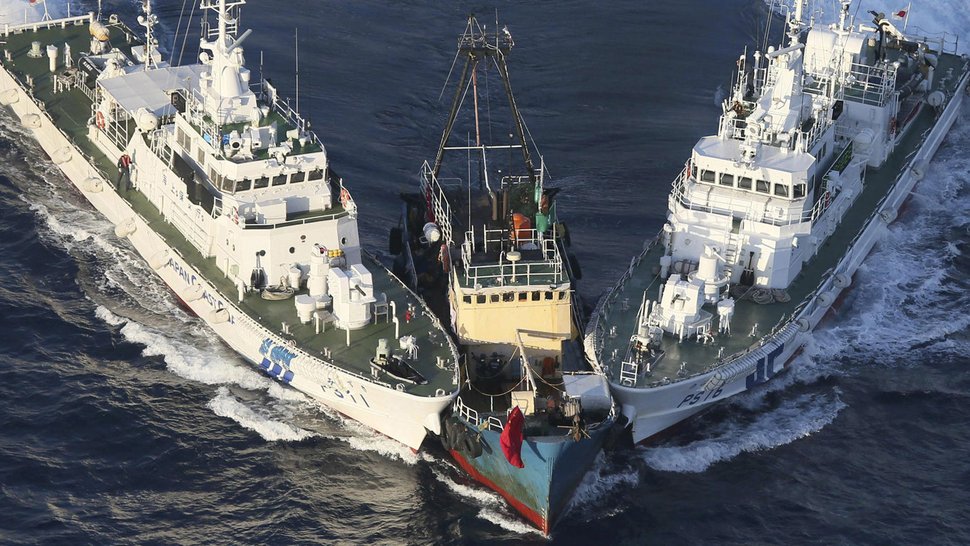
On Tuesday, Japan's coast guard ordered a Chinese ship to cease its research operations near the disputed Senkaku Islands, emphasizing that Tokyo had not authorized such actions. The Senkaku Islands, known as Diaoyu in China, are located between Taiwan and Japan's Okinawa and are administered by Japan, although Beijing claims sovereignty over them.
This directive came after the Japanese coast guard detected the Chinese vessel Xiayang Hong 22 approximately 57 kilometers northwest of the Senkaku Islands. The ship had entered Japan's exclusive economic zone around the islands on Monday, where it was observed dropping objects resembling pipes and wires into the sea, according to a coast guard spokesperson.
Details of the Incident
The Japanese coast guard announced that it had communicated with the Chinese ship via radio, demanding that it halt its operations, indicating that scientific research in the ocean without Japan's approval is not permitted. This incident is part of a series of confrontations between Japanese and Chinese vessels, with Chinese ships frequently present in the waters near the islands.
It is noteworthy that Japanese Prime Minister Fumio Kishida heightened tensions between the two countries when he made statements regarding Taiwan last November, angering Beijing. Kishida suggested that Tokyo might intervene militarily if Taiwan were attacked, which China considers part of its territory.
Background & Context
The roots of the dispute over the Senkaku Islands date back decades, with these islands being a focal point of tensions between Japan and China. These tensions have escalated in recent years, particularly with the increase in Chinese military activities in the region, raising concerns for both Japan and the United States, which is an ally of Tokyo.
The Senkaku Islands are believed to be rich in marine resources, increasing the importance of controlling them. The region has witnessed numerous incidents between Japanese and Chinese vessels, reflecting the ongoing tensions between the two nations.
Impact & Consequences
This incident could lead to an escalation of tensions between Japan and China, as both countries exchange accusations regarding violations of sovereignty. These tensions may affect economic relations between the two nations, as China and Japan rely on each other for trade.
Additionally, military statements from Japan could provoke reactions from China, increasing the likelihood of military escalation in the region. This situation is concerning for many countries in the area, including the United States and South Korea.
Regional Significance
The tensions between Japan and China hold particular significance for the Arab region, as they could impact regional stability. Furthermore, the economic relations between Arab countries and China may be affected by these tensions, especially given the increasing reliance on trade with Beijing.
Ultimately, the relationship between Japan and China remains under scrutiny as the world watches how these situations evolve and their impact on regional and international security.