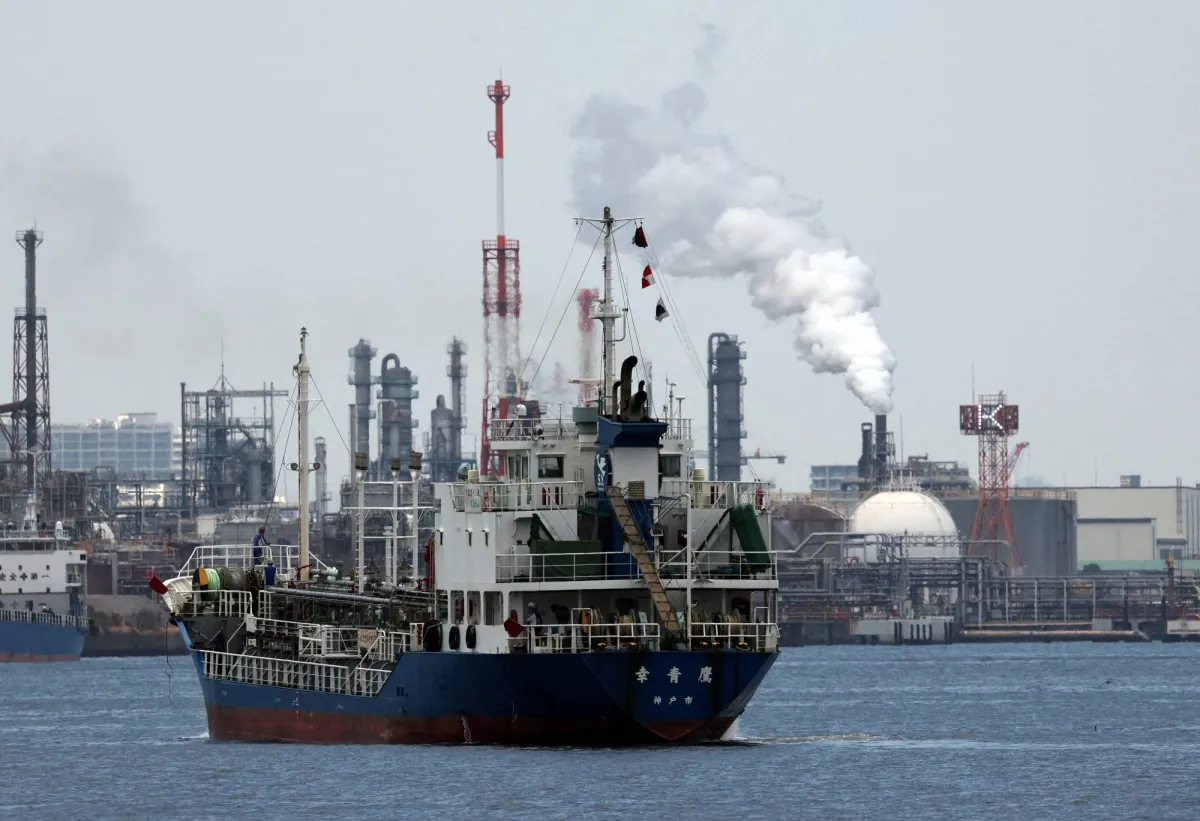
A document obtained by Reuters on Friday revealed that the Japanese Ministry of Industry has asked local wholesalers to adopt Brent crude prices instead of the Dubai benchmark when setting gasoline prices. This step aims to rein in the soaring prices that the Japanese market is currently experiencing, especially under the prevailing economic conditions.
This initiative is part of a series of measures Japan has taken to address the repercussions of the Iranian war, as the country depends on the Middle East for over 90% of its oil needs. These measures include a partial release of oil reserves and consideration of intervention in the crude oil futures market to address the weakening yen.
Details of the Event
Brent crude futures are currently trading at around $100 per barrel, which is lower than Dubai crude, making the switch to Brent a logical choice to mitigate rising gasoline prices. The leaked document indicates that the Japanese government is suggesting wholesalers continue to price gasoline based on Brent crude prices going forward. Although these guidelines are not legally binding, companies typically adhere to them.
In global markets, oil prices were trending towards a weekly decline after U.S. President Donald Trump extended the deadline for launching attacks on Iranian power stations by 10 days. However, investor concerns remain high, as a swift resolution to the conflict seems elusive. By 06:08 GMT, Brent crude futures fell by four cents to $107.97 per barrel, while U.S. West Texas Intermediate futures dropped by 40 cents to $93.65 per barrel.
Background & Context
Oil prices have been significantly affected by the Iranian war, with approximately 11 million barrels per day being withdrawn from global supplies. The International Energy Agency has described the crisis as worse than the oil shocks of the 1970s and the war between Russia and Ukraine. In this context, analysts at Macquarie Group have stated that oil prices could decrease if the war ceases soon, but they will remain at pre-conflict levels and could rise to $200 if the war continues until the end of June.
Meanwhile, European stocks have declined amid uncertainty regarding the war's impact on inflation and global economic growth. The Stoxx 600 index fell by 0.2%, with media stocks dropping by 1.4%, reflecting ongoing market concerns.
Impact & Consequences
Japan is one of the countries most vulnerable to fluctuations in crude oil prices, making it heavily impacted by rising prices. The closure of the Strait of Hormuz, through which about 90% of Japan's oil shipments pass, complicates the situation further. Additionally, rising oil prices typically exacerbate domestic inflation, putting additional pressure on the Bank of Japan to tighten monetary policy.
In this context, yields on Japanese government bonds have risen, with five-year bond yields reaching record levels. Concerns about inflation have led investors to reassess the trajectory of interest rate hikes, increasing pressure on the market.
Regional Significance
Arab countries are directly affected by fluctuations in oil prices, as many of these nations rely on oil exports as a primary source of revenue. Any rise in oil prices could lead to increased oil revenues, but at the same time, it may impact economic growth in oil-importing countries. Furthermore, the ongoing conflict in the Middle East threatens market stability and increases uncertainty in the region.
In conclusion, the shift to Brent crude pricing may represent a positive step for Japan in addressing current economic challenges, but it also reflects the global challenges facing oil markets amid ongoing conflicts.