Japanese government bond yields have surged to an unprecedented level of 2.395%, marking the highest point in nearly three decades, as of last Friday. This increase is occurring against a backdrop of escalating fears regarding inflation and economic slowdown, especially with the ongoing war in the Middle East.
The yield on the two-year bond, which is significantly influenced by interest rates set by the Bank of Japan, reached 1.385%, a level not seen since May 1995. It is important to note that yields move inversely to bond prices, meaning that rising yields reflect a decline in demand for government bonds.
Details of the Event
In a highly anticipated speech, U.S. President Donald Trump reiterated threats against Iranian installations without providing a timeline for ending hostilities. Since the outbreak of the war on February 28, initiated by a joint U.S.-Israeli airstrike, conditions in the region have deteriorated, leading to a sharp increase in petroleum product prices.
The Japanese economy heavily relies on imported energy, making it vulnerable to fluctuations in crude oil prices. Inflation risks are eroding the real value of fixed bond payments, increasing pressure on the central bank to tighten monetary policy in an effort to curb rising prices.
Background & Context
Historically, Japan has experienced periods of low inflation; however, the current geopolitical events, including the war in the Middle East, could lead to drastic changes in the economic landscape. Ataro Okumura, chief strategist at SMBC Nikko Securities, noted that there is a possibility of lower interest rates due to buying during price declines, but significant reductions are unlikely given the expectations of accelerating inflation.
The yield on the 20-year Japanese government bond rose by 2.5 basis points to 3.290%, while the yield on the 30-year bond increased by 2 basis points to 3.7%. In this context, Noriyatsu Tangi, chief bond strategist at Mizuho Securities, warned that the government's adoption of an expansionary fiscal policy could significantly impact long-term interest rates.
Impact & Consequences
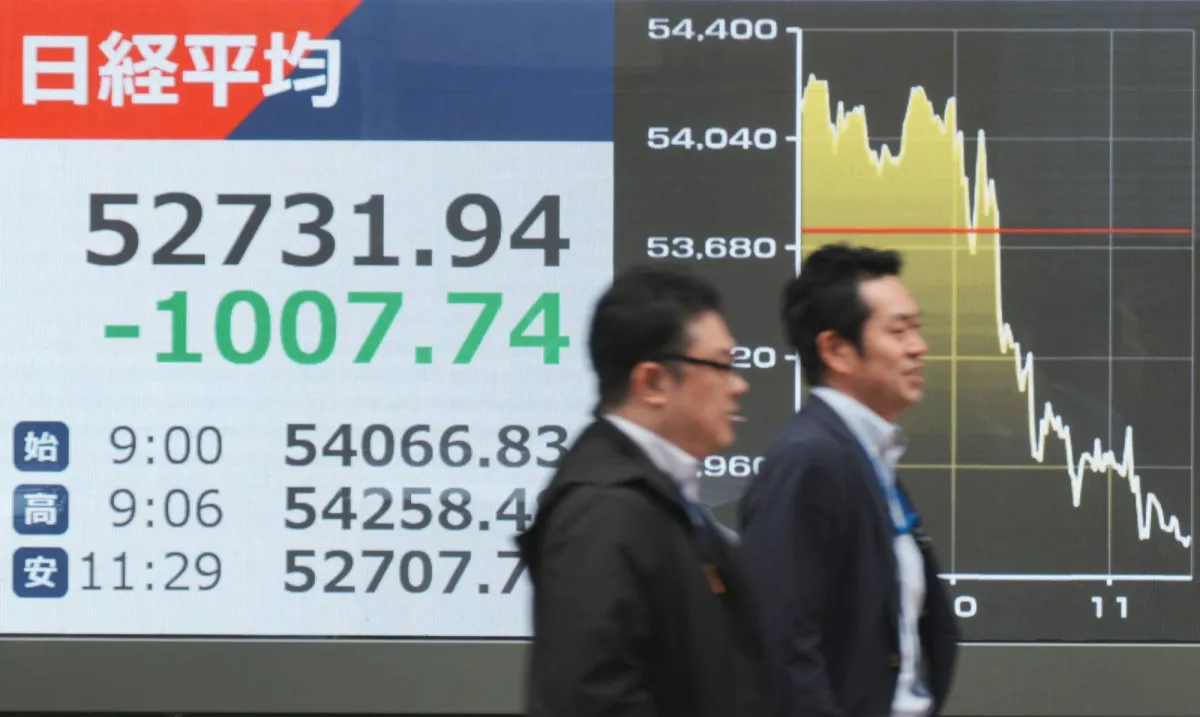
Under these circumstances, the Japanese Nikkei stock index rose on Friday, driven by gains in artificial intelligence companies, closing at 53,123.49 points. Nevertheless, the index still suffered a 0.47% decline over the week. The broader Topix index increased by 0.93% to 3,645.19 points.
Countries worldwide are striving to contain the repercussions of the sharp rise in energy costs, implementing urgent measures to protect consumers and secure supplies. In this context, India, South Korea, and China have taken multiple steps to ensure the stability of domestic supplies, while Japan is seeking to enhance the use of coal-fired power plants.
Regional Significance
Concerns are mounting regarding the implications of these conditions on the Arab region, where many countries rely on energy imports. Continuous increases in oil prices could heighten inflationary pressures, adversely affecting the economies of Arab nations. Additionally, ongoing geopolitical tensions may impact the stability of financial markets in the region.
In conclusion, the economic situation in Japan and globally remains under close observation, as governments seek to implement effective measures to address the challenges posed by current events.