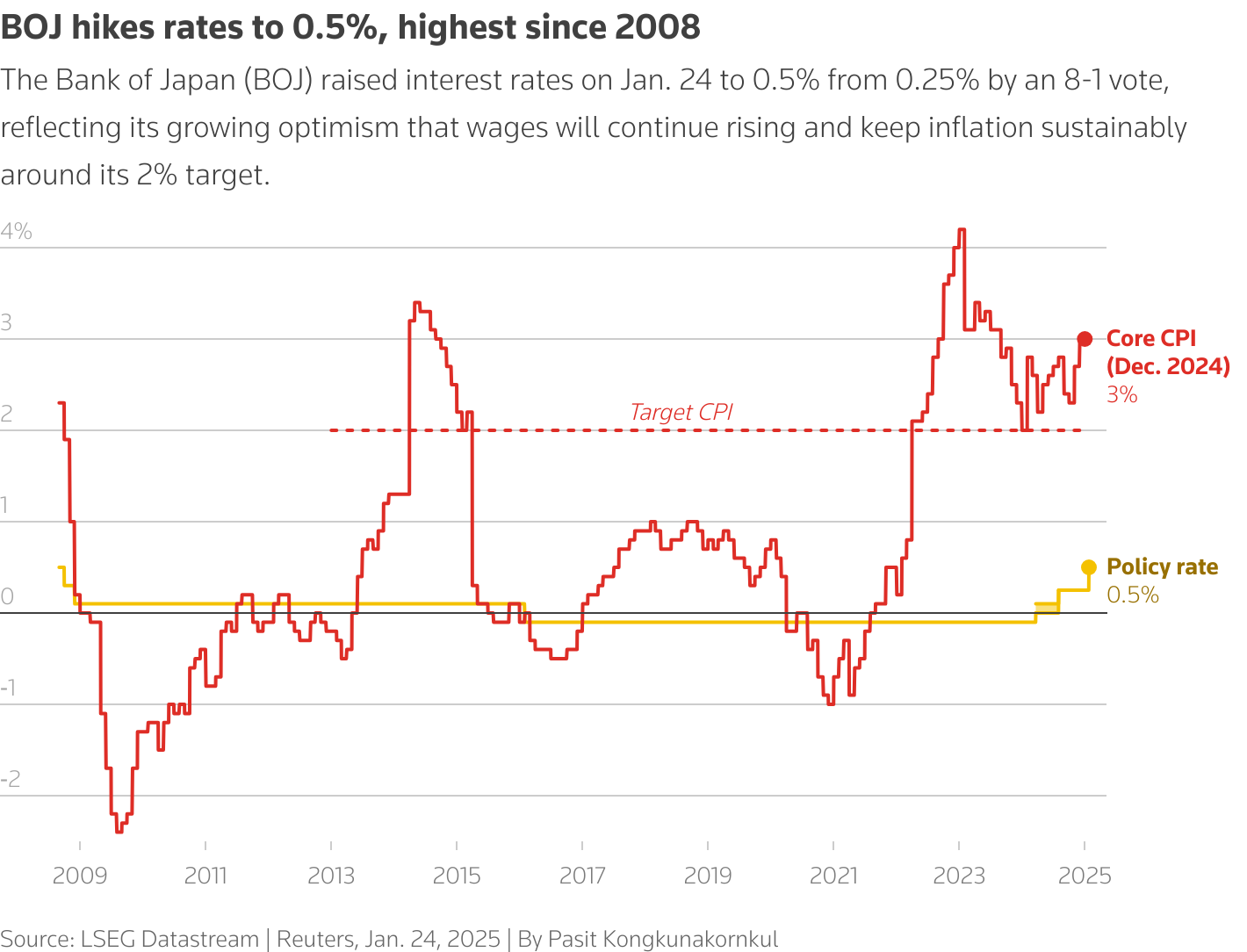
The Japanese central bank announced in its recent meeting its decision to keep the main interest rate unchanged at 0.1%, amidst volatile global economic conditions. This decision is made as fears grow regarding the impact of the ongoing war in Iran on global markets, along with a noticeable rise in energy prices.
This step serves as a confirmation of the cautious approach taken by the Japanese central bank, which aims to support the local economy in the face of external challenges. The bank's governor, Haruhiko Kuroda, indicated that the economic situation remains fragile, necessitating the maintenance of a flexible monetary policy.
Details of the Decision
While global markets are experiencing sharp fluctuations, the Japanese economy is facing multiple challenges, including rising energy costs due to geopolitical conflicts. Reports have shown a significant increase in oil and gas prices, adversely affecting inflation in Japan.
The central bank also pointed out that risks surrounding the global economy remain, including geopolitical tensions and their implications for international trade. It emphasized the importance of closely monitoring developments to ensure appropriate decisions are made in a timely manner.
Background & Context
Historically, Japan has suffered from prolonged periods of economic stagnation, prompting the central bank to adopt unconventional measures to support growth. Since 2016, the bank has embraced a negative interest rate policy as part of its efforts to stimulate the economy, reflecting the ongoing challenges faced by the country.
It is noteworthy that the war in Iran has significantly impacted oil prices, increasing inflationary pressures on energy-importing countries like Japan. This situation complicates the central bank's ability to make bold decisions without negatively affecting the local economy.
Impact & Consequences
The decision by the Japanese central bank is expected to influence global financial markets, potentially leading to increased volatility in currency and commodity prices. Additionally, persistently high energy prices may pressure Japanese companies, possibly resulting in reduced investments and economic growth.
Moreover, maintaining low interest rates may encourage borrowing, which could help support the economy in the short term. However, the risks associated with inflation may remain, necessitating caution from policymakers.
Regional Significance
Energy prices are a key factor affecting the economies of Arab countries, many of which rely on oil and gas exports. Therefore, any changes in energy prices due to geopolitical events could directly impact the Arab economy.
Furthermore, the continuation of the war in Iran may escalate tensions in the region, potentially affecting the economic and political stability of neighboring countries. Thus, monitoring developments in Japan could be of significant importance to Arab nations.