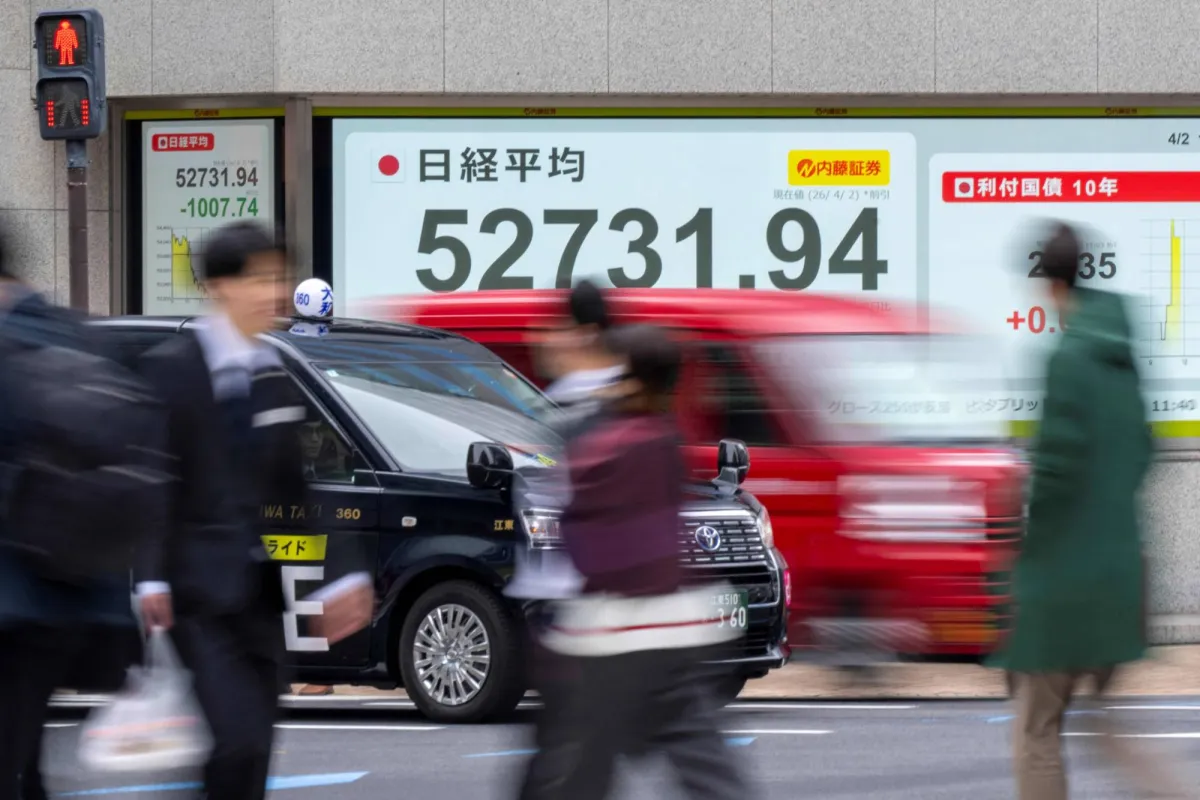
The Japanese Nikkei index ended trading on Monday with a rise of 0.55%, reaching 53,413.68 points, disregarding U.S. President Donald Trump's recent threats to target Iranian infrastructure. Conversely, the broader Topix index fell by 0.01%, closing at 3,644.8 points.
Trump warned that the United States could target Iranian power stations and bridges if the strategic Strait of Hormuz is not reopened. Nevertheless, he hinted at the possibility of a diplomatic breakthrough, which helped to ease investor concerns.
Market Reactions to Trump's Threats
Investors in the Japanese market dismissed Trump's threats, with some analysts suggesting that the market has begun to anticipate a U.S. withdrawal and the start of post-war negotiations. Takamasa Ikeda, a senior portfolio manager at GCI Asset Management, stated, "Trump has become like the boy who cried wolf... If he were serious about attacking Iranian facilities, he would have done it already."
The Nikkei index continued to rise for the third consecutive session, but investors began selling stocks as soon as the index reached the psychological level of 54,000 points. According to Kazuwaki Shimada, chief strategist at Iwai Cosmo Securities, the Nikkei index shows greater resistance to rising oil prices, as the market shifts its focus towards the growth of artificial intelligence stocks.
Background & Context
These developments come at a sensitive time, as tensions in the Middle East have escalated following an increase in hostilities between the United States and Iran. Trump's threats come at a critical moment, as the Strait of Hormuz is a vital artery for about one-fifth of global energy supplies.
Global markets have also reacted variably, with Indian stocks declining amid fears of a potential escalation in the conflict, while oil prices surged to record levels. This tension directly impacts financial markets, keeping investors on alert.
Impact & Consequences
The rise of the Nikkei index reflects a sense of cautious optimism among investors, despite political threats. At the same time, the decline in the Topix index indicates concerns regarding broader sectors of the Japanese economy.
Additionally, rising oil prices could affect production costs in Japan, potentially leading to inflationary pressures in the future. Analysts expect these pressures to persist, which may prompt the Bank of Japan to adopt more cautious monetary measures.
Regional Significance
The impact of these events extends to the Arab region, where Arab countries are closely monitoring the situation. Tensions between the United States and Iran could lead to increased instability in the region, affecting oil prices and local economies.
Under these circumstances, Arab countries must take proactive steps to ensure the stability of their financial markets, especially given their heavy reliance on oil revenues. Repeated threats could lead to market volatility, necessitating flexible investment strategies.
In conclusion, amid these volatile conditions, investors remain vigilant, with eyes turned towards political and economic developments that could impact both global and local markets.