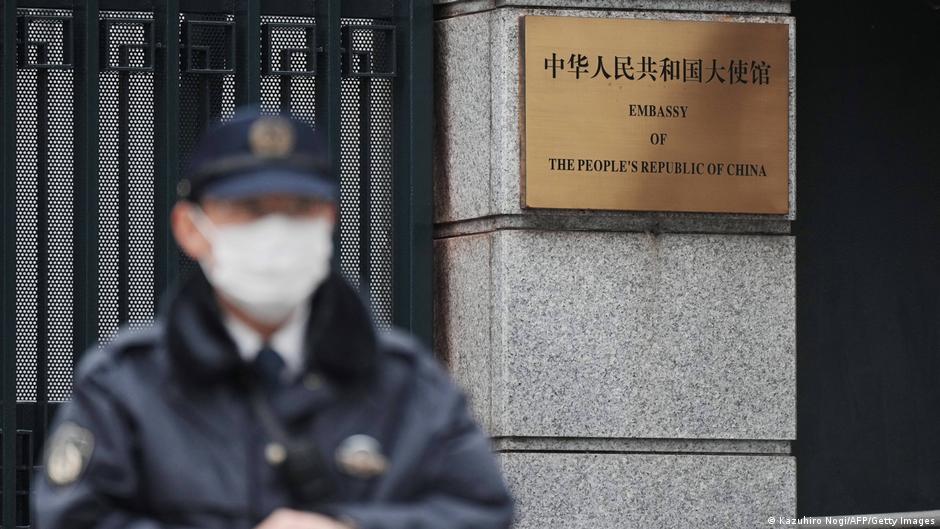
In a controversial incident, Japanese authorities have arrested a member of the Japan Self-Defense Forces after he stormed the Chinese embassy in Tokyo, provoking strong reactions from Beijing. The incident, which occurred on Tuesday morning, comes at a time when relations between Japan and China are under severe strain, particularly due to issues related to Taiwan.
Japanese government spokesman, Minoru Kihara, described the incident as "regrettable," noting that the arrested soldier was expected to adhere to the law. Kihara confirmed that police have launched an investigation to clarify the circumstances of the incident and that measures have been taken to enhance security at the embassy.
Details of the Incident
The soldier, who is 23 years old, climbed the embassy wall and was detained around 9 AM local time. According to reports, the soldier was armed with a knife and told police that he hoped to meet with the ambassador to request that he cease making aggressive statements. He also added that if his request was denied, he intended to "surprise" the ambassador by committing suicide.
This incident has raised significant concern in China, where the spokesperson for the Chinese Foreign Ministry, Lin Jian, expressed shock at the event and lodged a strong protest with the Japanese government. Beijing has demanded a thorough investigation and punishment for the soldier involved.
Background & Context
Historically, relations between Japan and China have been strained due to a range of issues, including territorial disputes and a painful shared history. In recent months, these tensions have escalated following statements from Japanese Prime Minister Sunai Takahashi regarding Taiwan, where he indicated the possibility of military intervention if the island were attacked by China. Beijing considers Taiwan a part of its territory, further complicating this sensitive issue.
In this context, the storming of the Chinese embassy represents an unprecedented escalation in tensions between the two countries, illustrating the fragility of diplomatic relations under current circumstances. The incident also reflects the security challenges Japan faces amid rising regional tensions.
Impact & Consequences
This incident could have significant repercussions for Japan-China relations, potentially leading to an escalation of diplomatic tensions and increasing distrust between the two parties. The Japanese government is expected to take additional steps to enhance security at foreign embassies, especially given the rising concerns over potential attacks.
Moreover, this incident may impact domestic politics in Japan, as it could be used by certain political factions to highlight the need for strengthening national security. Additionally, reactions from China may exacerbate tensions in the region, complicating efforts for peace and stability.
Regional Significance
This incident underscores the importance of international relations and their impact on regional security. As Arab nations seek to strengthen their ties with both Japan and China, the rising tensions between these powers could affect Arab interests, particularly in trade and investment.
Furthermore, events in East Asia may have implications for regional security in the Middle East, potentially leading to shifts in the strategies of major powers in the area. It is crucial for Arab nations to closely monitor these developments, as changing circumstances may require new strategic positions.