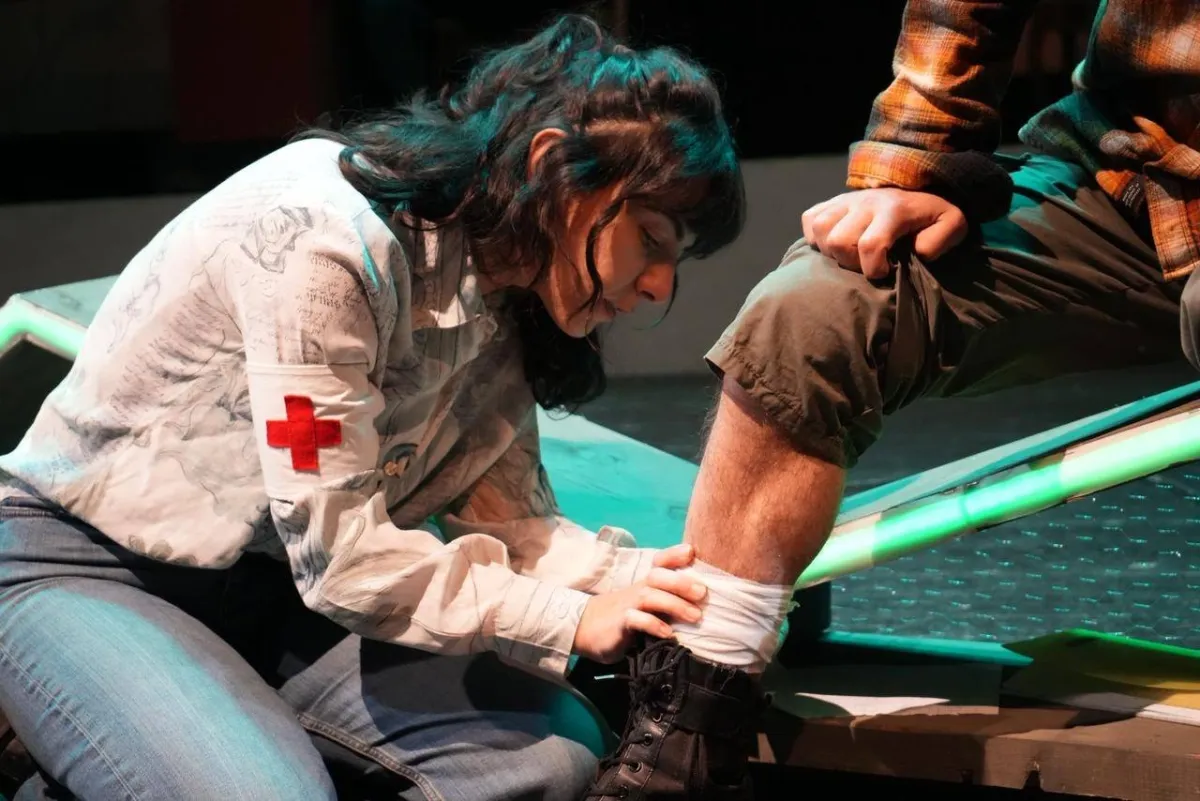
Artist Joanna Khalaf is preparing to present her new play 'Ama An Sit' in Paris, where she highlights the rights of Lebanese women, especially their right to grant nationality to their children. Joanna, who returned to Lebanon after a period of residence in France, emphasizes the importance of this work in expressing women's issues in her community.
In an interview with 'Asharq Al-Awsat', Joanna states, 'This is a situation I personally live; I cannot grant Lebanese nationality to my son.' The play reflects the struggles of many Lebanese women who face legal and social challenges in this context.
Event Details
The play revolves around the character 'Chloe', a girl born to a Lebanese mother and a French father, who decides to move to Lebanon after her father's death. 'Chloe' faces legal challenges that prevent her from obtaining Lebanese nationality, putting her in a difficult reality she did not expect. Joanna plays this role within a comedic framework, but she insists that the work carries an important social and humanitarian message.
Joanna Khalaf, who gained fame through her role in the play 'Kidhbat Bayda', expresses her passion for returning to Lebanon and presenting artistic works that reflect the reality of society. She says, 'The play has become for me an act of cultural resistance that has pushed me to stay in Lebanon, despite the recent war.'
Background & Context
Historically, women in Lebanon suffer from legal restrictions that prevent them from granting nationality to their children, a topic that sparks widespread debate in Lebanese society. This issue is not new, but it has become more apparent in recent years with the increasing awareness of women's rights. Through her play, Joanna sheds light on this issue and calls for changing unjust laws.
Joanna believes that art can be an effective means for social change, stating, 'The theater is a platform to express issues that concern society, and we must use it to raise awareness.' Through her work, she hopes to contribute to changing the negative perception of women's rights in Lebanon.
Impact & Consequences
Joanna hopes her play will stimulate discussion about women's rights in Lebanon and raise awareness about the social issues women face. In light of the current circumstances, where the country is suffering from multiple crises, highlighting these issues becomes more important than ever.
She says, 'It is painful that the Lebanese do not learn from their past; we are still, from that era until today, going in the same vicious circle.' These words reflect the ongoing challenges faced by women in Lebanon and emphasize the necessity of working towards changing unjust laws and practices.
Regional Significance
The issue of women's rights in Lebanon is part of a larger issue that encompasses all Arab countries, where women in many nations suffer from legal and social restrictions. Through her works, Joanna hopes to inspire other artists in the region to work on similar issues and contribute to promoting women's rights in the Arab world.
In closing, Joanna emphasizes the importance of art in changing society, stating, 'We must use our voices to make a difference.' Her new play is not just an artistic work, but a call for change and a struggle for women's rights in Lebanon and the Arab world.