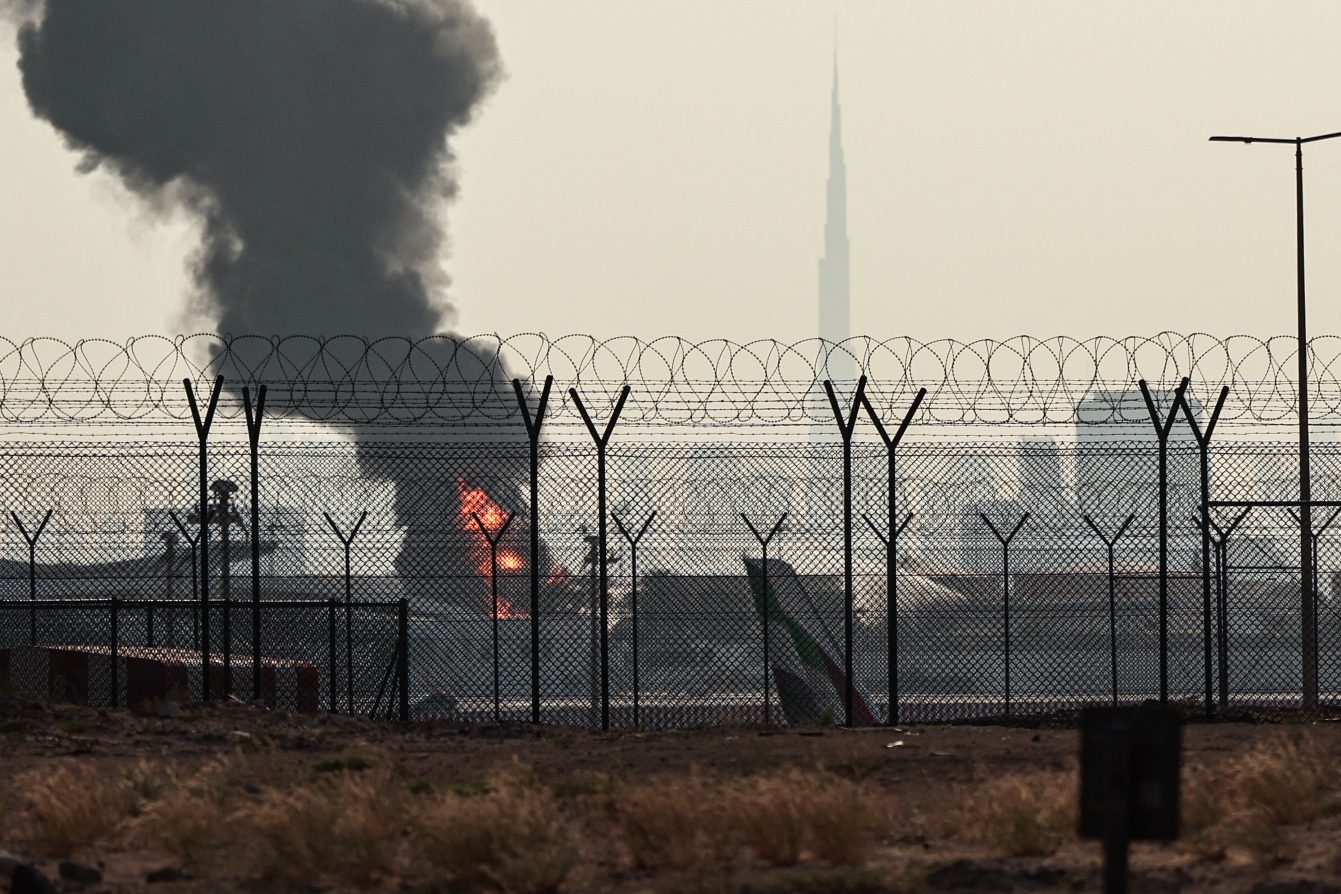
A joint airstrike by the United States and Israel targeted an international airport in southwest Iran, with the Iranian state news agency (IRNA) reporting that the attack occurred on Sunday. The Deputy Governor of Khuzestan Province, Valiallah Hayati, confirmed that Shahid Qasem Soleimani International Airport was assaulted by American and Israeli forces.
This airstrike comes at a highly sensitive time, as tensions escalate in the region between Iran and Western countries, particularly the United States. The attack has elicited mixed reactions in political and media circles, with some viewing it as a serious escalation in the ongoing conflict.
Details of the Airstrike
According to reports, the airstrike targeted the airport named after the former commander of the Quds Force, Qasem Soleimani, who was killed in a U.S. strike in 2020. This airport is considered a strategic point in southwest Iran, serving both civilian and military purposes. While the attack did not result in human casualties, the damage to the airport may affect air traffic in the region.
This airstrike occurs amidst rising tensions between Iran and the United States, as both countries exchange accusations regarding support for armed groups in the region. This attack highlights the complexity of the security situation in the Middle East, where regional and international interests increasingly overlap.
Background & Context
Since the United States withdrew from the Iranian nuclear agreement in 2018, relations between Iran and the West have significantly deteriorated. Economic sanctions imposed on Iran have exacerbated domestic conditions, prompting the Iranian government to seek to bolster its military strength. In this context, airstrikes like this are seen as part of a broader strategy aimed at undermining Iranian influence in the region.
Historically, Iran has always been a target of U.S. and Israeli airstrikes, especially given its support for armed groups in Iraq and Syria. This new attack reflects the continuation of this policy and indicates that the United States and Israel are prepared to confront any potential threats from Iran.
Impact & Consequences
This airstrike could escalate tensions in the region, as Iran may respond in various ways, either by enhancing its military capabilities or by supporting armed groups in Iraq and Syria. Additionally, this attack may provoke reactions from Iran's allies in the region, further complicating the security landscape.
Moreover, these events could impact ongoing nuclear negotiations between Iran and major powers, as Iran might view this airstrike as evidence of the futility of dialogue with the West. Consequently, these developments could lead to increased tensions in international relations.
Regional Significance
Events in Iran have a direct impact on security and stability in the Arab region. The tensions between Iran and Western countries could lead to escalations in conflicts in Iraq, Syria, and Lebanon, where Iran-backed groups are present. Any Iranian response could also affect maritime navigation in the Arabian Gulf, threatening the economic interests of Arab nations.
Ultimately, the situation in the region remains volatile, and Arab countries must be prepared to face any repercussions that may arise from escalating tensions between Iran and the West.