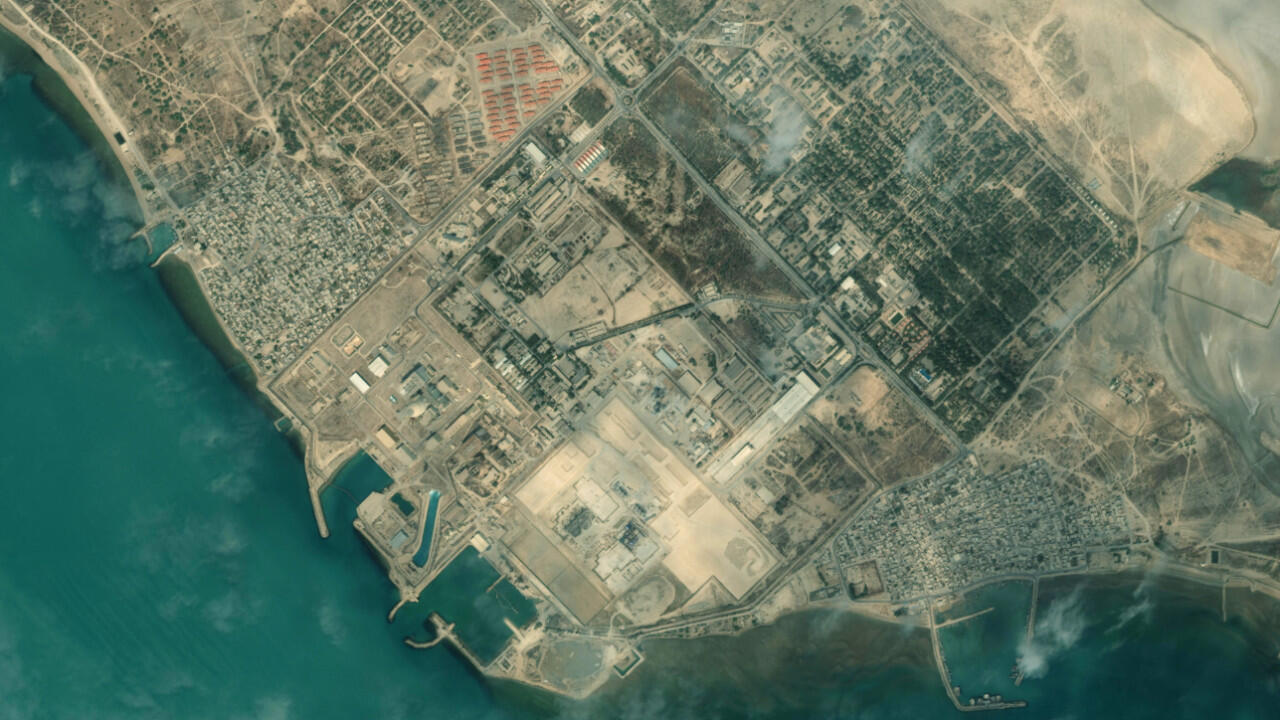
A joint US-Israeli strike on Saturday targeted the vicinity of Iran's Bushehr nuclear power plant, leading to the death of a security personnel, according to official Iranian media reports. Iranian Foreign Minister Abbas Araghchi warned in a message to the United Nations about the potential risks of radiation leaks as a result of this attack.
The Bushehr nuclear power plant, officially inaugurated in September 2013, is considered Iran's only operational civilian nuclear facility. Russian technical teams assist in its operation, and recently, Russia announced the evacuation of 198 workers from the plant, who are employees of the Rosatom nuclear agency.
Details of the Incident
This strike comes after the Bushehr plant had previously been subjected to three attacks since the onset of the conflict in the Middle East on February 28. The plant houses a reactor with a capacity of 1,000 megawatts, making it a strategic target in the region. Reports indicated that the recent attack resulted in the death of a security personnel, raising concerns about the safety of the facility.
The history of the Bushehr plant dates back to 1975, when the project was awarded to the German company Siemens, but work was halted due to the Islamic Revolution in 1979 and the Iran-Iraq War. In the late 1980s, Iran sought to revive the project, but faced international pressure that led to Siemens' withdrawal.
Background & Context
In 1995, Russia secured a contract to build a pressurized water reactor in Bushehr, but the project was delayed for over 11 years due to financial issues and American pressure. Washington feared that the operation of the plant would enhance Iran's ability to develop nuclear weapons. However, Moscow managed to complete the project after reaching an agreement with Tehran to provide nuclear fuel.
The Bushehr plant is considered less dangerous than other facilities such as Natanz and Arak, which Iran is accused of using to develop nuclear weapons, a claim Tehran denies. Nonetheless, concerns persist regarding Iran's ability to enrich uranium, with enrichment levels reaching 60%, close to the threshold required for nuclear weapon production.
Impact & Consequences
The recent attack on the Bushehr plant reflects escalating tensions in the region and heightens concerns about nuclear security. These events may affect relations between Iran and Western countries, especially amid ongoing American pressure to prevent Iran from developing its nuclear capabilities.
There are growing fears that such pressures could lead to military escalation in the region, potentially impacting the stability of the Gulf Cooperation Council states. Gulf countries have warned of the potential risks of radiation leaks, particularly in an area prone to earthquakes.
Regional Significance
The Bushehr nuclear power plant is located near the Gulf Arab states, making it a concern for countries like Kuwait and Qatar. These nations have expressed worries about the possibility of a radiation leak due to an earthquake or an attack. In April 2021, a 5.8 magnitude earthquake struck the Bushehr area, but the plant was unaffected, raising questions about the reliability of safety at the facility.
In conclusion, the Bushehr nuclear power plant remains a focal point in Iran's international relations, and concerns about nuclear security continue to impact regional stability.