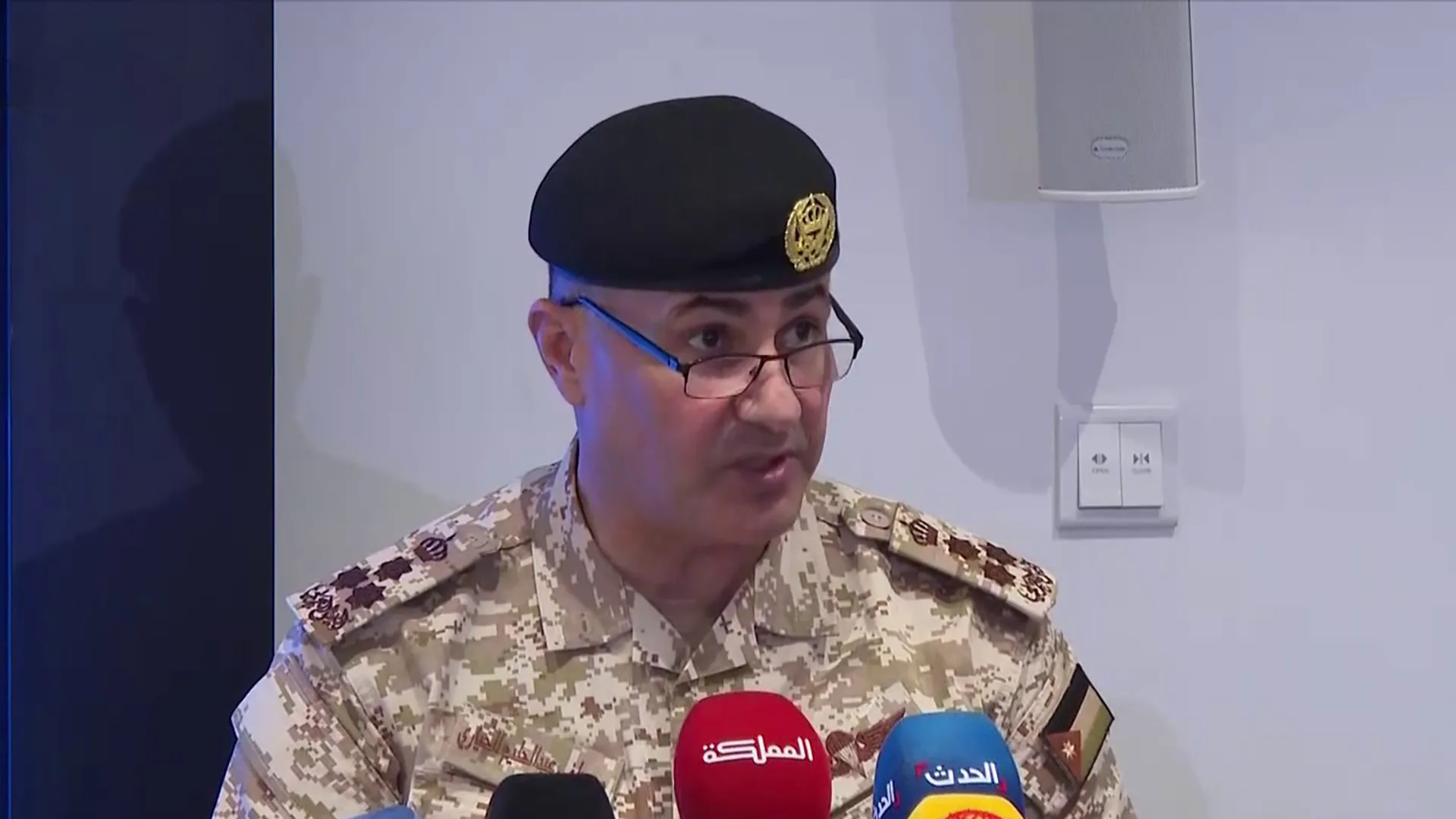
The Jordanian Army has confirmed that Iran and its affiliated factions are targeting the kingdom without justification. The spokesperson for the Jordanian Armed Forces, Brigadier General Mustafa Al-Hiyari, stated that these attacks are not random but are aimed at vital institutions within the country.
During a press conference held in Amman, Al-Hiyari explained that the Jordanian Armed Forces have successfully intercepted 261 missiles and drones since the escalation began, while 20 missiles and drones could not be intercepted, indicating that the failure rate of the missiles used in the current crisis has exceeded 25%.
Details of the Incident
Al-Hiyari reported that Iran and its affiliated factions are targeting the kingdom with missiles and drones, resulting in injuries and material damage. He noted that the increased failure rate of the missiles raises the risk of them falling in unintended areas, including Jordanian territory, necessitating their interception in the eastern desert regions away from populated areas.
He also clarified that drones flying at low altitudes are more susceptible to falling before reaching their targets due to weather conditions and electronic jamming. He emphasized the need to deal with and intercept them immediately upon detection, especially near residential areas.
Background & Context
Amid rising regional tensions, Al-Hiyari confirmed that the Jordanian Armed Forces have developed a comprehensive system to deal with drones, which includes early detection, electronic jamming, and direct interception, along with enhancing coordination among various military formations and leveraging operational expertise. He explained that some drones, due to their size, speed, and altitude, still pose a challenge, prompting an increase in surveillance at border fronts.
Al-Hiyari also stated that the armed forces are closely monitoring threats from armed factions in neighboring countries, stressing the Jordanian Army's capability to address them decisively. He pointed out that supply chains and food security have not been significantly affected so far, thanks to proactive measures.
Impact & Consequences
Al-Hiyari urged citizens not to hoard food supplies to avoid disrupting markets, highlighting the role of the military consumer institution in providing essential goods. In the same context, the spokesperson for the Public Security Directorate, Colonel Amer Al-Sartawi, stated that the directorate has raised its readiness to the highest levels and activated emergency plans in coordination with the armed forces and the National Center for Security and Crisis Management.
Al-Sartawi added that civil defense and public security personnel have dealt with 585 reports of missile or shrapnel falls across various governorates since the escalation began, resulting in 28 injuries, most of which were minor, in addition to damage to 59 homes and 31 vehicles, along with 16 incidents affecting public property.
Regional Significance
Since February 28, the United States has been launching extensive attacks on Iran under the pretext of eliminating the threat posed by its nuclear and missile programs. Iran retaliates by targeting Israel with missiles and drones, as well as what it describes as American bases and interests in the region, complicating the security situation and affecting the stability of neighboring countries.
In conclusion, the situation in Jordan remains under observation, as the armed forces seek to enhance their defensive capabilities in the face of increasing threats while maintaining internal security and stability.