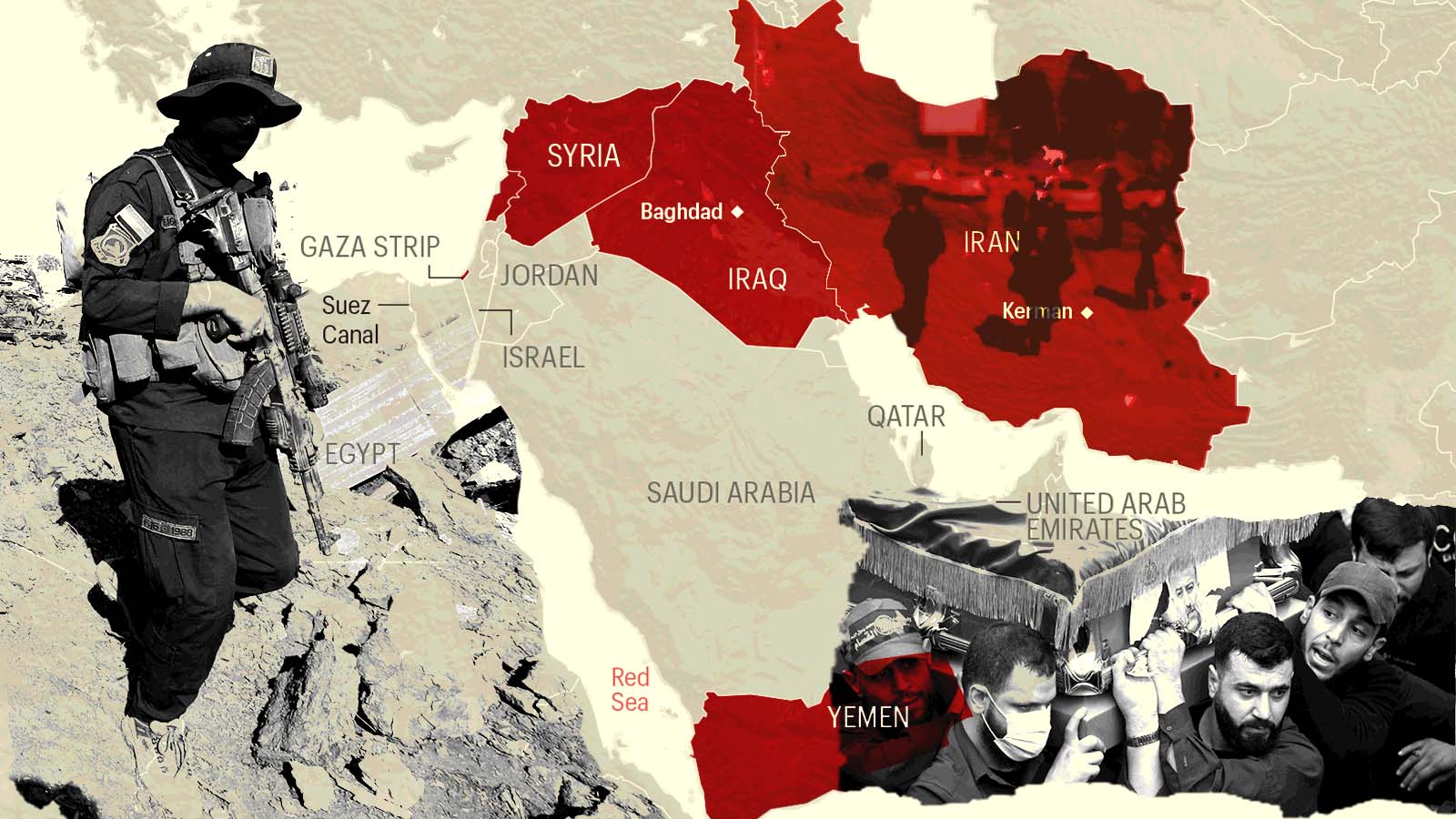
Challenges are escalating for journalists covering the ongoing war in the Middle East, as the French newspaper Le Monde reveals significant difficulties related to security restrictions and access to the field, in addition to the proliferation of fake images generated by artificial intelligence.
With the risk of military intervention in the region escalating since mid-February, many news channels have begun sending teams of correspondents to countries such as Turkey, Iraq, Lebanon, Israel, and the Gulf States. As American and Israeli strikes commenced on February 28, the war in the Middle East has dominated news broadcasts around the clock.
Details of the Event
Despite the significance of these events, reporting them is not straightforward, as journalists face multiple obstacles in their efforts to cover the happenings. The conflict in Iran, unlike the war in Ukraine, has rapidly extended to several countries in the Middle East, leading some nations to temporarily close their airspaces, complicating journalists' missions.
For instance, a team from the French channel BFM TV had to drive approximately 15 hours from Istanbul to Erbil in Iraq to cover the events there. Mahdi Al-Bawashra, the central editor at Agence France-Presse, commented on the difficulty of coverage, stating, "I do not recall a conflict this challenging to cover, both in terms of its geographical scope and the multiplicity of its dimensions."
Background & Context
The antagonistic relationship between media outlets and the involved states is increasing, as Iranian authorities refuse visa requests from foreign journalists. The writer noted that Le Monde has been unable to obtain visas for journalists since June 2021, except for a few Western journalists.
On the other hand, Agence France-Presse relies on a team of journalists in Tehran, but they face restrictions working in other provinces. With phone and internet networks partially disrupted due to the war, the agency established an "Iran Office" in Paris to follow the news remotely.
Impact & Consequences
Israeli military censorship significantly affects coverage, as the army prohibits the display of air defense images during missile interceptions. Journalists in Lebanon also face strict restrictions from Hezbollah, increasing the risks they encounter.
In the Gulf States, media outlets are banned from photographing official and military buildings, limiting their ability to comprehensively cover events. Four journalists from France 2 were arrested in one of the Gulf States after filming the aftermath of a drone attack without obtaining the necessary permits.
Regional Significance
The spread of AI-generated videos poses another challenge for media, as they can be used as tools for misinformation. The news editing room at TF1 has formed a specialized team to verify images and videos, reviewing approximately 1,200 clips during March.
These circumstances require journalists to work diligently to ensure accurate information is provided during crises, underscoring their crucial role in conveying the truth to the public.