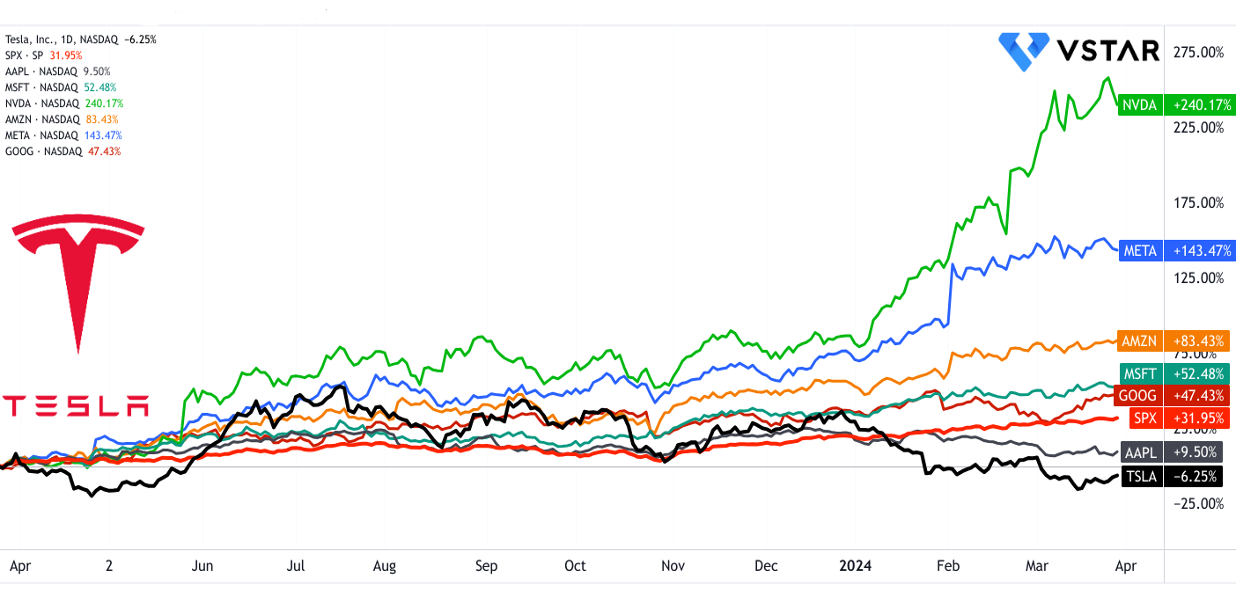
Recent reports from JPMorgan indicate that the financial outlook for Tesla, a leader in the electric vehicle industry, has deteriorated significantly in recent years, despite the continuous rise in its stock prices. This warning comes at a critical time for the market, as analysts predict that the stocks may experience further declines of up to 60%.
The reports suggest that this potential decline reflects growing concerns about the company's financial performance, as Tesla faces increasing challenges, including heightened competition in the electric vehicle market and shifts in global demand. Additionally, high production and distribution costs may negatively impact profit margins.
Details on the Financial Outlook
In recent years, Tesla has seen remarkable growth in its market value, making it one of the most valuable companies in the world. However, the recent warnings from JPMorgan indicate that this growth may not be sustainable. The financial analyst at the bank who issued this warning highlighted a high degree of caution regarding the company's future projections.
The reports detail that Tesla is encountering multiple challenges, ranging from increased competition from both new and established companies in the electric vehicle market to changes in government policies that may affect support for this industry. Furthermore, rising raw material costs could lead to higher vehicle prices, potentially impacting demand.
Background & Context
Founded in 2003, Tesla has become a pioneer in the electric vehicle sector, contributing to the transformation of sustainable transportation concepts. However, the market has undergone significant changes in recent years, with many major companies entering this field, intensifying competition. In this context, Tesla finds itself in a precarious position that requires it to adapt to rapid market changes.
Since the beginning of 2020, Tesla has experienced a substantial increase in its stock prices, making it a focal point for investors. However, this rise has not always been supported by strong financial performance, raising questions about the sustainability of this growth. The recent warnings from JPMorgan may reflect increasing investor concerns about Tesla's ability to maintain its market position.
Impact & Consequences
If the forecasts of stock declines materialize, it could significantly impact investors who have bet on the company's growth. A drop in stock prices may also lead to a loss of confidence in the market overall, which could affect other companies in the sector. At the same time, this decline may prompt Tesla to reevaluate its strategies, potentially pushing it to take new steps to strengthen its market position.
The potential effects of this decline could extend to global financial markets, as Tesla is one of the leading companies in the technology sector. Any drop in its market value could influence investor sentiment worldwide.
Regional Significance
As a leader in the electric vehicle market, Tesla's performance is crucial not only for its investors but also for the broader automotive industry. The company's ability to navigate challenges and maintain its competitive edge will have implications for the future of sustainable transportation.
In conclusion, the warnings from JPMorgan underscore the importance of closely monitoring Tesla's financial health and market dynamics, as they could have far-reaching consequences for investors and the electric vehicle sector as a whole.