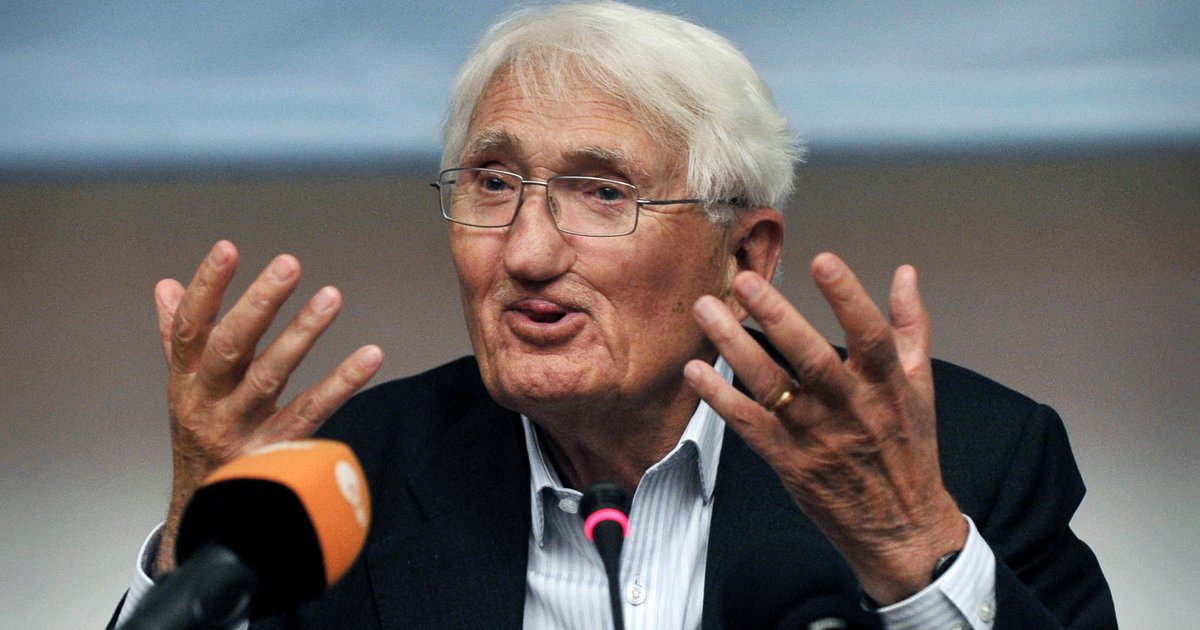
Jürgen Habermas, the prominent German philosopher, passed away on March 14, 2026, at the age of 96, marking the departure of one of the most critical thinkers of his era. His passing is not just a fleeting event; it represents a turning point in understanding European philosophy and its impact on global issues.
Habermas was a symbol of critical thought, known for his bold stances on social and political issues, and his concern for the fate of European civil society. He was regarded as one of the foremost thinkers defending the achievements of the Enlightenment, emphasizing that it remains an unfinished project.
Details of the Event
Throughout his academic career, Habermas held positions at several prestigious universities, including Heidelberg University and Goethe University in Frankfurt, and directed the Max Planck Institute in Starnberg. He had a significant influence on an entire generation of philosophers and thinkers, contributing to shaping discussions about the public sphere and the role of religion in modern society.
One of his most notable works was The Theory of Communicative Action (1982), where he addressed the challenges facing rationality in mass societies. He also provided a continuous defense of European modernity in his book The Philosophical Discourse of Modernity (1985), despite acknowledging that it remains an unfinished project.
Background & Context
Born on June 18, 1929, in Düsseldorf, Habermas grew up during the collapse of the Nazi regime. His experience during World War II shaped his critical view of European philosophy and postmodernism. He held an understanding position towards immigration issues, believing that the integration of Muslim immigrants into the European fabric should be approached with greater tolerance, in contrast to the rising hatred against Muslims during that period.
His ideas were significantly influenced by global political events, as he participated in discussions about the American invasion of Iraq and co-authored an important article with French philosopher Jacques Derrida titled "Old Europe, New Europe, Core Europe," which addressed the nature of transatlantic relations amid political tensions.
Impact & Consequences
Habermas's passing raises questions about the future of European philosophy. His stance on the Palestinian issue, where he supported some positions deemed justified, drew widespread criticism, revealing the limitations of European thought that was considered universal. This stance led many to question the ability of European philosophers to understand the suffering of non-Europeans.
His death marks the end of an era of European philosophy that was considered comprehensive and universal, while in reality, it was confined to specific cultural contexts. Philosophers from outside Europe, such as Nasser Hamid Abu Zaid in Egypt and Achille Mbembe in Africa, have begun to reshape global philosophy, reflecting a greater diversity in philosophical thought.
Regional Significance
Habermas's death is a turning point in how European philosophy is understood in the Arab world. The discussions surrounding issues like Palestine have shown that European philosophy is not necessarily capable of encompassing all human experiences. This pushes Arab thinkers to rethink how to integrate different philosophies into their cultural contexts.
Ultimately, Habermas's legacy remains complex, combining admiration for his critique of traditional European thought with criticisms of his stances on humanitarian issues. Understanding this legacy requires us to view philosophy from a broader perspective that transcends narrow cultural boundaries.