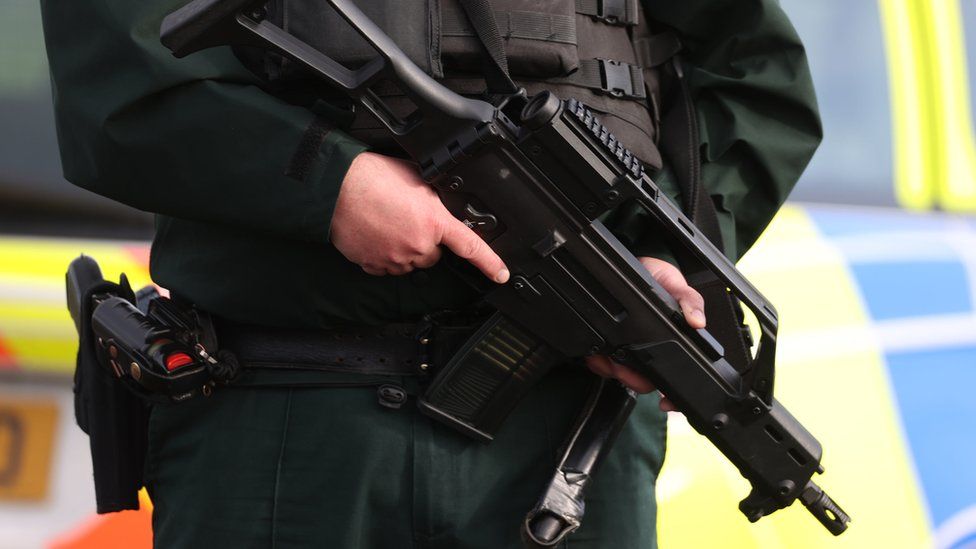
Northern Ireland's Justice Minister, Naomi Long, has confirmed that rebel groups still possess the capability and intent to carry out attacks on police, despite their dwindling numbers. This statement follows a recent incident involving the kidnapping of a delivery driver in Lurgan, where he was threatened with transporting a bomb to a police station.
In detail, the delivery driver was threatened at gunpoint by two masked individuals, one of whom was armed with a pistol, and was forced to drive his vehicle to the police station. Upon arrival, he informed security personnel about the bomb in the vehicle, prompting a large-scale security operation.
Incident Details
The incident occurred around 10:30 PM on Monday, when the driver was stopped in the Deramore Drive area. After reporting the bomb, approximately 100 homes in the vicinity were evacuated, and the situation was handled through a controlled detonation of the explosive device. Police confirmed that the device, despite its primitive nature, posed a significant threat to the driver and the local community.
Justice Minister Long indicated that this incident serves as evidence of the commitment of rebel groups to violence, stating, "If they were not committed to causing harm, they would not be part of these groups." She emphasized that the police are working diligently to ensure the safety of citizens and to confront the activities of these groups.
Background & Context
The roots of the conflict in Northern Ireland date back decades, stemming from a struggle between Catholic republican groups seeking unity with the Republic of Ireland and Protestant groups supporting remaining within the United Kingdom. Following the Good Friday Agreement in 1998, which ended the worst periods of violence, new rebel groups emerged that rejected this agreement, such as the New IRA.
Historically, Northern Ireland has witnessed bloody conflicts resulting in the deaths of thousands. Despite progress made in recent years towards peace, small groups still seek to revert to violence, raising concerns within the community.
Impact & Consequences
This incident serves as a reminder that security threats remain prevalent in Northern Ireland. Assistant Chief Constable Ryan Henderson noted that these groups, despite their small size, still possess the capability to carry out serious attacks, necessitating ongoing vigilance from authorities.
Moreover, such events could impact efforts to achieve peace and stability in the region, as many look forward to a future free from violence. Some officials have called for enhanced cooperation among different communities to ensure that a return to the past does not occur.
Regional Significance
These events illustrate how internal conflicts can affect security and stability within communities. In the Arab region, there are numerous conflicts resembling the situation in Northern Ireland, where certain groups seek to achieve their goals through violence. Therefore, the lessons learned from the Northern Ireland experience could be beneficial for Arab countries facing similar challenges.
In conclusion, the need to enhance dialogue and understanding among various parties in any conflict remains urgent to ensure the achievement of peace and stability, whether in Northern Ireland or any other region of the world.