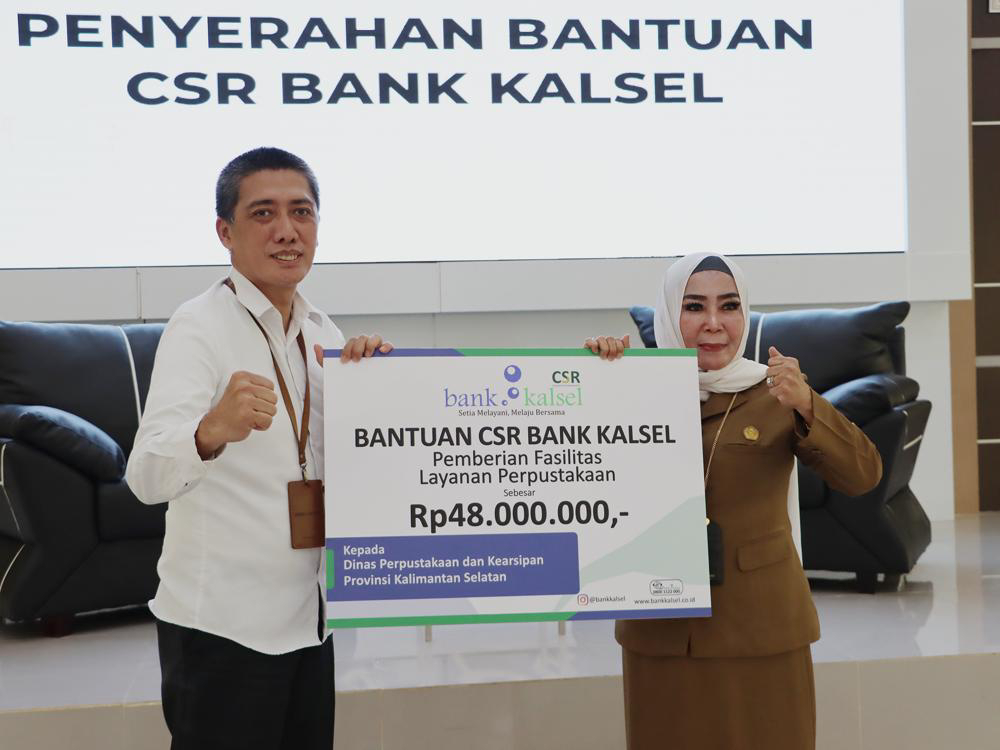
KalSel Bank has announced the operation of 968 agencies to improve access to financial services across South Kalimantan. This initiative aims to enhance financial inclusion and provide banking services to individuals in remote areas. The bank's general manager, Fakhredin, emphasized that these agencies represent a key part of the bank's strategy to support government efforts in improving access to financial services.
During a press conference held in Banjarmasin, Fakhredin noted that these agencies, known as ADINK (All-Digital Inclusive Finance Agencies), serve as alternative solutions for delivering essential banking services, allowing citizens to conduct financial transactions without the need to travel long distances to bank branches.
Event Details
The ADINK agencies are distributed across various rural areas, facilitating residents' access to services such as opening savings accounts, conducting real-time cash deposits and withdrawals, paying bills like electricity and water, as well as transferring money between accounts. These services are designed to simplify daily life for residents and enhance their ability to manage their financial affairs more effectively.
This expansion is part of the bank's efforts to promote financial inclusion, as the Indonesian government seeks to improve access to financial services for all citizens, especially in areas suffering from a lack of banking infrastructure. Fakhredin pointed out that this expansion signifies the bank's commitment to providing comprehensive financial services for everyone.
Background & Context
Historically, many regions in Indonesia, particularly rural areas, have suffered from a lack of banking services. This has led to the prevalence of illegal financial practices, negatively impacting the local economy. In recent years, the Indonesian government has begun taking serious steps to enhance financial inclusion through the development of programs aimed at improving access to financial services.
The ADINK agencies are part of these efforts, representing an innovative model for delivering financial services in remote areas. Through these agencies, citizens can benefit from basic banking services without needing to travel to major cities, contributing to the enhancement of the local economy.
Impact & Consequences
The expansion of KalSel Bank is expected to have a significant positive impact on the local economy. It will enable citizens in remote areas to manage their financial affairs better, thereby enhancing their ability to save and invest. Additionally, providing financial services directly in these areas will help reduce reliance on illegal financial practices.
Moreover, this expansion may encourage increased economic activity in rural areas, as citizens can conduct financial transactions easily and quickly. Consequently, this could contribute to improving living standards and promoting sustainable development in these regions.
Regional Significance
The experience of KalSel Bank serves as a model for the Arab region, where many Arab countries face similar challenges in financial inclusion. Arab nations can benefit from this experience by developing similar programs aimed at improving access to financial services, particularly in rural and remote areas.
Enhancing financial inclusion in the Arab region can contribute to achieving sustainable economic development, helping to improve living standards and promote social stability. Thus, the experience of KalSel Bank could be a starting point for similar initiatives in Arab countries.