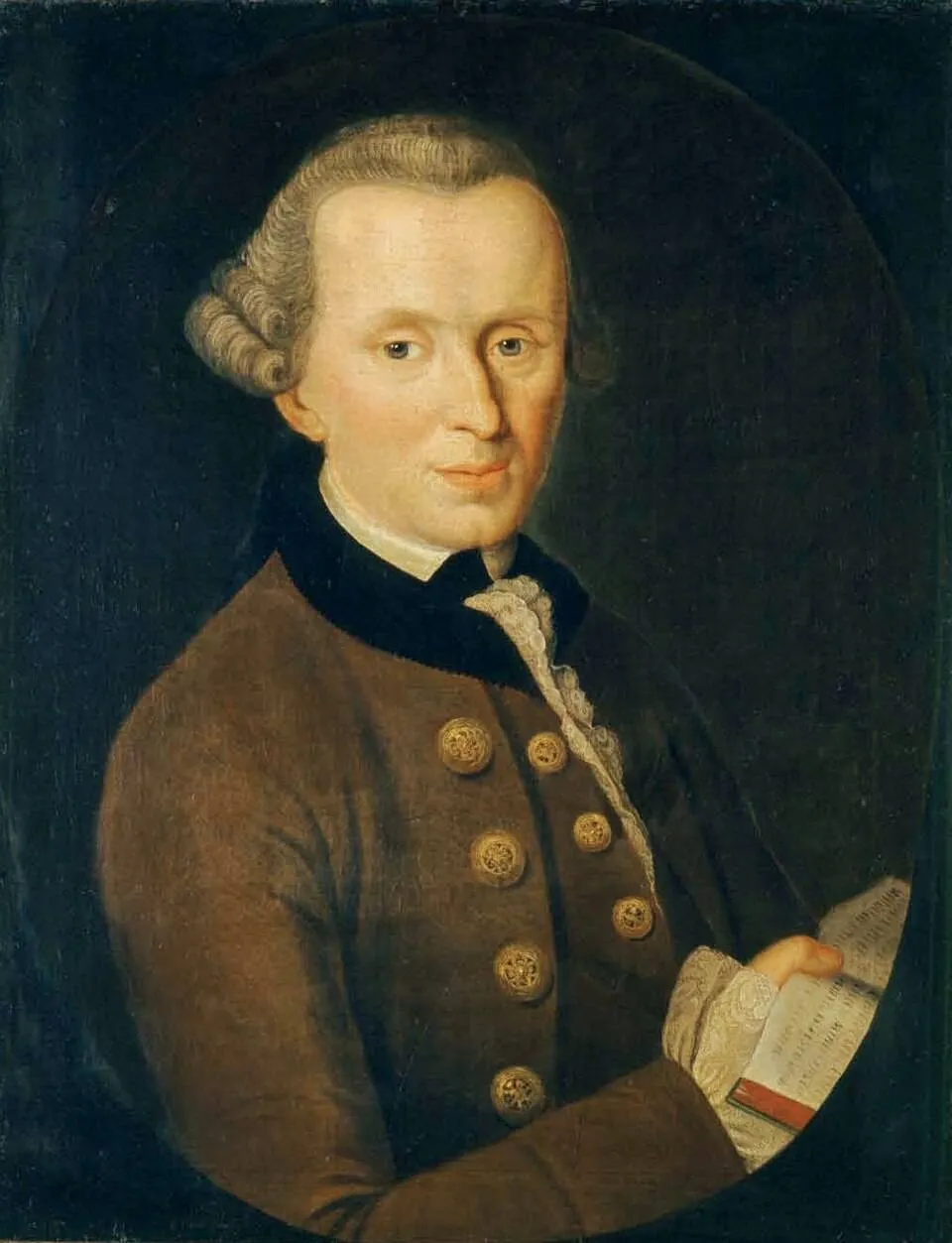
The article examines the philosophical perspectives of Immanuel Kant and Georg Wilhelm Friedrich Hegel on war as a test of human reason. It questions whether reason can end violence or if violence is an inherent part of history. In this context, the two philosophers represent different views on the meaning of war, the state, and humanity.
Kant, who considers humanity an end in itself, sees war not merely as a reality to be interpreted but as a problem to be solved. In his project "Perpetual Peace," Kant seeks to shift politics from a logic of power to a logic of law, emphasizing the necessity of republican systems that make the decision to go to war subject to the will of the citizens. According to him, a state that engages in war has not yet reached the level of maturity required to comply with a universal law.
Kant's Perspective on Peace and War
Kant asserts that peace is not a natural state but a project that must be built, as nature drives humans toward conflict. Thus, humanity needs reason to put an end to this nature. In this view, peace becomes a possible historical achievement rather than just a wish.
On the other hand, Hegel offers a contrasting view, considering the state as the highest manifestation of ethical life. For him, war cannot be viewed as a malfunction but as a moment that reveals the truth of the state. Hegel believes that if society experiences prolonged peace, it may become closed off within its own interests, causing individuals to lose their sense of belonging to the whole. Hence, war acts as a shock that reconnects individuals with the state.
Background & Context
The evaluation of war differs between the two philosophers, with Kant rejecting the idea of perpetual peace, while Hegel sees it as part of the nature of history based on conflict. According to Hegel, relationships between states are not purely legal but are relationships of power, where each state represents an independent whole that does not recognize a higher authority. In this context, reason cannot be separated from violence as Kant does.
The difference between the two philosophers is highlighted in their conception of reason, where Kant seeks to impose limits on reason, while Hegel sees reason as realized within history, even in the conflict itself. This difference reflects a variation in understanding humanity, with Kant viewing humans as rational beings before being political, while Hegel believes that humans can only be understood within the state and history.
Impact & Consequences
In light of contemporary global events, such as the war between the United States, Israel, and Iran, it appears that reality leans towards Hegel's logic, where relationships are resolved through a balance of power and conflict. Meanwhile, Kant's horizon suggests the need for an international law that prevents slipping into war, making it a standard that is invoked but not realized.
This tension between the two views remains present in the modern world, where international institutions, international law, and the idea of human rights manifest as a continuation of Kantian horizons, yet often stand powerless against the logic of power. In contrast, states continue to act according to calculations of conflict, reflecting that the world has not yet departed from Hegel's horizon.
Regional Significance
The importance of this philosophical discussion is evident in understanding current conflicts in the Arab region, where tensions between states and societies reflect the need to rethink the concept of peace. Recognizing the limits of each perspective can contribute to building more effective strategies for addressing conflicts, thereby enhancing the chances of achieving sustainable peace.
Ultimately, Kant and Hegel provide rich philosophical insights that reflect the complexities of human conflict, opening the door for further research and contemplation on how to achieve peace in a world filled with challenges.