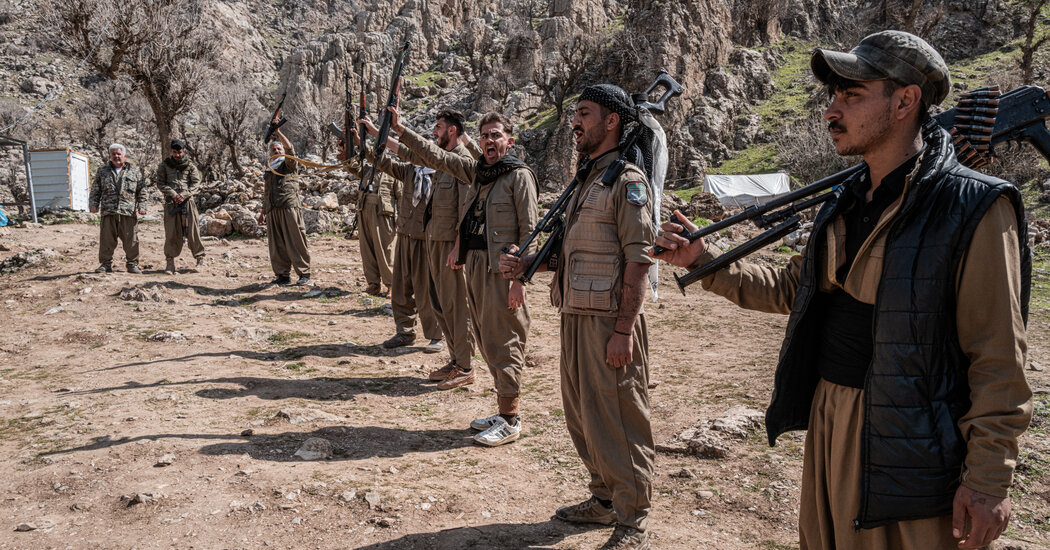
Forces from Iranian Kurdish groups are positioned in the rugged mountainous regions along the Iran-Iraq border, awaiting the right moment to engage in conflict against the Iranian regime. These groups, which have suffered decades of marginalization and persecution, hope that the current circumstances in Iran, which is grappling with multiple crises, present an opportunity to realize their dream of autonomy.
These forces are located in remote areas of the Zagros Mountains, where they have established camps in the Kurdistan Region of Iraq. An agreement has been made to avoid provoking issues, but as tensions in the region escalate, these groups are beginning to consider joining the fight. Ribaz Sharifi, a leader in the Kurdish Freedom Party, states, "We are ready to fight; we just need to put on our shoes."
Military Activities Escalate in the Region
Military activities in the area are on the rise, with American and Iranian drones frequently flying in the skies. Fighters have learned to distinguish types of aircraft by their sound, reflecting the level of tension and anxiety experienced by these combatants. They view the ongoing conflict between the United States and Israel on one side and Iran on the other as an opportunity to engage in battle.
These groups are striving to achieve their dream of autonomy, similar to what the Kurds have accomplished in Iraq. With the Iranian leadership in decline, the Kurds hope that this moment could be the long-awaited opportunity to realize their aspirations.
Historical Context of Kurdish Groups in Iran
Historically, Kurdish groups in Iran have faced severe repression, being marginalized in many political and social spheres. Over the past four decades, these groups have attempted armed operations against the Iranian regime, but most of their efforts have been met with violent repression. However, the current situation in Iran, characterized by political and economic turmoil, may open avenues for these groups to achieve their goals.
The Kurdistan Region of Iraq serves as a safe haven for these groups, allowing them to establish training and recruitment camps for fighters. This region enjoys relative autonomy, providing a suitable environment for these groups to launch their operations.
Potential Consequences of Kurdish Engagement
If these groups can effectively engage in conflict, it could alter the balance of power in the region. Iran may experience an increase in internal tensions, potentially threatening the stability of the current regime. Additionally, Kurdish involvement in the conflict could strengthen their position in future negotiations regarding autonomy.
This engagement might also escalate tensions between Iran and neighboring countries, particularly Iraq and Turkey, which view the Kurds as a threat to their national security. Consequently, the situation could contribute to escalating regional conflicts and complicate the political landscape.
Impact on the Arab Region
The events in Iran have significant implications for the Arab region, potentially leading to changes in political alliances. If Kurdish groups succeed in achieving autonomy, they may inspire similar movements in other Arab countries, such as Iraq and Syria. Furthermore, escalating tensions in Iran could reflect on the security situations in the region, necessitating attention from Arab nations.
In conclusion, it appears that the Kurds in Iran stand on the brink of a new phase of conflict, hoping to achieve their dream of autonomy. With the deteriorating situation in Iran, this moment may represent the long-awaited opportunity to fulfill their objectives.