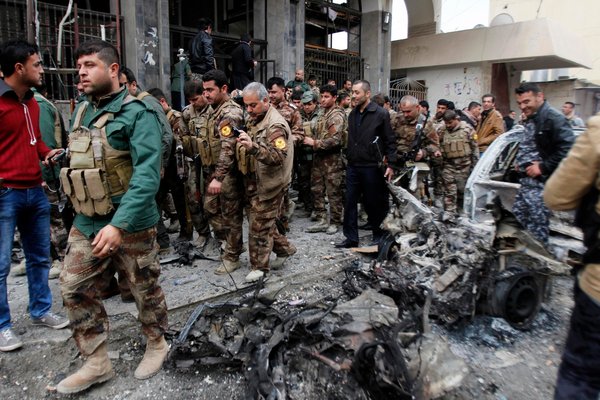
The Kurdistan Regional Government of Iraq, through Deputy Prime Minister Qubad Talabani, has called on the central government in Baghdad to put an end to the repeated militia attacks on the region's territory, which houses a U.S. consulate and military advisors. Talabani condemned the ongoing strikes that have been witnessed in the region since the onset of the conflict in the Middle East, indicating that these attacks threaten the stability and security of the region.
Talabani emphasized that the regional government cannot remain silent about these attacks, which have been increasing in frequency recently, pointing out that these actions adversely affect the relations between Erbil and Baghdad, complicating the security situation in Iraq.
Details of the Incident
These statements come at a sensitive time, as areas of the region are facing repeated attacks from armed factions believed to be supported by Iran. These attacks specifically target sites that host American forces, raising concerns in Washington and prompting a reassessment of its military strategy in the region.
Talabani also noted that the regional government has taken steps to enhance its security, including increasing cooperation with American forces and the international coalition against terrorism. However, the ongoing threats from militias make it difficult to achieve complete stability in the area.
Background & Context
Historically, Iraq has witnessed ongoing conflicts since the American invasion in 2003, leading to the emergence of multiple armed factions, some of which are linked to Iran. These factions have become a threat to national security, especially in autonomous regions like the Kurdistan Region.
In recent years, attacks on military bases hosting American forces have escalated, prompting the U.S. government to take precautionary measures, including reducing its troop presence in Iraq. In this context, the region seeks to maintain its relations with Washington amid increasing security challenges.
Impact & Consequences
These attacks affect the political and economic stability in the Kurdistan Region, where the government relies on external support, particularly from the United States, to confront security challenges. Furthermore, the escalation of violence may lead to a deterioration of relations between Erbil and Baghdad, complicating the political landscape in Iraq.
Moreover, the continuation of these attacks could prompt the international community to reassess its strategy in Iraq, which may impact counter-terrorism efforts in the region. These conditions could also lead to increased sectarian tensions, threatening regional security.
Regional Significance
The situation in Iraq serves as an indicator of the challenges facing countries in the region, many of which suffer from external interventions and internal conflicts. The rise in violence in Iraq could negatively affect the stability of neighboring countries, increasing the risks of regional conflicts.
In this context, the situation in Iraq provides a lesson for other Arab countries on the importance of strengthening internal security and avoiding sectarian divisions that could lead to state disintegration.
In conclusion, the situation in the Kurdistan Region of Iraq remains under scrutiny, as the current security challenges require a swift and effective response from the central government in Baghdad to ensure regional stability and protect national interests.