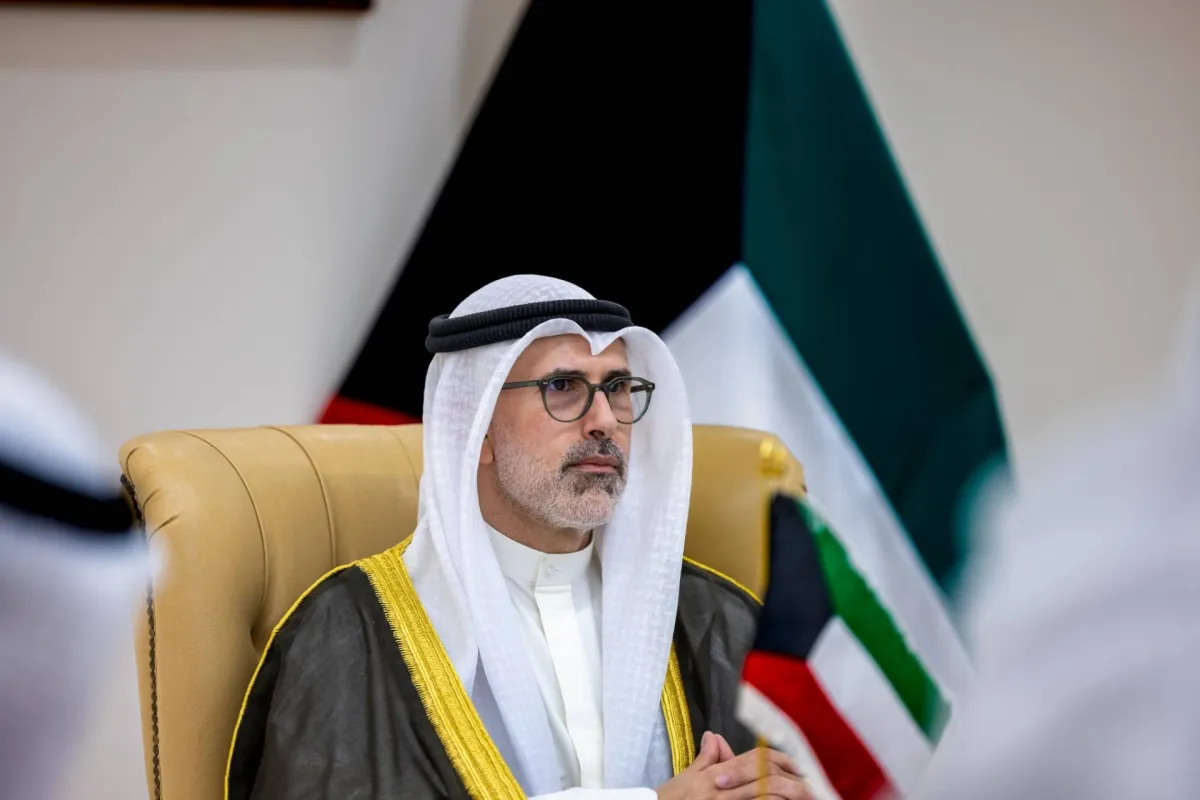
Kuwait's Foreign Minister, Sheikh Jaber Al-Ahmad Al-Sabah, emphasized during an Arab ministerial meeting via video conference that what the region is experiencing today is not just a fleeting escalation, but a systematic pattern aimed at destabilizing regional stability led by Iran. He pointed out that this Iranian behavior relies on employing chaos and terrorism as tools for influence, necessitating a firm international stance and deterrent measures to protect international peace and security.
Sheikh Jaber Al-Sabah reiterated Kuwait's condemnation of Iranian aggression against the country and other regional states, noting that this aggression includes systematic targeting originating from Iranian territory, which constitutes a blatant violation of Kuwait's sovereignty and international law. He explained that these actions have resulted in casualties and injuries, endangering citizens and residents, in addition to destroying vital facilities and infrastructure.
Details of the Incident
The Kuwaiti minister highlighted that the scope of Iranian aggression has expanded to include attacks launched by Iranian-backed Iraqi factions and militias, using missiles and drones against Kuwait and other Arab countries. He praised the Iraqi government's commitment to taking measures to halt hostilities, expressing hope for the success of these efforts soon.
He also referred to attempts to undermine internal security in several Arab countries, commending the efforts of Kuwaiti security agencies that managed to apprehend three terrorist cells linked to the "Hezbollah" organization, reflecting Kuwait's success in countering Iranian attempts to carry out sabotage activities.
Background & Context
Historically, the region has witnessed escalating tensions between Iran and Gulf states, with Gulf countries accusing Iran of supporting armed factions in Iraq, Syria, and Lebanon. This tension arises at a time when the region is suffering from multiple crises, complicating the security and political landscape.
In this context, Sheikh Jaber Al-Sabah affirmed that Iranian practices represent a blatant violation of international law, emphasizing Kuwait's right to defend itself in accordance with Article 51 of the United Nations Charter. He also called for the restructuring of the Arab League to enhance the efficiency of decision-making mechanisms in line with the increasing challenges.
Impact & Consequences
Concerns are growing that these tensions could lead to greater military escalation in the region, which may negatively impact regional security and stability. Reports have shown that air defenses in Gulf countries have repelled waves of Iranian attacks, reflecting these countries' preparedness to confront threats.
Furthermore, the current escalation may affect diplomatic relations between regional countries and Iran, as calls for the need for international guarantees to prevent the recurrence of Iranian aggressions are increasing. The advisor to the UAE president has demanded that any political solution include clear guarantees to prevent future aggressions.
Regional Significance
Attention is turning to how Arab countries will respond to these challenges, as the current situation requires a united Arab effort to confront common threats. The continuation of these tensions could exacerbate humanitarian and economic crises in the region, necessitating urgent action from Arab countries.
In conclusion, the situation in the region remains complex, requiring Arab countries to take effective steps to protect their security and stability, and to work on enhancing regional cooperation to face common challenges.