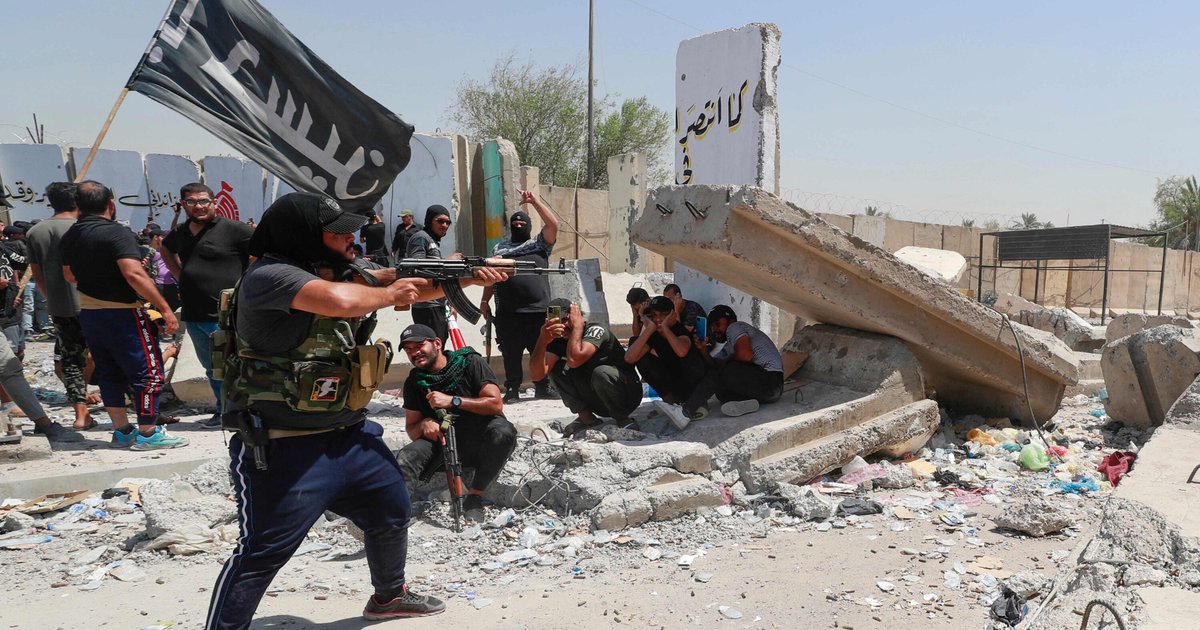
The Kuwaiti Ministry of Foreign Affairs has summoned the Iraqi chargé d'affaires in Kuwait, Zaid Abbas Shanshul, for the second time and handed him an official protest note regarding the continued assaults carried out by Iraqi armed factions targeting Kuwaiti territory.
Aziz Rahim Al-Dihani, the acting Deputy Foreign Minister of Kuwait, emphasized that using Iraqi territory to launch attacks against Kuwait constitutes a direct aggression and a violation of its sovereignty, international law, and the United Nations Charter.
Details of the Incident
In this context, Al-Dihani urged the Iraqi government to take immediate measures to deter such practices and reiterated Kuwait's right to defend itself under Article 51 of the United Nations Charter, taking necessary actions to protect its security and territorial integrity, as reported by the Kuwait News Agency (KUNA).
The Kuwaiti army announced in statement number (46) that it had detected and dealt with 13 hostile drones that breached the country's airspace over the past 24 hours. These assaults resulted in targeting a service building at one of the power generation and water distillation stations, leading to the death of one worker and causing significant material damage to the site.
Background & Context
These events come at a time when the region is witnessing increasing tensions, as the United States and Israel wage a broad war against Iran, which retaliates by launching missiles and drones towards Israel, in addition to targeting what it describes as American interests in the region. However, field data indicates that the majority of these attacks have hit Gulf countries, resulting in human losses and civilian damage, prompting official condemnations from both within and outside the region.
Historically, relations between Kuwait and Iraq have been tense, especially following Iraq's invasion of Kuwait in 1990. Despite more than three decades having passed since those events, their effects continue to cast a shadow over bilateral relations, increasing the sensitivity of the current situation.
Impact & Consequences
These assaults are considered a threat to regional security and could lead to escalating tensions between Kuwait and Iraq, which may negatively impact stability in the region. Additionally, the continuation of these attacks could push Kuwait to take more decisive measures to protect its territory, potentially leading to military escalation.
Moreover, these events may affect diplomatic relations between the two countries, as pressure may increase on the Iraqi government to deal with the armed factions responsible for these assaults, which could impact the stability of the Iraqi government itself.
Regional Significance
These events highlight the urgent need to enhance security cooperation among Gulf countries to confront common threats. The current situation reflects the challenges faced by Arab states in maintaining their sovereignty and security amid escalating regional tensions.
In conclusion, attention remains focused on the developments between Kuwait and Iraq, where effective diplomatic moves are required to avoid escalating situations and ensure regional stability.