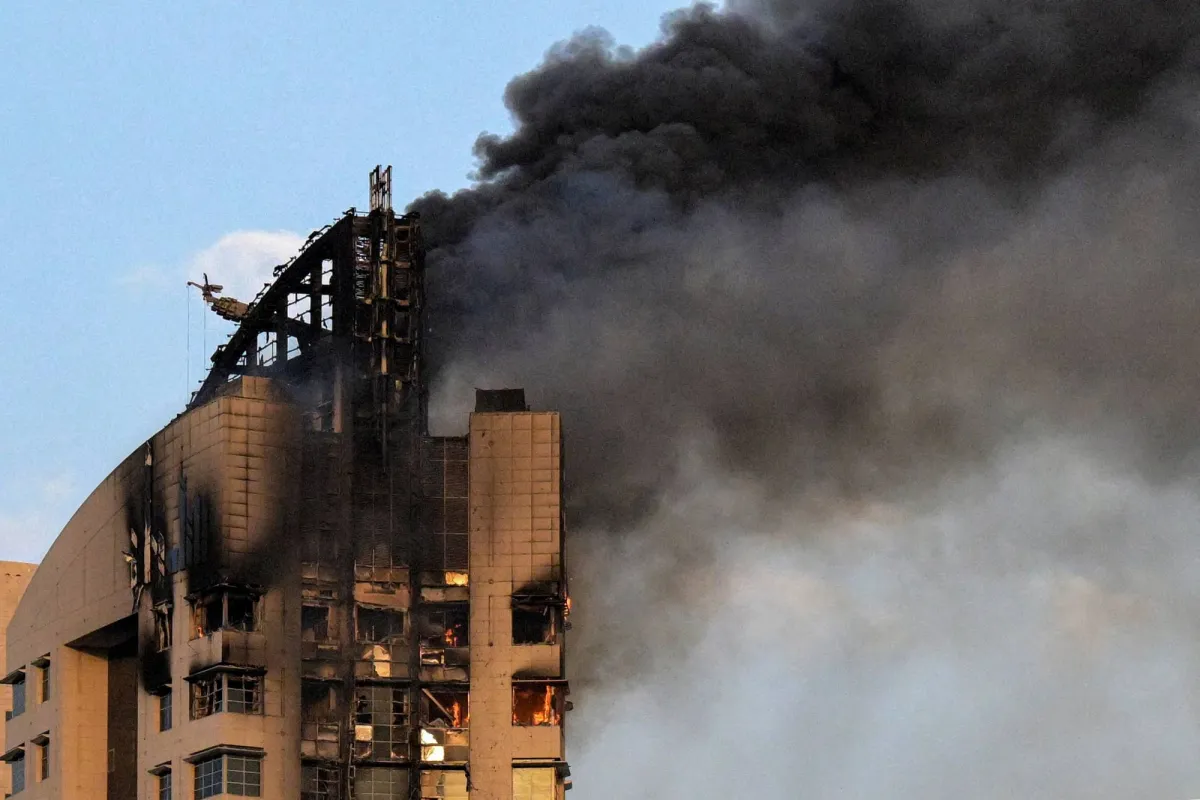
In a serious development, the Kuwaiti army announced in the early hours of Sunday that it successfully thwarted missile and drone attacks launched towards Kuwait, following an Iranian attack on the country on Saturday evening. This attack resulted in significant damage to a government complex in the capital, Kuwait City.
The General Staff of the Kuwaiti army reported that the air defenses successfully intercepted the hostile attacks, noting that the sounds heard in the capital were a result of these interceptions. Citizens were urged to adhere to security and safety instructions issued by the relevant authorities.
Details of the Incident
The Kuwaiti Ministry of Finance announced that the attack caused severe material damage to the Ministry Complex, which was targeted by a drone. Despite the damage, no human injuries were reported, and visits to the government complex were suspended, while officials will work remotely on Sunday.
Earlier today, the Kuwait Petroleum Corporation confirmed that a fire broke out at the oil sector complex in Shuwaikh, which houses the Ministry of Oil and the corporation's headquarters, as a result of the drone attacks. Emergency and firefighting teams began addressing the fire, with no reports of injuries.
Background & Context
These attacks come amid escalating military tensions between Iran and Gulf countries, as Iran has targeted several nations in the region in recent days, including the UAE and Bahrain. These attacks were launched as part of a reaction to the military pressures Iran is facing from the United States and Israel.
On Saturday, air defenses in Gulf countries detected repeated attacks, successfully intercepting several missiles and drones. These attacks resulted in limited damage to some civilian facilities, with no human injuries reported.
Impact & Consequences
These events highlight the rising tensions in the region, with growing fears of a wider conflict. The attacks have led to heightened military preparations in Gulf countries, as armed forces work to bolster their air defenses against potential threats.
Furthermore, these developments could negatively impact regional stability, raising concerns about energy security and supply chains in the area. Some countries, such as Qatar, have expressed a desire to de-escalate tensions and call for political dialogue as a means to resolve crises.
Regional Significance
These attacks serve as a warning to countries in the region about the escalating tensions, as any escalation could lead to serious repercussions for regional security. This situation underscores the urgent need to enhance security cooperation among Gulf states to address common threats.
At the same time, the importance of diplomatic dialogue emerges as a means to alleviate tensions, as communication between nations is essential to avoid any military escalation that could have dire consequences for the entire region.