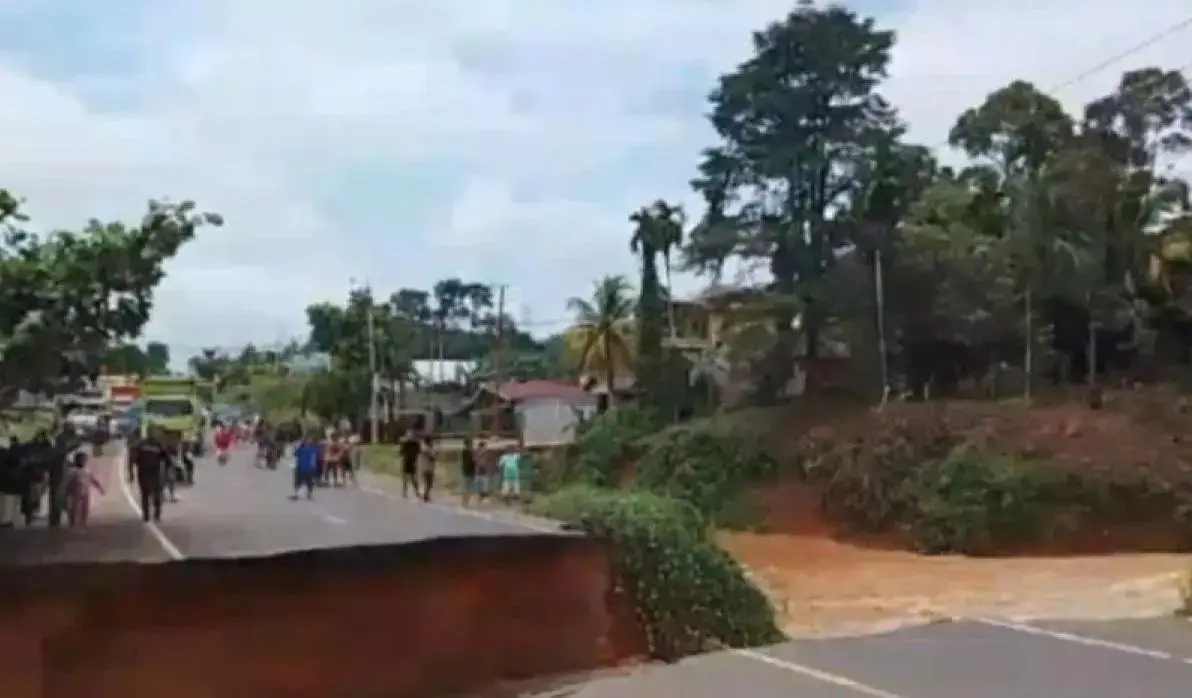
A landslide in the Baluboh area of Agam, Indonesia, has closed the national road connecting the cities of Badan and Medin, causing significant traffic congestion. The incident occurred on Wednesday morning, with reports of the landslide coming in at 06:15 local time, following heavy rainfall in the region.
According to Rahmat Lasimuno, the head of the Agam emergency management agency, the landslide covered a section of the road approximately 20 meters long and up to 1.5 meters high. This incident completely halted traffic, resulting in a backlog of vehicles in the area.
Details of the Incident
After the landslide occurred, local authorities dispatched heavy equipment from the national road management agency to clear the road and remove debris. Thanks to their swift efforts, authorities managed to reopen the road to traffic by 10:30, but with a controlled opening and closing system to ensure driver safety.
Local police were also deployed to manage traffic and direct drivers during this critical period. Authorities urged drivers to exercise caution when passing through the area, especially given the adverse weather conditions that could lead to further landslides.
Background & Context
Indonesia is one of the countries that frequently experiences landslides, particularly during the rainy season. This is due to its mountainous terrain and tropical climate, which causes heavy rainfall. In recent years, the country has witnessed several similar incidents that have led to the closure of major roads and caused significant property damage.
Historically, landslides in Indonesia have impacted the lives of local residents, resulting in loss of life and destruction of homes and infrastructure. Consequently, the Indonesian government is working to improve early warning systems and develop emergency plans to address these natural disasters.
Impact & Consequences
Landslides can affect the local economy by disrupting transportation and delaying the delivery of goods and services. Additionally, the traffic congestion resulting from these incidents can increase costs for drivers and businesses.
Moreover, the recurrence of such incidents highlights the need for improved infrastructure and the implementation of more effective preventive measures. This requires investment in road improvement projects and the development of drainage systems to reduce the risk of future landslides.
Regional Significance
While this event may seem distant from the Arab region, there are lessons to be learned. Natural disasters do not recognize borders and affect communities worldwide. Arab countries, facing similar environmental challenges, can benefit from Indonesia's experiences in crisis management and emergency planning.
In conclusion, landslides remain a significant challenge for Indonesia, necessitating a rapid and effective response from local authorities. As climate change continues, these incidents are likely to increase, requiring new strategies for adaptation and mitigation.