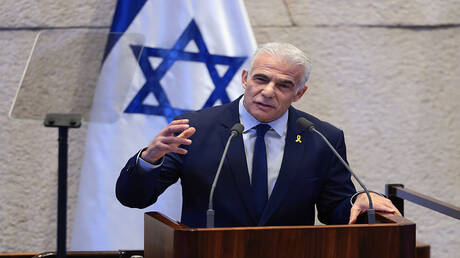
Israeli opposition leader Yair Lapid has launched a scathing attack on Prime Minister Benjamin Netanyahu, accusing him of causing an unprecedented political crisis that is gripping Israel. These remarks come at a critical juncture as the country experiences escalating internal tensions, with Netanyahu facing widespread criticism from various political factions.
In his statements, Lapid described the current situation as a "political disaster," noting that Netanyahu's policies have exacerbated economic and social crises. He added that the current government has failed to provide effective solutions to the challenges facing the nation, further increasing citizens' frustration.
Details of the Criticism
Lapid's criticisms come at a time when Netanyahu is experiencing a decline in popularity, with opinion polls indicating that many Israelis are dissatisfied with his government's performance. Lapid pointed out that the failure to address fundamental issues such as security and the economy reflects the weakness of the current leadership.
He also addressed the impact of these crises on Israeli society, emphasizing that political and social divisions have become more pronounced. He argued that there is an urgent need to unite and rebuild trust between the government and the citizens.
Background & Context
Historically, Israel has faced numerous political crises, but the current situation is considered one of the most complex periods. Political divisions have intensified in recent years, leading to ongoing governmental instability. Netanyahu, who has served multiple terms as Prime Minister, is a controversial figure facing corruption allegations and internal and external pressures.
These statements come amid rising tensions in the region, with growing fears of escalating violence and unrest. Some observers have noted that the internal situation may affect Israel's ability to address regional challenges, complicating the political landscape further.
Impact & Consequences
Political circles anticipate that these criticisms will lead to increased pressure on Netanyahu, potentially altering the balance of power within the Knesset. Some believe that this crisis could pave the way for new coalitions, especially amid rising calls for early elections.
The impact of these crises may also extend to Israel's international relations, as internal instability could affect its position in negotiations with Palestinians and Arab states. These circumstances may require a reassessment of the government's strategies in dealing with regional issues.
Regional Significance
The political situation in Israel has a direct impact on the Arab region, with Arab nations closely monitoring internal developments. Any changes in Israeli leadership could influence the peace process in the region, particularly amid the ongoing Israeli-Palestinian conflict.
Moreover, political crises in Israel may enhance dialogue opportunities among Palestinian factions, potentially leading to increased tensions in the future. Therefore, observers are keenly watching how events unfold in Israel and their implications for the regional situation.
In conclusion, the political landscape in Israel remains under global scrutiny, with expectations of further developments that could reshape the political scene in the country.