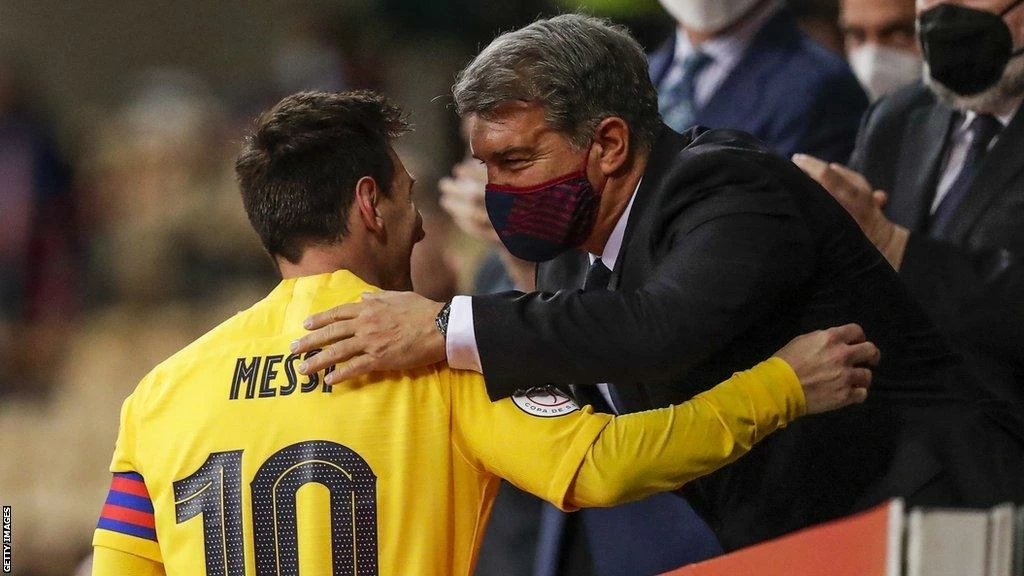
Joan Laporta, the president of FC Barcelona, revealed that his decision to part ways with Argentine star Lionel Messi five years ago has proven to be correct based on the results the club has achieved during his second term. Laporta emphasized that this decision was necessary given the difficult financial circumstances the club was facing.
During his election campaign in 2021, Laporta promised Barcelona fans that he would ensure Messi's continued presence in the team. However, he informed the Argentine football legend in August of the same year that he did not have a contract with him, sparking much controversy over the reasons behind this decision.
Details of the Decision
In an interview with the newspaper "El País," Laporta explained that he felt vindicated by the results achieved by the club, stating: "I had to make a decision, and I believe I made the right one; the results speak for themselves." He pointed out that Barcelona managed to improve its financial situation and build a new competitive team, reflecting the success of his strategy.
Laporta added: "Leo was approaching the end of his career, and we needed to build a new team. Did I want to build a new team with Leo's help? Yes. We tried, but it was not possible." These statements reflect the challenges the club faced during that period, as Messi represented a significant part of Barcelona's identity.
Context and Background
Historically, Lionel Messi is considered one of the greatest players in football history, having spent over twenty years at Barcelona, where he achieved numerous titles and accomplishments. However, the club's financial situation, exacerbated by the COVID-19 pandemic, forced management to make difficult decisions. In this context, Laporta's decision to part ways with Messi was part of a strategy to restructure the club.
It is noteworthy that Messi has expressed his desire to return to Camp Nou on several occasions, but it seems that this desire may face significant obstacles with Laporta at the helm. Additionally, the club's former coach and Messi's teammate, Xavi Hernandez, indicated that there was a deliberate effort not to facilitate Messi's return two years after his departure.
Consequences and Impact
This decision not only affected Messi but also had wide-ranging implications for the club and its fans. Barcelona, which relied on Messi as the team's leader, faced significant challenges in rebuilding its identity after his departure. The results the club has achieved since then, including winning domestic and international titles, have helped mitigate the criticism faced by management.
Moreover, the relationship between Laporta and Messi will remain a point of interest for the media and fans. Laporta confirmed at the end of his remarks that "the future relationship between the two parties depends on what Leo wants and what Barcelona wants," opening the door for interpretations regarding the possibility of Messi's return in the future.
Impact on the Arab Region
The story of Messi and Barcelona is one of the most popular narratives in the Arab world, where millions of football fans in the region follow the news of the Argentine star. Messi's departure from Barcelona was a shock to many and affected the sentiments of fans in the Arab world, who view Messi as a symbol of success and creativity in football.
In conclusion, the relationship between Messi and Barcelona remains complex, as everyone looks forward to what the coming days will bring. Will Messi return to Barcelona? Or will things remain as they are? These questions will linger in the minds of football fans around the world.