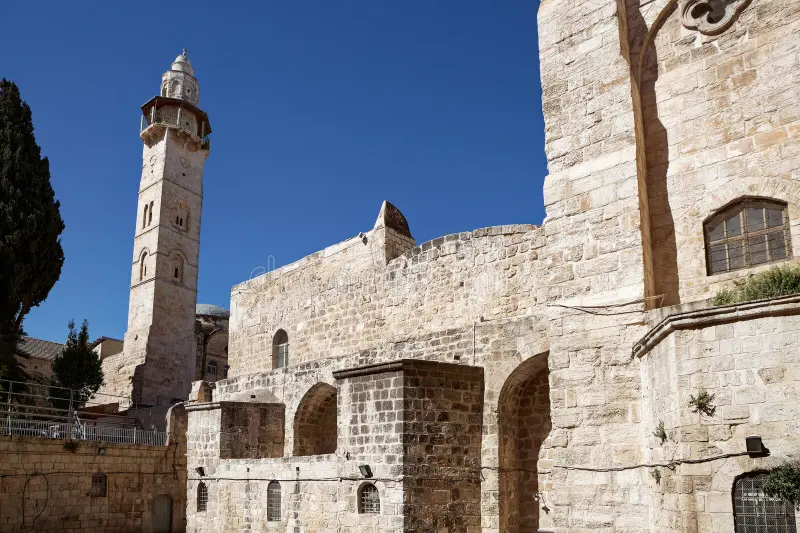
The incident of preventing several worshippers from attending Palm Sunday prayers at the Church of the Holy Sepulchre in Jerusalem has elicited strong reactions from the Latin Patriarchate and the Custody of the Holy Land. The Patriarchate affirmed in a statement that this decision represents a violation of religious freedom and reflects the increasing tensions in the holy city.
The Church of the Holy Sepulchre is considered one of the holiest Christian sites in the world, hosting many significant religious rituals. The ban on prayer comes at a sensitive time as Christians prepare to celebrate Palm Sunday, which marks the beginning of Holy Week.
Details of the Incident
In an official statement, the Latin Patriarchate expressed its deep concern regarding this decision, emphasizing that religious freedom must be respected and upheld at all times. It also called on the relevant authorities to reconsider this decision and allow worshippers to practice their religious rites freely.
On the other hand, the Custody of the Holy Land confirmed that it works to protect holy sites and ensure the safety of worshippers, but at the same time noted that the ban on prayer contradicts the values of tolerance and mutual respect.
Background & Context
Historically, the city of Jerusalem has witnessed recurring tensions among various religious denominations, especially during religious holidays and events. Palm Sunday is one of those occasions that attracts large numbers of worshippers, increasing the importance of maintaining security and peace during this period.
It is worth noting that the Church of the Holy Sepulchre is considered a sacred place for Christians of all denominations, with a history spanning centuries, as it is believed to be built on the site of Christ's burial. With the increasing number of visitors and worshippers, the need for effective management to ensure their safety becomes more pressing.
Impact & Consequences
This incident could lead to heightened tensions among different Christian denominations and may negatively affect relations between religious communities in Jerusalem. Additionally, the ban on prayer may be seen as a negative message to the international community regarding the state of religious freedoms in the city.
Furthermore, this incident could impact religious tourism in Jerusalem, as the local economy heavily relies on visitors coming to perform their religious rites. Any reduction in visitor numbers could place additional pressure on the local economy.
Regional Significance
This incident is part of a broader picture reflecting political and religious tensions in the region. The Israeli-Palestinian conflict continues to affect the lives of people in Jerusalem, reflecting the tensions among different religious communities.
These events highlight the importance of interfaith dialogue and promoting tolerance, which are deemed essential for achieving peace and stability in the region. Cooperation among different denominations can contribute to building a more cohesive community.
In conclusion, religious freedom remains a fundamental right that must be respected, and all parties involved should work to promote this right, especially in sacred places that bring together various religions and cultures.