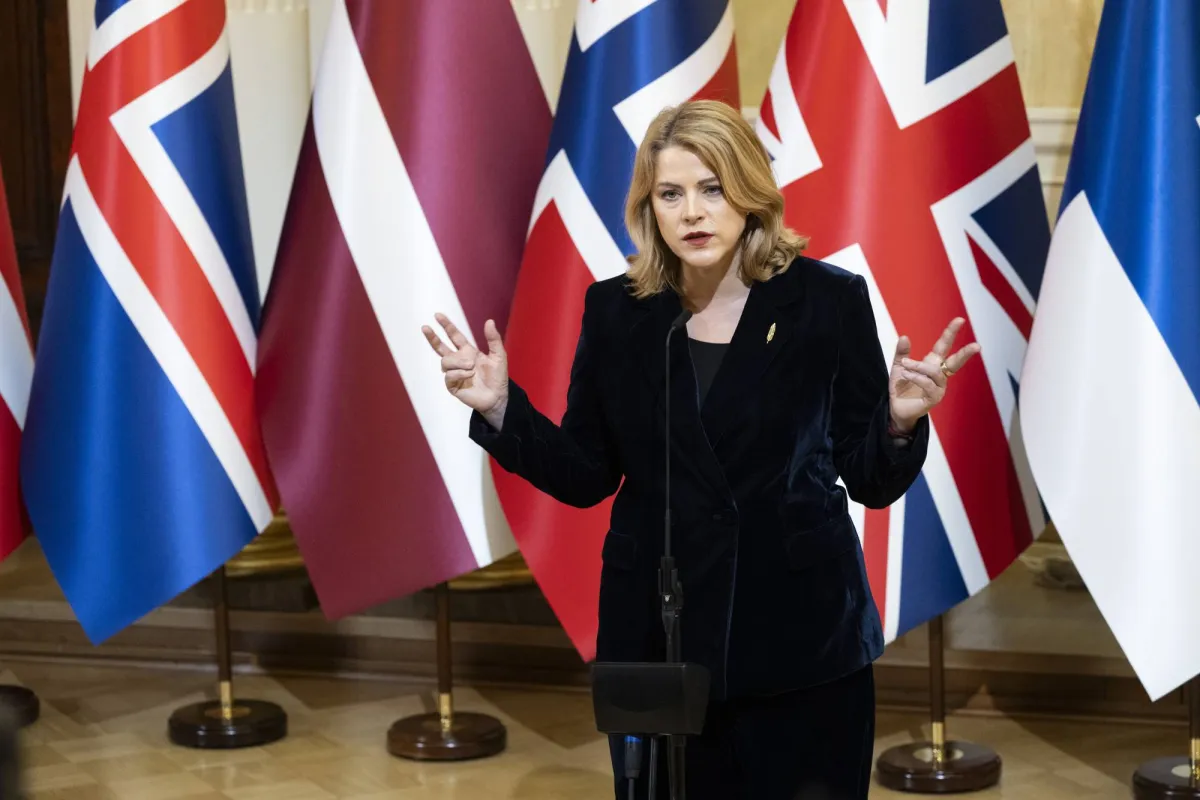
The Latvian Ministry of Defense has accused Russia of organizing a coordinated disinformation campaign aimed at the Baltic states, as stated in an official announcement released on Friday. The ministry reported that Moscow is promoting claims that Estonia, Latvia, and Lithuania are allowing their territories to be used for Ukrainian attacks against Russia.
The ministry explained that the campaign involves disseminating misleading information and using chatbots on social media, targeting Russian-speaking audiences, particularly the youth. The ministry provided screenshots of online posts allegedly proving the existence of this Russian campaign.
Details of the Campaign
According to the Latvian Ministry of Defense, the Russian campaign seeks to weaken trust in NATO and divide the local community, as well as undermine confidence in state institutions. The ministry also confirmed that Moscow is attempting to divert attention from its failures in countering successful Ukrainian counterattacks on Russian targets along the Baltic Sea coast.
In this context, the ministry emphasized that the Baltic states, including Latvia, have not participated in planning or executing any Ukrainian counterattacks. This accusation comes at a sensitive time, as tensions between Russia and Western countries are escalating due to the ongoing conflict in Ukraine.
Background & Context
Historically, the Baltic states have been under Russian influence for long periods and gained independence from the Soviet Union in the early 1990s. Since then, these countries have sought to strengthen their ties with the West, including joining NATO and the European Union. As tensions between Russia and the West have intensified, the Baltic states have become targets of Russian aggression, raising their concerns about national security.
The disinformation campaign is considered part of a broader strategy employed by Russia to undermine the stability of neighboring countries, with Moscow aiming to sow chaos and erode trust in Western governments. In recent years, there has been an increase in the use of disinformation as a tool of psychological warfare, raising concerns about its impact on regional security.
Impact & Consequences
The Latvian Ministry of Defense anticipates that this campaign will lead to increased tensions in the region, potentially affecting relations between the Baltic states and Russia, as well as their relationships with NATO. Furthermore, this campaign may prompt enhanced security efforts in the Baltic states, necessitating a response from Western allies.
Disinformation is an effective weapon in modern warfare, capable of dividing societies and increasing polarization. Therefore, countering this campaign requires effective communication and confrontation strategies to ensure it does not influence public opinion.
Regional Significance
These events highlight the importance of awareness regarding disinformation in the Arab world, where there has also been an increasing use of such strategies in political conflicts. The experiences of the Baltic states could serve as a crucial lesson for Arab countries on how to address similar challenges.
Amid the multiple crises facing the region, it is essential to enhance public awareness about disinformation and methods to counter it, ensuring the stability of communities and protecting them from negative external influences.