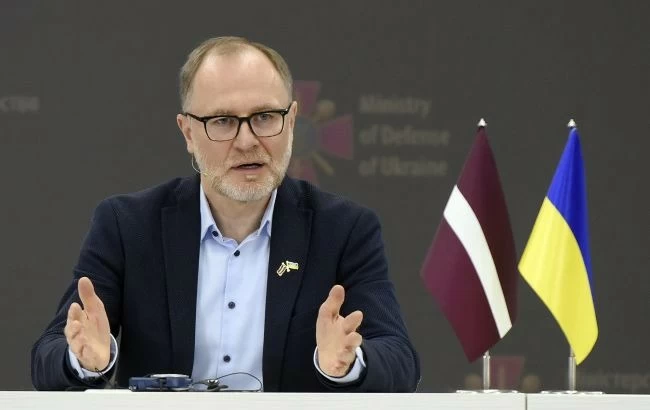
Latvian Defense Minister Andris Sprudzs resigned on Sunday after a Ukrainian drone breached the airspace of his country on May 7. Sprudzs confirmed that he takes full responsibility for failing to intercept the drone, noting his respect for opposition calls and leaving the final decision to parliament.
In televised statements, Sprudzs said, "I take full responsibility, I respect the opposition's proposal, and I will respect parliament's decision regarding my resignation." Two drones, believed to be Ukrainian, entered Latvian airspace coming from Russian territory in the early hours, with one crashing in the Rēzekne area near an oil storage facility, causing a fire in empty tanks, while the second fell in another area without resulting in human injuries.
Details of the Incident
This incident is part of a series of airspace violations that the Baltic states, including Latvia and Lithuania, have experienced in recent months. It is believed that the Ukrainian drones were aimed at Russian targets but deviated from their course due to Russian electronic interference or technical errors.
The incident sparked sharp criticism of the Latvian Ministry of Defense, with blame directed at the delayed alert and the failure of sound detection systems to identify the drone early. Opposition parties immediately called for the minister's resignation, increasing political pressure on Sprudzs within the ruling coalition.
Background & Context
Latvia is a member of the North Atlantic Treaty Organization (NATO), making any breach of its airspace a regional security concern. These events come amid escalating tensions between Russia and Ukraine, with European countries closely monitoring the situation.
Historically, the Baltic states have faced tensions with Russia, especially following the annexation of Crimea in 2014. Such incidents have heightened concerns about regional security, as Latvia seeks to bolster its air defenses against potential threats.
Impact & Consequences
Sprudzs's resignation may lead to changes in Latvian defense policy, as the new government is likely to seek improvements in air defense systems and enhance cooperation with NATO allies. Additionally, this incident could affect relations between Latvia and Russia, as it may be viewed as a strong message from the Latvian government regarding any future violations.
Furthermore, these events may increase security awareness in other Baltic states, prompting them to take additional preventive measures to protect their airspace. The political pressure on the Latvian government could also impact the stability of the ruling coalition.
Regional Significance
This incident highlights the security tensions in the Baltic region and their impact on the defense policies of NATO member states. The resignation of a high-ranking official underscores the seriousness of airspace violations and the need for robust defense mechanisms.
In conclusion, the situation remains fluid, and Latvia's response to such incidents will be crucial in shaping its future defense strategies and regional alliances.