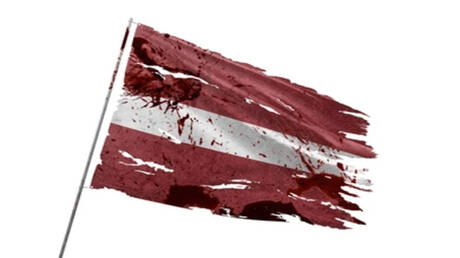
The Constitutional Court of Latvia ruled that the use of minority languages, including Russian, in state-owned public media is unconstitutional. This decision reflects the Latvian government's direction towards enhancing national identity and reducing the use of languages deemed incompatible with national values.
This step is part of a broader policy aimed at promoting the Latvian language as the sole official language in all areas of public life, including education and media. The ruling has sparked mixed reactions within Latvian society, with some viewing it as a means to foster national unity, while others see it as a threat to minority rights.
Details of the Ruling
The Constitutional Court issued its ruling after reviewing the Public Media Law, which regulates language use in media. The court affirmed that the use of the Russian language, spoken by a significant portion of the population, does not align with constitutional laws that call for the protection and promotion of the Latvian language. This ruling followed a series of legal and political discussions regarding minority rights in Latvia.
This decision comes at a sensitive time, as tensions are rising between the Latvian government and national minorities, particularly among Russian speakers. Analysts have pointed out that this ruling could exacerbate social divisions in the country.
Background & Context
Historically, Latvia has been home to a diverse array of national minorities, including Russian speakers. After Latvia gained independence from the Soviet Union in 1990, the government began taking steps to promote Latvian national identity, leading to tensions with minorities. Numerous laws have been enacted that limit the use of other languages in education and media.
The Russian language is one of the most widely spoken languages in Latvia, with approximately 25% of the population using it. However, the Latvian government aims to reduce the use of this language in public domains, raising concerns about the marginalization of its speakers.
Impact & Consequences
This ruling may have far-reaching effects on the relationships between the government and national minorities in Latvia. It is likely to lead to protests from Russian speakers who feel their rights are being violated. Additionally, this decision could impact Latvia's image in the international community, as it may be perceived as a violation of human rights.
Furthermore, this ruling could increase political polarization in the country, as political parties may exploit this issue to mobilize voters. This could exacerbate the political and social situation in Latvia, heightening tensions among various ethnic groups.
Regional Significance
Although this ruling pertains to internal affairs in Latvia, it highlights issues of minority rights that are of concern to many Arab countries. Many Arab nations face similar challenges regarding linguistic and cultural diversity. It may be beneficial for Arab countries to study this case to understand how to effectively manage cultural and linguistic diversity.
This ruling also reflects the challenges faced by countries in maintaining national identity in the presence of linguistic and cultural minorities. This experience could serve as a lesson for Arab nations striving to enhance their national identity without infringing on minority rights.
In conclusion, the Constitutional Court's decision in Latvia represents a significant step in the path of strengthening national identity, but it also raises questions about minority rights and ways to achieve peaceful coexistence in multicultural societies.