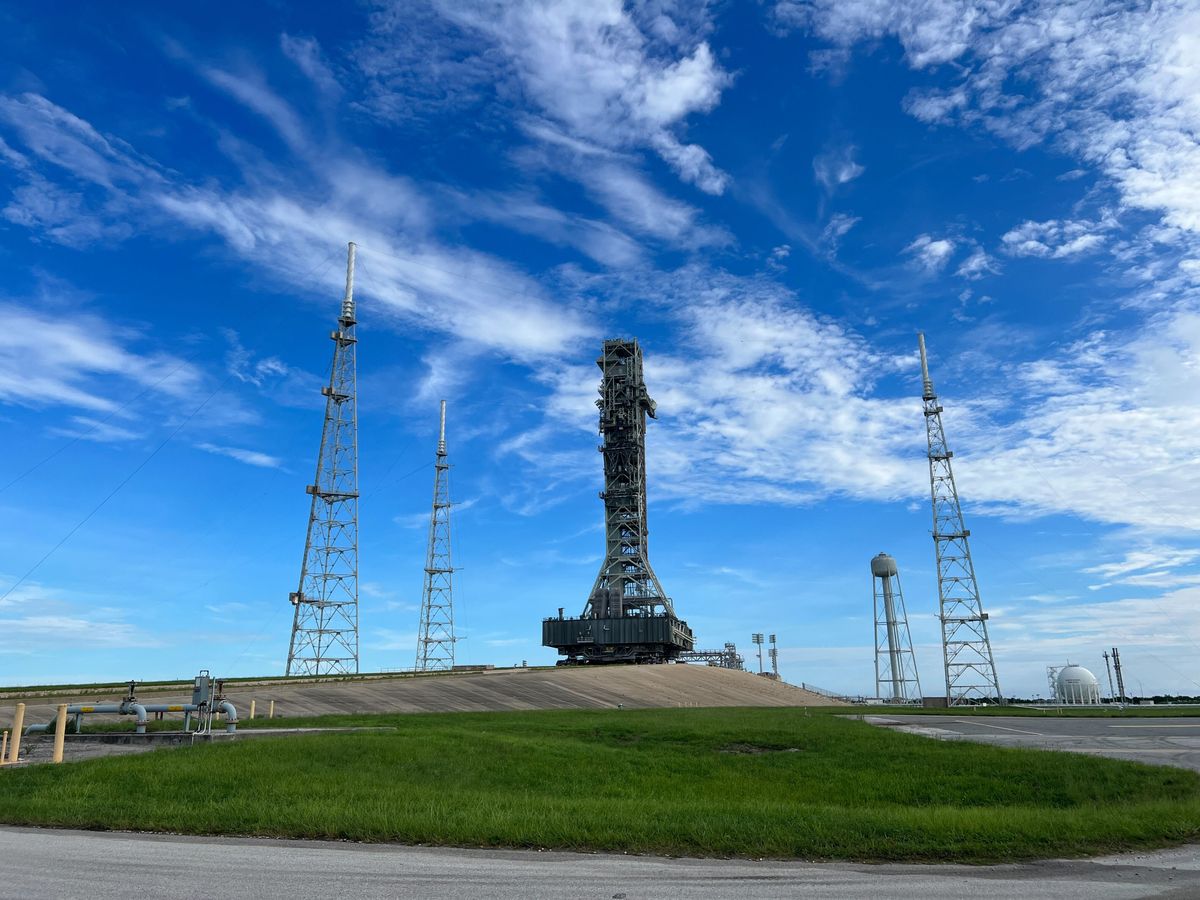
NASA's Artemis 2 astronauts ignited their engines on Thursday night, heading towards the Moon in a historic step aimed at exploring outer space after decades of hiatus. This mission represents a new beginning in humanity's journey into space, as NASA seeks to overcome the limitations imposed on space exploration since the end of the Apollo program.
The Artemis 2 mission is part of a larger plan to return humans to the Moon by 2024, where the mission will conduct critical tests on the Orion spacecraft, specifically designed for this task. This step is part of NASA's efforts to rehabilitate the American space program and enhance its capabilities in deep space exploration.
Event Details
The mission launched from the Kennedy Space Center in Florida, where the Space Launch System rocket, one of the most powerful rockets ever built, was launched. After a full day of orbiting the Earth, the astronauts ignited their engines to head towards the Moon, marking a significant step towards achieving NASA's ambitious goals.
The mission crew consists of four astronauts: Christina Koch, Jeremy Hansen, John Shoffner, and William Bond. These astronauts will embark on a journey to the Moon lasting approximately ten days, during which they will conduct a series of scientific experiments and tests on the spacecraft.
Background & Context
After the Apollo program ended in the 1970s, manned space activities significantly declined, with most missions limited to low Earth orbits. However, recent technological advancements and a growing interest in space have revitalized manned space programs, leading to the launch of Artemis 2.
This mission comes at a time when the world is witnessing an increasing interest in space exploration, as many countries strive to enhance their capabilities in this field. There is also a growing interest from the private sector, contributing to the acceleration of space explorations.
Impact & Consequences
The Artemis 2 mission is a crucial step towards achieving NASA's ambitious goals, aiming to establish a permanent base on the Moon by the end of this decade. This project will allow scientists and researchers the opportunity to study the Moon more deeply, potentially contributing to a better understanding of the solar system's history.
Furthermore, the success of this mission could open doors for future missions to Mars, as NASA aims to use the Moon as a launch point for exploring other planets. This could enhance international cooperation in space and encourage further investments in this sector.
Regional Significance
Although the Artemis 2 mission is related to the United States, its impact may extend to the Arab region. Arab countries have shown an increasing interest in space, with many launching their own space programs. This interest could enhance cooperation among Arab nations in the field of space and encourage knowledge and experience sharing.
Moreover, the success of space missions could inspire new generations in the Arab world, potentially leading to increased interest in science and technology, thereby fostering innovation in the region.
The launch of the Artemis 2 mission represents a new beginning in space exploration and reflects the technological advancements achieved by humanity. This mission is not just a step towards the Moon; it is a step towards a bright future in the field of space exploration.